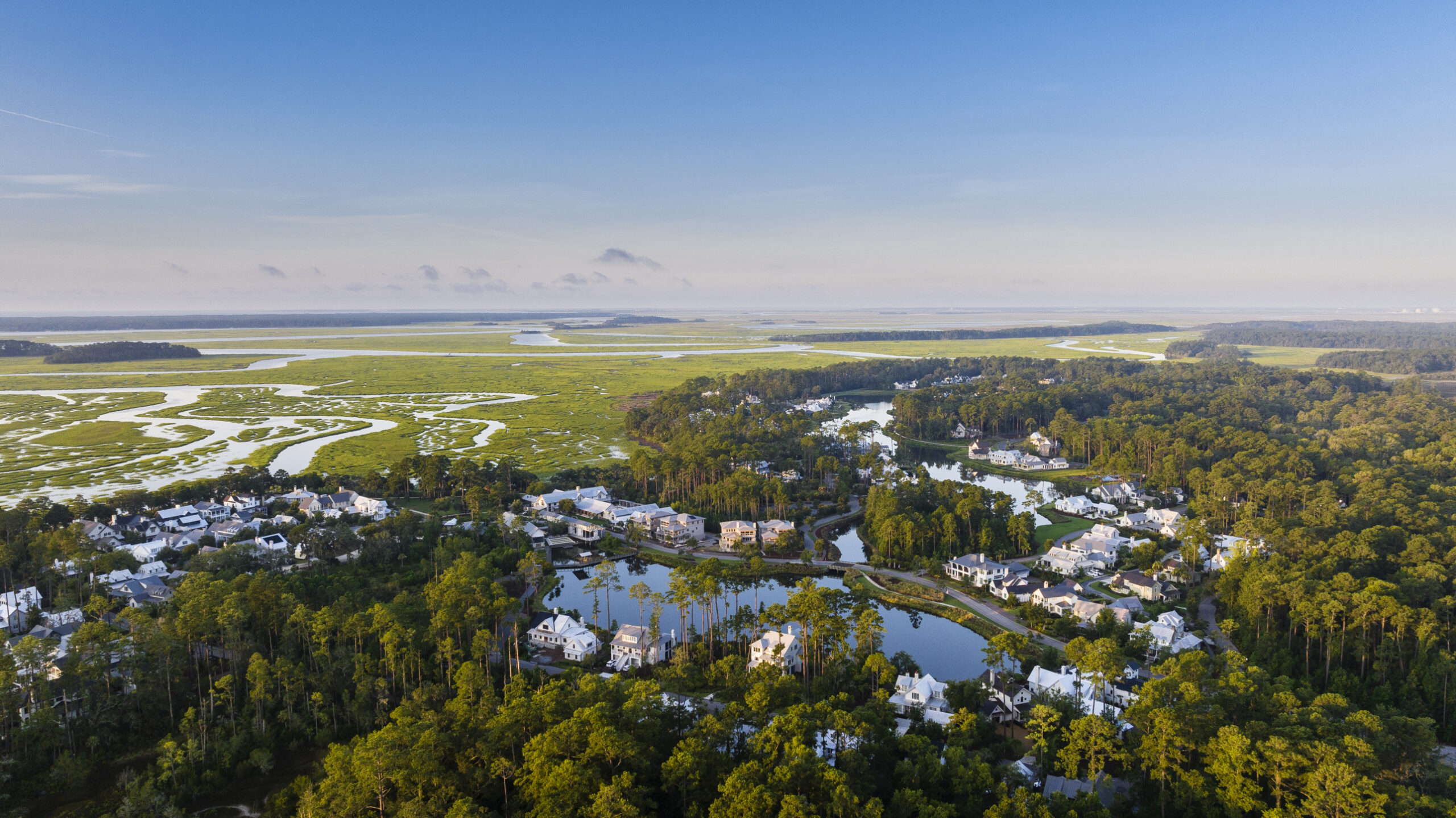
Because we all share a deep appreciation for the extraordinary Lowcountry setting of Palmetto Bluff, we tend to think of the Bluff as a unified, quiet place. And, in some ways, it has been for more than 100 years.
As far back as the Civil War – although, at the time, Palmetto Bluff was split into a number of plantations, each owned by different individuals – the plantation owners were united in their support of Secession. One by one, men enlisted in the Confederacy’s army or navy, and some, like Henry Hartstene and Nathaniel Crowell, resigned their Federal commissions to do so. Their families left for the safety of Savannah, and their slaves fled to freedom on Hilton Head Island, where Federal troops had arrived in November 1861. Throughout the war, the Bluff was largely empty, except for the Confederate pickets who kept watch on the May River. Even when Union soldiers burned Bluffton in June 1863, the Confederate lookouts at the Bluff observed the scene undisturbed; they were too few to warrant Federal attention, and the Bluff escaped becoming a battlefield. But 80 years earlier, the Revolutionary War had revealed a different landscape. The divided loyalties of the Bluff’s plantation owners – British Loyalists and American Patriots – brought bloodshed to what is now the May River Forest neighborhood in Palmetto Bluff.
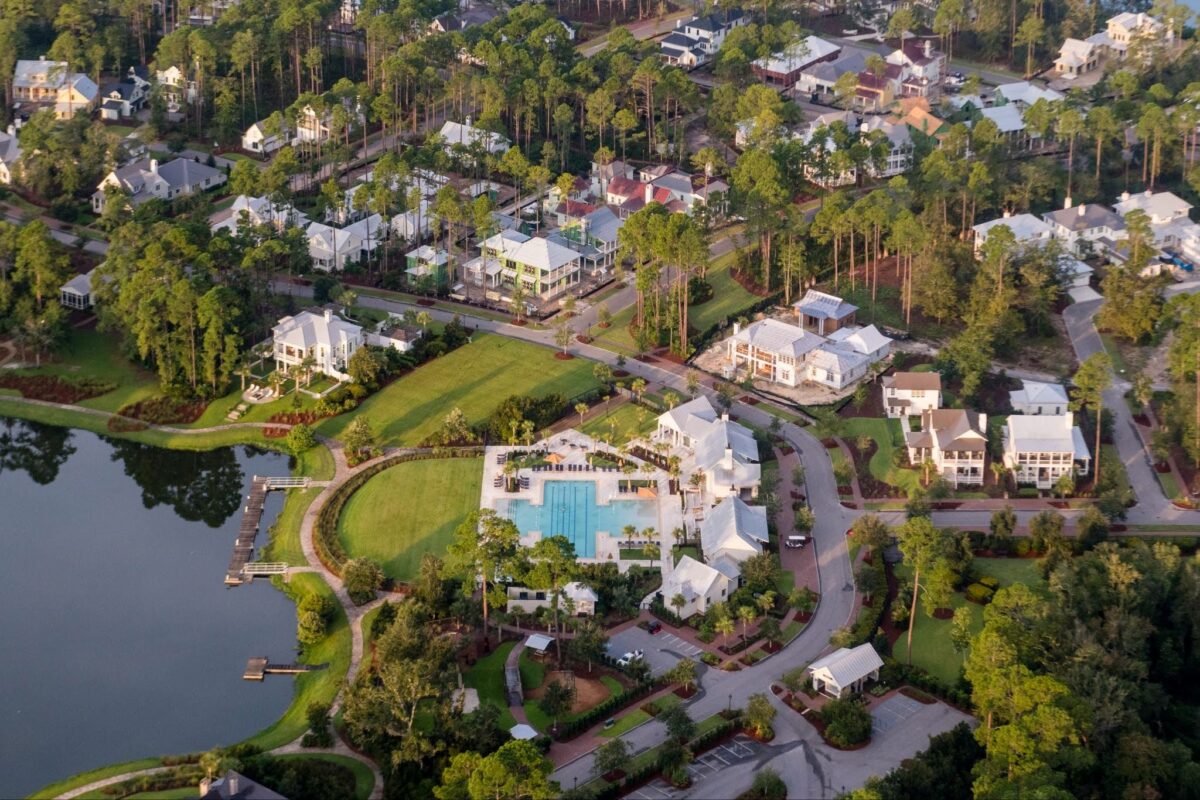
All of the May River Forest and Point neighborhoods were once part of a plantation known as Montpelier, a 640-acre tract owned by Josiah Pendarvis. The main house of the plantation, perched on the bluff just north of the Canoe Club pool, was ideally located to receive cool breezes and to provide an expansive view of the May River. Pendarvis’ three children, Richard, Elizabeth and Josiah, Jr., grew up in the home at Montpelier. In 1778, when Richard, the eldest, was ready to run his own plantation, his father split the Montpelier property and sold his son the northeastern 200 acres. Richard built his home overlooking the May River just north of Hope’s Neck Drive. And in 1780, that is where he brought his bride, Margaret Martinangele of Daufuskie Island, to live.
Perhaps because Richard’s family had a century’s history in the Carolina colony (he could trace his ancestry back to the earliest English settlers), he was fiercely loyal to the Crown and remained so when the Revolutionary War broke out. In the Lowcountry of South Carolina, being a Tory was not unusual: many of the English and Scottish colonists who had made the coast their home were Loyalists, including John Kerr, the owner of the plantation to the south of Montpelier. (Kerr’s plantation would later be known as “Octagon.”)
In fact, the British were counting on loyalties such as these for their “Southern Strategy” to be successful. They believed that Loyalist support was strongest in the South, and that after they regained control of a few key cities and towns, the colonists of the Carolinas and Georgia would quickly abandon any thoughts of independence. Therefore, after some defeats in the North and the entry of France into the conflict, the British focused their military efforts on the South. And for a while, anyway, the “Southern Strategy” appeared to be working: Savannah fell to the British in December of 1778, and thousands of colonists willingly returned their allegiance to the Crown. Sixteen months later, Charleston was also under royal control. Pendarvis, Kerr and South Carolina’s other Tories probably believed that they had made a wise choice.%GALLERY%
Pendarvis seems to have made little effort to hide the fact that his loyalty was to the King of England. Well before the surrender of Savannah, Patriot patrols noted that along the May River, “correspondence is carried on between some of the inhabitants and Georgia,” where there were some strong Loyalist sympathies. In July 1778, a local militia leader complained in a letter to his superior that Pendarvis, Kerr and others had sworn allegiance to Great Britain and that Pendarvis at least should face trial for his actions. (There was no explanation as to why Pendarvis was singled out as being particularly traitorous.)
The Southern strategy was a plan implemented by the British to win the conflict by concentrating their forces in the Southern states of Georgia, South Carolina, North Carolina and Virginia.
Pendarvis was certainly one of the men whom the British could count on, but South Carolina was not nearly as committed to remaining a colony as the royal government assumed. Patriot resistance remained high, and even after the surrenders of Savannah and Charleston, British control was tenuous and did not extend to the countryside between the two cities.
In the Lowcountry, skirmishes between Tory and Patriot militia units became more frequent as the war progressed, and men often found themselves sighting down their muskets at neighbors and former friends. In some cases – because the individuals involved knew each other – the clashes between Loyalists and Patriots led to retaliations marked by personal enmities.
That may have been the case in late 1780, when Pendarvis set in motion a murderous plot that would end at Palmetto Bluff.
Richard Pendarvis was the leader of a Tory militia group based along the May River. In December 1780, he set off with his men to “apprehend one Dougherty,” who lived on “Bear Island,” which probably referred to the mainland near Pinckney Island. (Captain James Dougherty was a Patriot officer who refused to comply with British regulations after the surrender of Charlestown.) At the approach of the Tories, Dougherty and the six or seven men with him opened fire, killing one of Pendarvis’ men and wounding another. Pendarvis and the Tories returned fire, killing Dougherty as the Patriots fled. At least that’s the story that appeared in the Royal Georgia Gazette of Savannah on January 4, 1781.
The American version of the encounter is quite different; a “bitter and deadly hatred” arose between Pendarvis and Dougherty, though they had once been friends, which led Pendarvis and his gang to set out to kill Dougherty. Dougherty, however, was warned that a group of Tories was coming to murder him, so he decided to ambush his attackers. Dougherty recruited Captain Thomas Talbird and two of his own nephews, Captain James Leacraft and his younger brother, 14-year-old William Leacraft. It was evening as they were leaving the house to set the trap, but they were too late, and the Tories had already arrived in the yard. From the darkness, the Tories asked, “Are you Captain Dougherty?” Dougherty warned his companions to flee as he stayed behind to answer in the affirmative (and give his companions time to escape). The Tories opened fire, and Dougherty fell wounded to the ground. As he lay injured, but still holding his gun, Dougherty asked his assailants to come to him and at least shake his hand. The Loyalists (knowing full well that it was a trap) responded with gunshot, and Dougherty was killed. Pendarvis and his men then entered Dougherty’s house where they found William Leacraft. They strung a rope around the boy’s neck and suspended him repeatedly, trying to force him to divulge the whereabouts of the others. Leacraft refused, and finally, because they admired the boy’s courage, they let him go. (This version of the event is told in Joseph Johnson’s Traditions and Reminiscences Chiefly of the American Revolution in the South published in 1851.)
It’s not at all clear how the encounter actually unfolded, or who, if anyone, acted with courage and honor, but what is certain is that the Patriots retaliated. Four months after the skirmish on Bear Island, Captain Leacraft led a Patriot militia unit, known as the “Bloody Legion,” to exact revenge for his brother’s torture and his uncle’s death. The Loyalist newspaper Royal Georgia Gazette had this account of what happened:
“Last Friday afternoon Capt. Richard Pendarvis was shot dead within 90 yards of his house on the River May, where one William Patterson was also barbarously murdered. The perpetrators of these murders consisted of a Rebel Officer and five men; the names of four of them are Leacraft, a prisoner on parole; Blackwood, Bettison, and Nathan Gamble, who had received and were then under protection. The villains afterward went to the house and insulted Mrs. Pendarvis with opprobrious language, and on leaving the plantation took with them three horses and Capt. Pendarvis’s gun.” (April 19, 1781).
According to the family history, when Pendarvis realized that the Bloody Legion had arrived and that there could be no escape, he turned to face his attackers, saying “shoot and be damned!” Leacraft fired, and Pendarvis fell dead. (Pendarvis was killed in front of his home on the northeastern tip of what is now the May River Forest neighborhood in Palmetto Bluff.)
There are no surviving accounts of how Leacraft and the Bloody Legion fled Pendarvis’ plantation, but if they made their way by land (as they probably did, since they stole three horses), they would have passed through neighboring plantations that were sympathetic to their cause. John Screven, who owned a tract of land in what is now Mays Bend, was an early supporter of the Patriot cause and had served with his brother in the Georgia militia. Ironically, John Screven was married to Pendarvis’ sister, Elizabeth. Two members of the Mongin family, who owned plantations along the New River, were members of the Bloody Legion, although it seems that they were not present when Pendarvis was shot.
However, the Mongins were present a few months later when the Bloody Legion again retaliated for the death of a Patriot at the hands of Loyalists; this time it was the killing of Charles Davant of Hilton Head by Tory Captain Phillip Martinangele (brother of Pendarvis’ widow, Margaret) of Daufuskie Island. Leacraft, the Mongins and others went to Daufuskie where they found Martinangele lying ill in bed. They shot Martinangele and then, according to the British Royal Gazette in Charlestown “plundered Mrs. Martinangele and her children of almost everything they had.” (January 30, 1782).
By the time Martinangele was killed, the war was nearly over. Cornwallis’ surrender at Yorktown in October 1781, followed by other defeats elsewhere, led the British to accept American independence as a basis for peace talks in 1782. The Treaty of Paris was signed in September 1783 and ratified by Congress in January 1784.
At the Bluff, at least, the war’s end seems to have brought about resolution to any lingering resentment. Many former Loyalists, such as William McKimmy, who owned Octagon Plantation after the war, became staunch supporters of the young country and formed friendships with Patriots such as John Screven, despite being enemies only a few years prior. Perhaps the best evidence of the absence of bitterness is the marriage on May 25, 1783, of Margaret Martinangele Pendarvis, whose husband and brother were killed by the Bloody Legion. On that day, the young widow married William Edwards Mongin, brother of one Bloody Legion member and uncle of another. From this and other relationships between 18th century families at Palmetto Bluff, it appears that the birth of the new nation brought with it a fresh start for its citizens, whatever their previous allegiances may have been.
Photography by Rob Kaufman