From famine to fortune.
The late 19th century was a difficult time for the wineries of France. Mild, humid weather fostered an epidemic of powdery mildew on vines that was soon followed by a devastating plague of an aphidlike insect, known as phylloxera. The pest was inadvertently introduced to Europe from the United States sometime around 1860 and, within a couple of years, vines across the continent were dying. American grapes had developed a resistance to the sap-sucking root louse; however, European vines lacked any defense (and apparently had particularly delectable roots). As the blight worsened, at one point, it looked as if nearly all wine production in Europe would end. The few locations that were unaffected—the Mosel Valley of Germany and the island of Santorini in Greece, for example—offered little hope: soil conditions in those locations were very different from those in France and the rest of Europe and couldn’t replace the highly sought-after French wine.
At the vineyards of celebrated winery Château Lafite in Bordeaux, France, the situation appeared especially dire. Not only was phylloxera poised to destroy the decades of work that had propelled Château Lafite wines to considerable renown (even Thomas Jefferson had bottles in his collection), but also the new owner of the property, Baron James Mayer de Rothschild, died in November 1868, just three months after his purchase, leaving the vineyard bereft of its leader during a time when he was needed the most.
Rothschild was one of the wealthiest men in the world (possibly the wealthiest), but his fortune had been made in banking, not vineyards. Although they had no apprenticeship in the art of winemaking, it was up to Rothschild’s three sons to manage this unprecedented disaster in their father’s new venture after he died. Fortunately, the younger Rothschilds were also savvy businessmen, and that fact coupled with the discovery by desperate vintners that grafting native vines onto American rootstocks would allow European grapes to grow once again meant that the wine and reputation of Château Lafite Rothschild, as the winery was now called, would survive the crisis. It would take years for the vineyards to recover, but the Rothschilds had the foresight (and the resources) to wait.
Poor harvests and mediocre wines were typical as the grafted plants matured. Then, two consecutive years of perfect conditions, 1899 and 1900, yielded exceptional grapes. The harvests became superlative wines with Château Lafite Rothschild’s vintages as two of the most celebrated wines the winery ever produced.
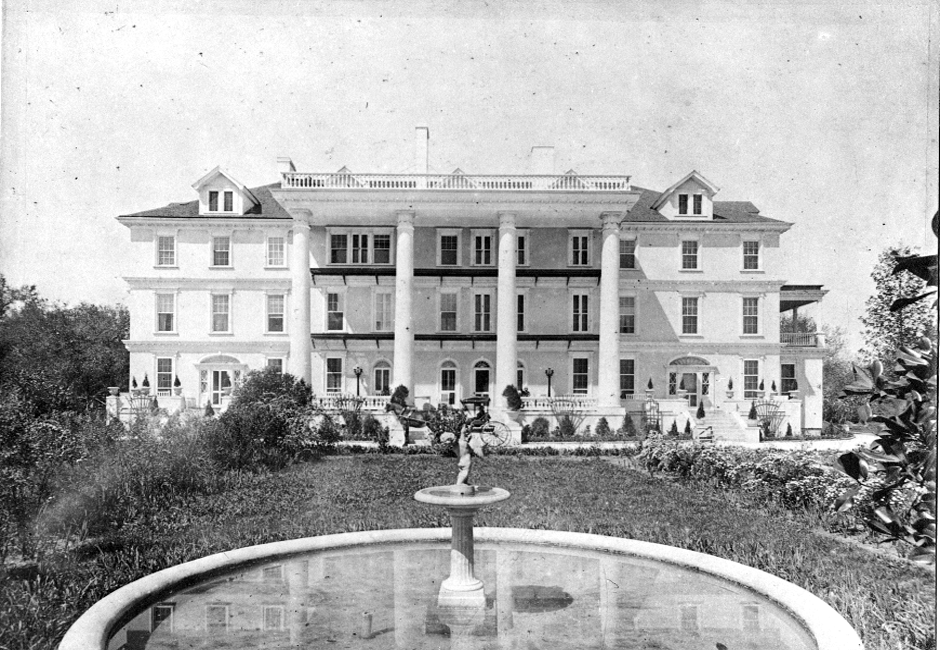
Richard T. Wilson Jr. and his wife, Marion, the wealthy New Yorkers who built the spectacular home that once stood in Palmetto Bluff’s Village Green, may have purchased Château Lafite Rothschild’s 1899 vintage because of its fame. An empty bottle of the wine, discovered by archaeologists in a trash pit associated with the mansion, suggests that the wine was consumed sometime before 1926, when the Wilsons were regular visitors to Palmetto Bluff. During this period, Mrs. Wilson entertained lavishly and the bottle of 1899 Château Lafite may have been served at one of her elegant dinner parties. (Indeed, it may even have been an illicit indulgence, enjoyed after Prohibition began in 1920!)
Despite the success of the 1899 and 1900 harvests, problems were far from over for the winemakers of Europe. Two world wars and the vagaries of weather left even Château Lafite Rothschild struggling to maintain its stature as Bordeaux’s most iconic wine, synonymous with wealth, prestige, and nobility.
By the middle of the 20th century, however, vineyards across the continent were recovering, and in 1974, Baron Eric de Rothschild took over Château Lafite Rothschild and returned the winery to its former prominence. Today, Château Lafite Rothschild is the largest producer of wines classified as First Growth in Bordeaux, the highest ranking achievable in the Bordeaux Wine Classification. (This system of evaluating and ranking wines began in 1855 and Château Lafite has been at the top the list from the beginning.)
The vinification process has evolved under Rothschild’s leadership with everything being bottled within two to four weeks from harvest. Additionally, the finished grand vin (best wine) rests in barrels for 18 to 20 months, a change from the past when the wines were aged for three months to a year in barrel.
Montage Palmetto Bluff’s Director of Wine Jesse Rodriguez has 13 Château Lafite Rothschild vintages in the River House wine cellar, including the extraordinary 2010, one of the “best Bordeaux vintages in recent memory,” according to Wine Spectator—and is perhaps reminiscent of the 1899 vintage the Wilsons enjoyed a century ago, with friends at Palmetto Bluff.
Written by Dr. Mary Socci & Jesse Rodriguez
Photography by Krisztian Lonyai%GALLERY%GLOSSERY OF TERMS
Graft:
In this horticultural technique, the stem of a European grapevine is cut and attached to the cut stem at the base of an American vine, which allows growers to take advantage of current roots.
Phylloxera:
A tiny insect that lives on and feeds on the roots of grape vines. Phylloxera were largely the culprit in the destruction of European grapevines in the mid-19th century.
Bordeaux Wine Classification:
A classification begun in 1855 that ranks wines of the Bordeaux region in order of quality. Chateaux (producers) are evaluated in various categories and listed accordingly.