Written by Palmetto Bluff
Apr 20, 2021
Written by Lydia Moore, Palmetto Bluff Conservancy Research + Education Coordinator
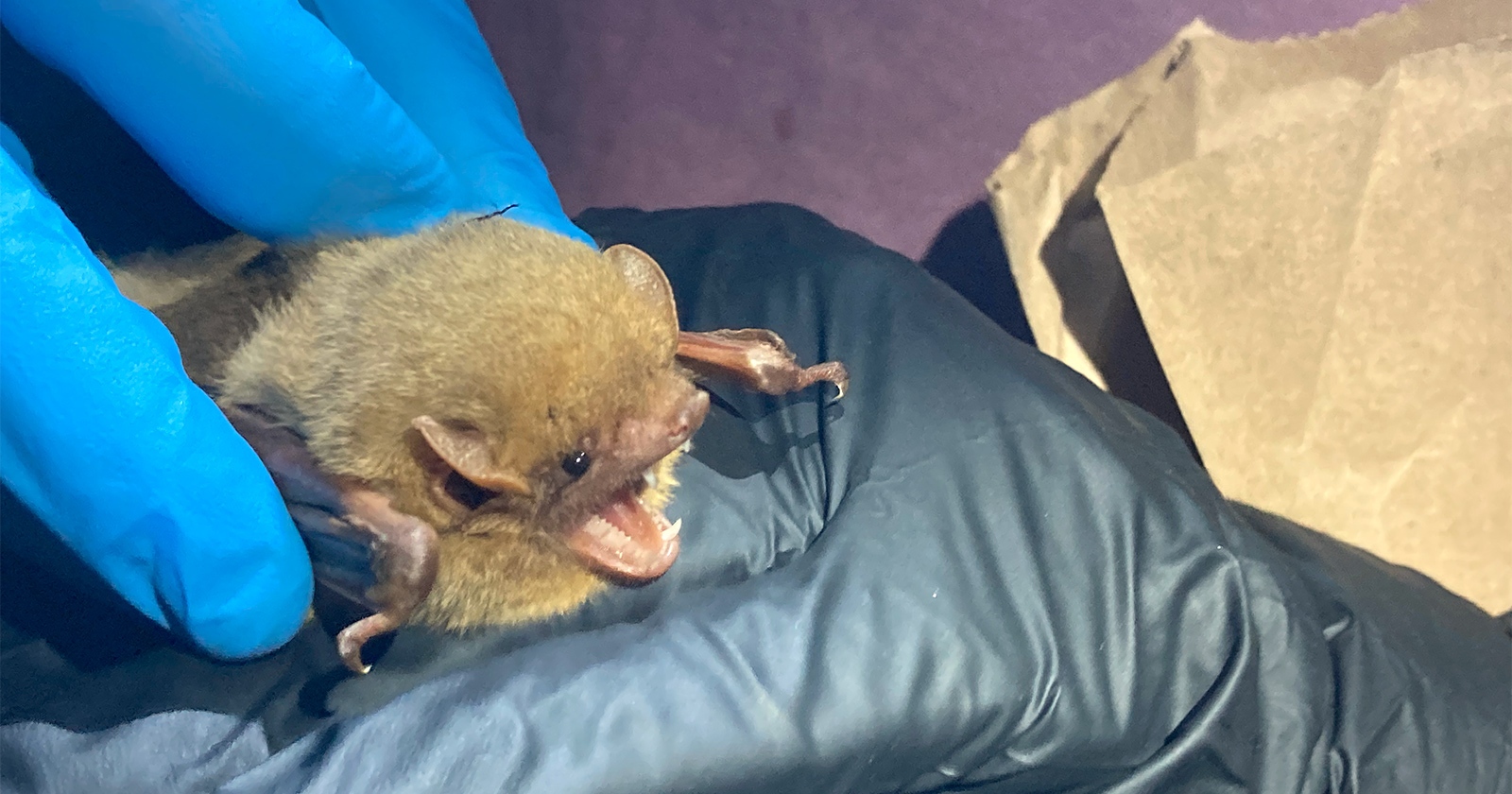
The word “bat” often evokes horrific (and, in my opinion, over the top) images of Nosferatu and Dracula, sucking the lives out of innocent victims. We as a species have a tumultuous relationship with bats; some cultures fear them and others revere them.
When we discuss wildlife in the United States, bats are largely ignored until there is some sort of local or global health crisis. Rabies, Ebola, and coronaviruses can all be linked to bats, which become easy scapegoats since our culture fosters a negative stereotype of these elusive mammals. Everything about them seems “creepy” to us. The only parts of their vocalizations that are in the range of our hearing sound like clicks. They fly erratically, which is a jarring juxtaposition to the smooth flight of birds. They live in the sky at night – two realms that are completely foreign to us. We are not exposed to them and our lack of exposure make them appear abnormal and scary. In fact, bats have been used as the inspiration behind monsters in horror films.
Unsurprisingly, this fear is unwarranted. Let’s bust four common myths about bats.
All bats are vampires. Of the roughly 1,400 species of bat found worldwide, only three drink blood. The rest eat insects, fruit, nectar, fish, frogs, salamanders, rodents, birds, and even other bats! The only bats that drink blood are vampire bats (yes, vampire bats DO exist – and they look really cool). Of the three species of vampire bat – all of which are found in Central and South America, only one specializes in drinking the blood of mammals.
Vampire bats are SO unique! They have the ability to fly directly from the ground and to run, which most bats cannot do. Like all colonially roosting species, vampire bats are social. Unlike other bats, there are many studies of their altruistic behavior toward other vampire bats. A bat can easily starve if it comes back to the roost without securing a blood meal. If this happens, another bat in the colony will regurgitate part of its own meal to the hungry bat, allowing that bat to continue living while reducing its own probability of survival. Incredible!

All bats have rabies. While rabies is a seriously fatal virus, less than 1% of bats actually have it. Even so, 70% of rabies-related human deaths in the US can be traced to bats. What is the cause of this discrepancy? One factor could be that it is impossible to tell if a bat has rabies by observing its behavior. Unlike many other mammals, most rabid bats become lethargic instead of hostile and violent. When we see a bat on the ground, it may seem calm and unassuming, but it might not be doing very well. In fact, we rarely come into contact with healthy bats (they fly at night, remember?). Usually, the bat we encounter is a bat on the ground. Bats are vulnerable when they are on the ground and, even though there are benign reasons for it ending up in that predicament, assume that this bat is sick and too weak to fly. Check out this site to learn what to do if you find a grounded bat.

Bats are blind. Many people think bats are blind because most of them have itty bitty eyes and echolocate. But a bat’s eyes are adapted to being able to see in low light conditions. This means that bats have two modes of navigation – echolocation and vision – which they use under different circumstances. Echolocation is used for short-range navigation, keeping them from flying into trees and helping them find food. And vision? Vision is used for long-distance navigation, like following the edge of a forest, river corridor, or canyon rim. Bats can even see light in the ultraviolet spectrum – colors that we cannot see!

Bats get caught in your hair. This one made me literally laugh out loud when I first heard it. I was informed once that bats attack and get caught in human hair. For a bat to become stuck in your coiffure would mean they were oblivious to your presence. These incredible mammals can find and catch insects that are smaller than half an inch in length. Of course they can detect your presence!
Bats swoop and dive when foraging for insects. It looks like they are intentionally coming towards us when they do this – and they are! Just not for the reason you might think. Bats in South Carolina eat insects. Some insects that feed on us – like mosquitos – are attracted to carbon dioxide. We emit carbon dioxide every time we exhale, so to a mosquito carbon dioxide means food is nearby. Essentially, our emitted carbon dioxide attracts mosquitos and the mosquitos, in turn, attract bats. Those bats swooping down towards you? That’s a GOOD thing!
Let’s change our myths about bats from negative to positive. Stay tuned for next month’s post: Bats Schmats! Why should we care about bats?