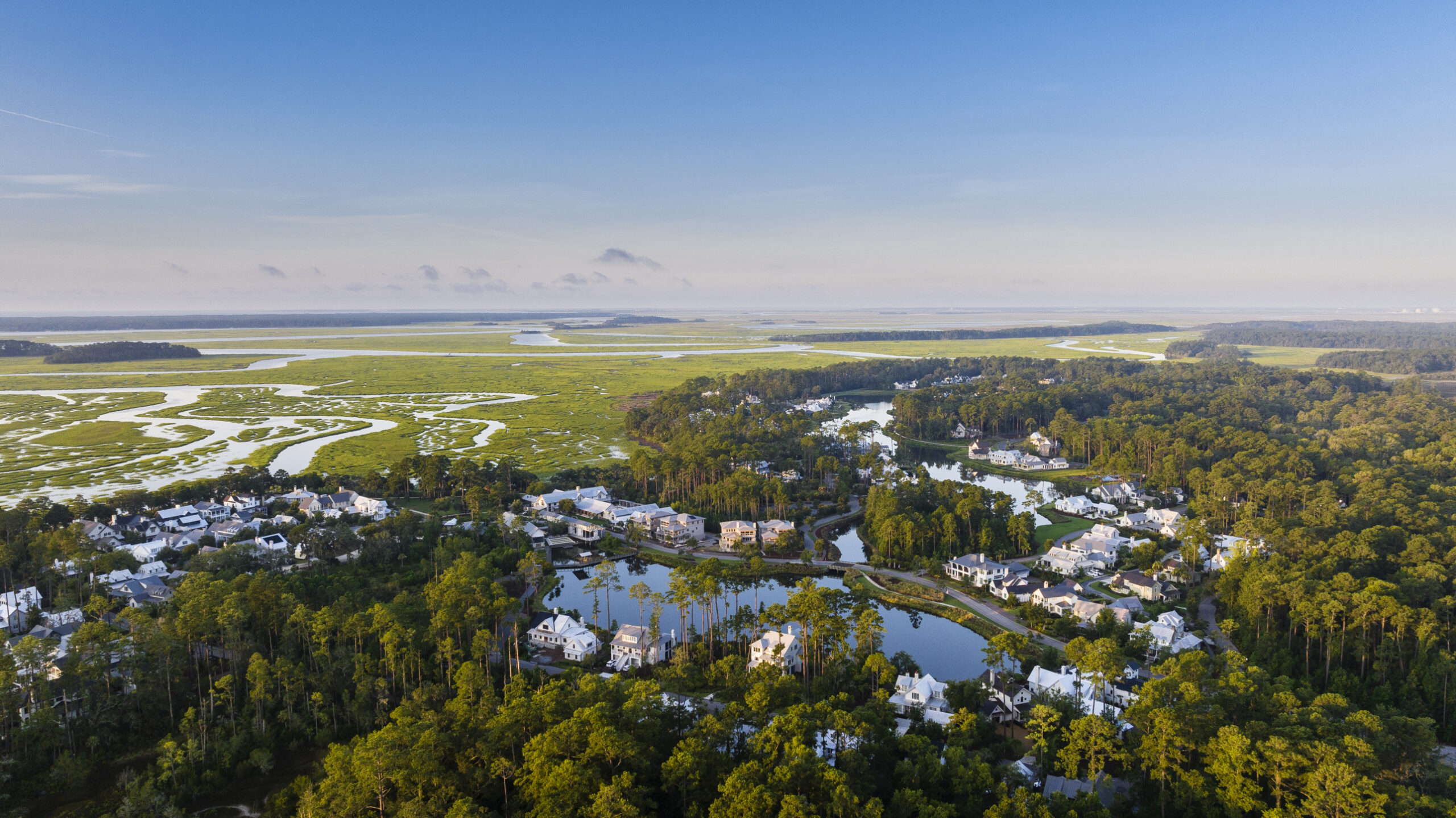
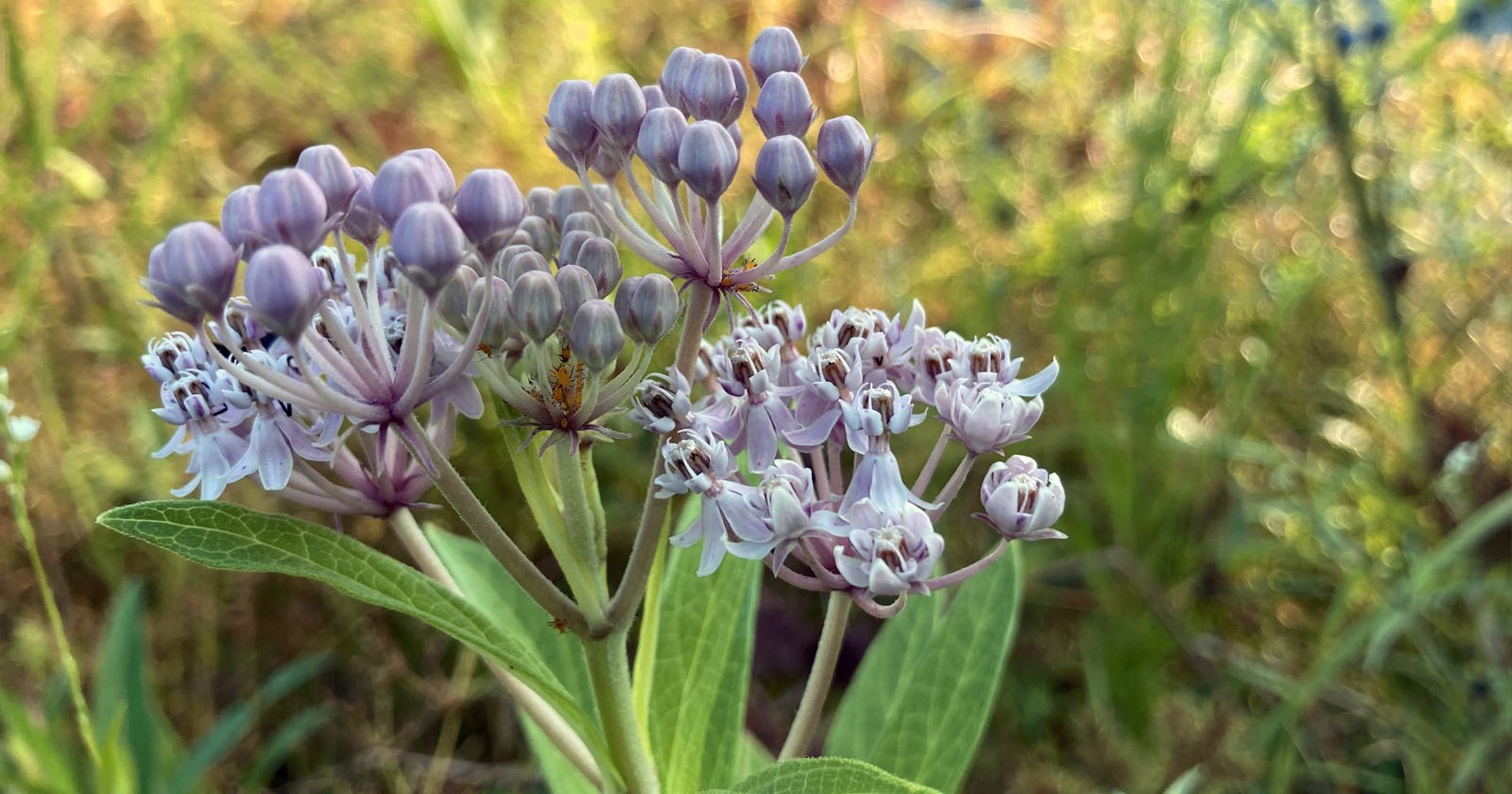
Beaufort County is home to roughly a dozen species of milkweed, three of which have been documented growing wild at Palmetto Bluff.
The genus Asclepias earned the common name “milkweed” from the sticky, milky-white substance that is excreted from broken parts of the plant. This substance is toxic if ingested by people and dogs, but monarch butterfly caterpillars have adapted to consume the leaves and toxins found within this plant. In return, their diet makes the young monarchs unpalatable to birds and other predators. However, monarch populations have been in decline, as a result of a loss of habitat and loss of milkweed. This downward trend in monarch sightings and the joy people experience from watching them flit around the garden has inspired many homeowners to plant milkweed in their flower beds. This unique addition to the garden provides food for both the caterpillars and the adults.
The efforts to attract monarchs and help their population has increased the availability of some species of milkweed at local nurseries. Butterfly milkweed (Asclepias tuberosa) is one of the most common species sold in the Southeast, while common milkweed (Asclepias syriaca) is more prominent in northern plant nurseries. Other species commonly sold at nurseries include whorled milkweed (Asclepias verticillata) and swamp milkweed (Asclepias incarnata).
There is one more species of milkweed that has become commonplace at nurseries, and it is known as tropical milkweed or blood flower (Asclepias curassavica). This species, native to Central and South America, has become highly popular in North America due to its more evergreen behavior and ease of cultivation. However, this has been connected with an increase in monarchs becoming non-migratory and staying year-round in places with an abundance of tropical milkweed. It has also been linked to some monarch pathogens becoming more prevalent as the pathogens would typically die back with the plants in winter, but this is not the case with tropical milkweed. The easiest and best solution is to plant native species, as these plants will die back close to winter, killing the pathogens along with them, and the monarchs will be more inclined to migrate.
Residents of Beaufort County may be interested in planting any of the following native species of milkweed:
• Aquatic Milkweed (Asclepias perennis)
• Butterfly Milkweed (Asclepias tuberosa) – documented at Palmetto Bluff
• Carolina Milkweed (Asclepias cinerea)
• Clasping Milkweed (Asclepias amplexicaulis) – documented at Palmetto Bluff
• Fewflower Milkweed (Asclepias lanceolata)
• Longleaf Milkweed (Asclepias longifolia)
• Michaux’s Milkweed (Asclepias michauxii)
• Pineland Milkweed (Asclepias obovata)
• Pinewoods Milkweed (Asclepias humistrata) – documented at Palmetto Bluff
• Savannah Milkweed (Asclepias pedicellata)
• Swamp Milkweed (Asclepias incarnata)
• Whorled Milkweed (Asclepias verticillata)
%GALLERY%