Written by Palmetto Bluff
Jan 28, 2025

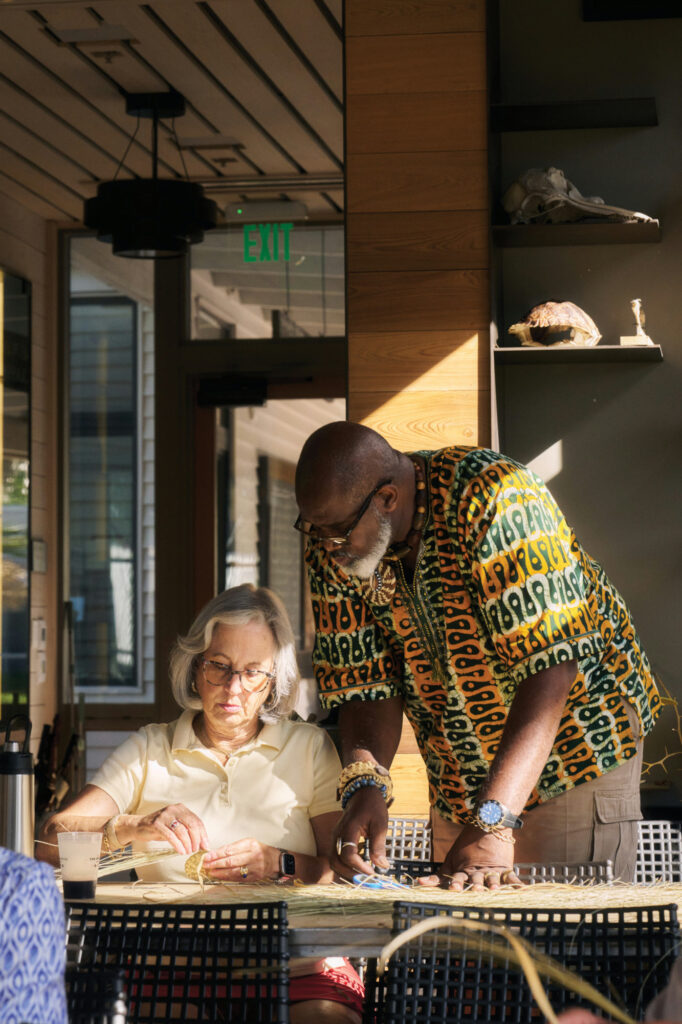
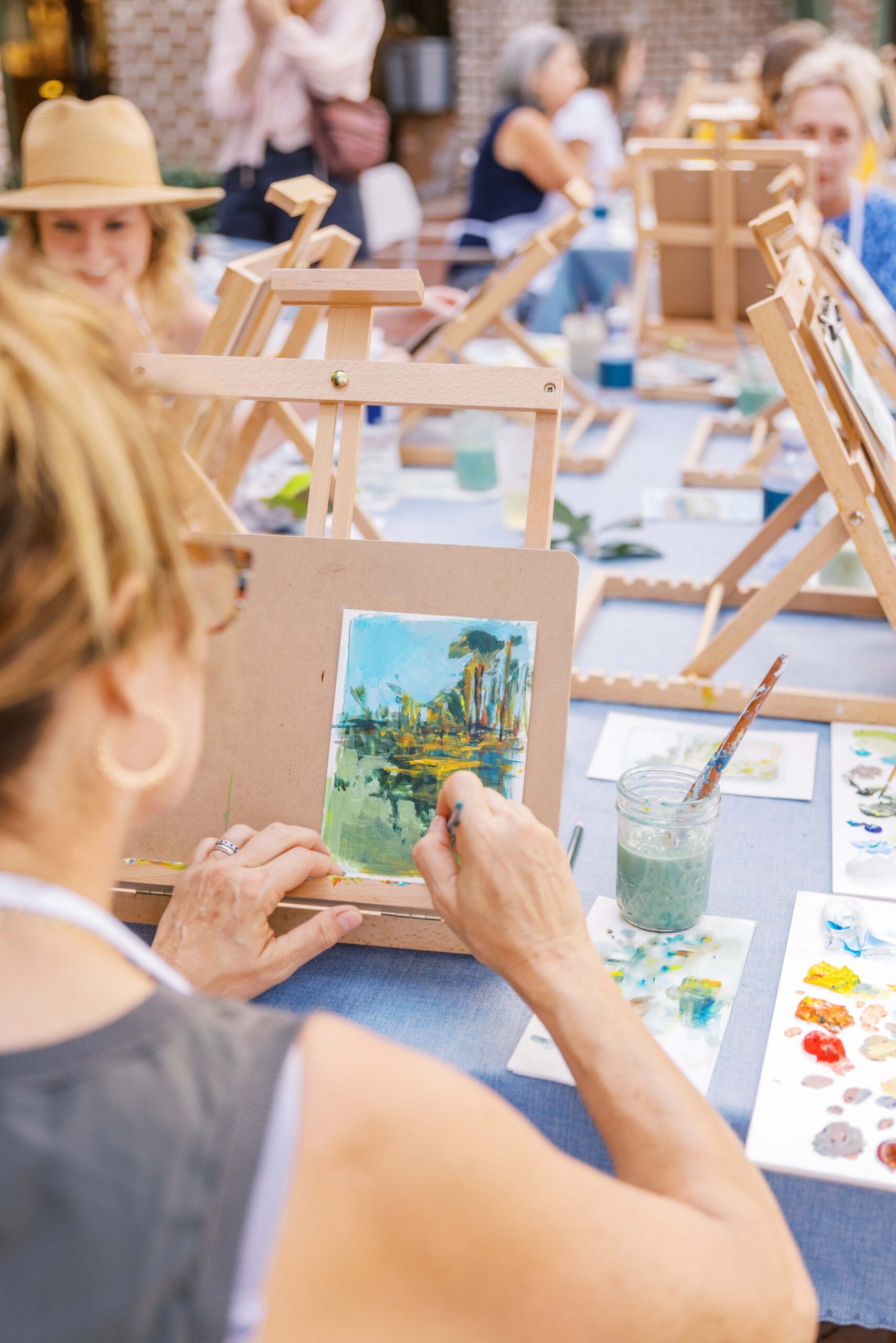
On a warm summer afternoon in Moreland Village, light streams in the windows of the Conservancy classroom as Michael Smalls and Dino Badger lay out bunches of sweetgrass and curling palmetto fronds. The workshop today is part of The Arts Initiative at Palmetto Bluff ’s Artist in Residence program. Renowned master basket makers, Smalls and Badger’s July visit has been greatly anticipated. They move around the room, equipping each station with a pair of scissors, a “nail bone,” and a small, coiling knot of pine needles—the beginning of a basket. Once everyone has arrived and settled, Smalls begins his story of sweetgrass.
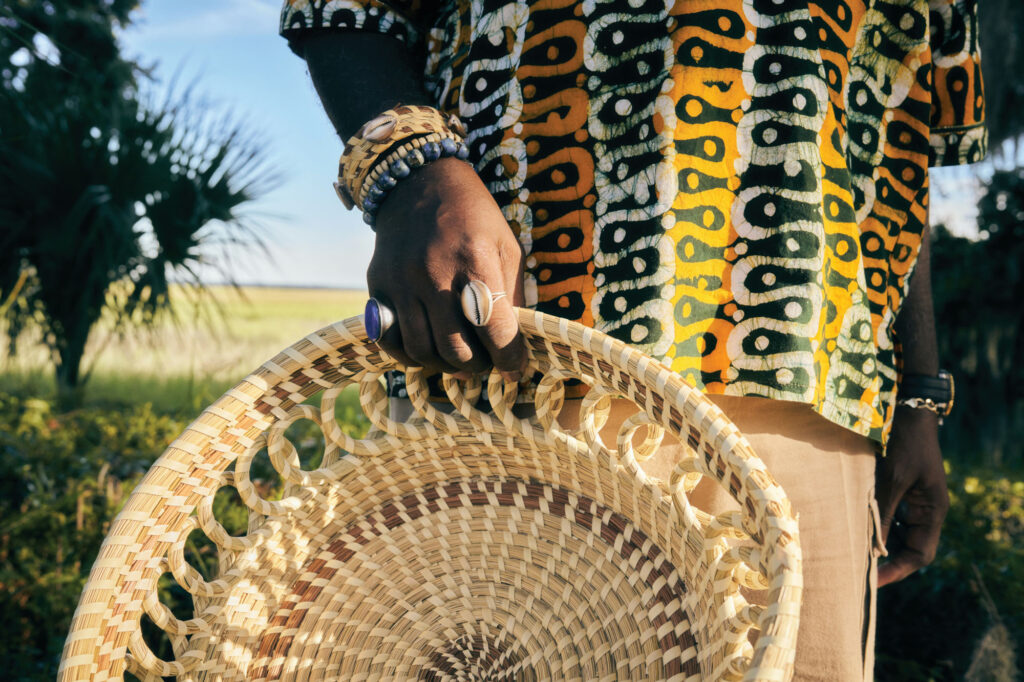
As a young boy, Smalls would sit beneath the shelves of his family’s roadside sweetgrass basket stand in Mount Pleasant. He loved to watch and listen at the feet of his relatives, to play with the dropped strands of sweetgrass and bulrush. Smalls remembers watching their hands and listening to the meandering conversations as his elders made baskets to sell to passersby on Highway 17. He heard stories about September Drayton, his ancestor who was born into enslavement at Laurel Hill Plantation, and how he used wide baskets that were crafted for rice winnowing—“fanners” to toss hulls into the air to separate the lighter chaff from the rice grains. One day his great-grandmother, Lucinda Pringle, said, “If you want to learn, I will teach you.”
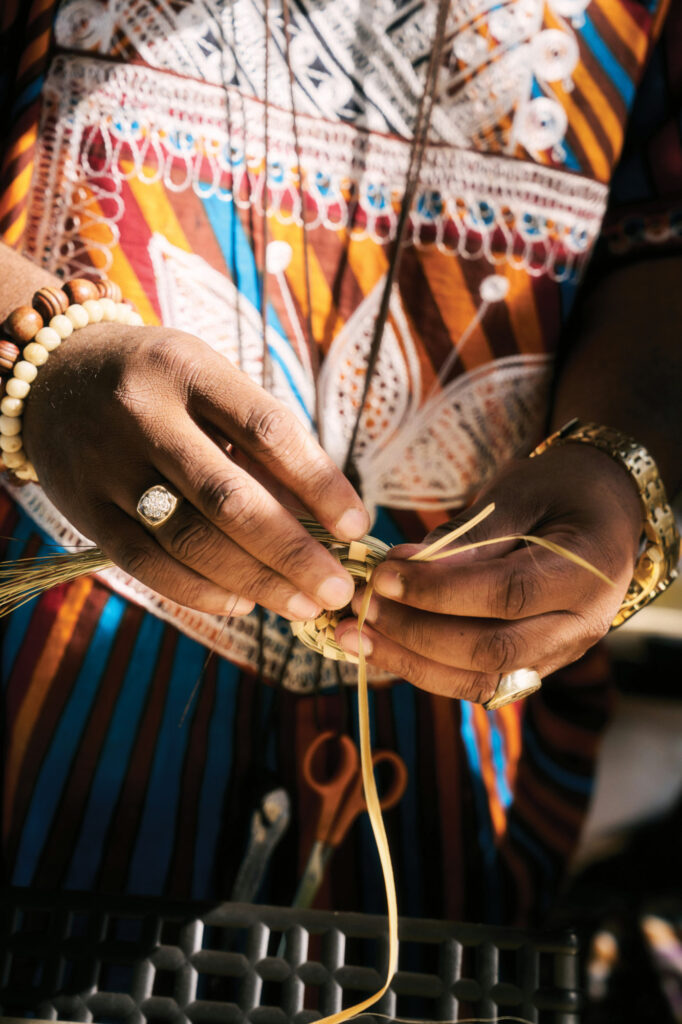
Early on, Smalls learned they weren’t “weaving” baskets. “We consider ourselves as sewing, going stitch to stitch,” he explains. The baskets begin as coiled bundles of the fibrous sweetgrass, held in place by sewing through the grass with thin strands of saw palmetto fronds. Tight spirals and loops create a basket’s strength and durability. Smalls didn’t realize it then, but by learning to craft baskets, he would carry on Gullah traditions and skills traced back to western Africa. Young men originally made the larger baskets as a rite of passage, and other work baskets were made to hold vegetables, shellfish, and cotton. He learned that in Africa, animal bones were used for sewing baskets, which were replaced by flattened nails or spoons in the Lowcountry. In Gullah culture, Smalls says the term “nail bone” is still used, no matter the tool. It’s the kind of language carryover that he likes to share with others—a sign of lasting Gullah influence. Smalls explains all this to the quiet room. After a few questions, he stands up to get everyone started. The work is pleasant, and the room falls into a steady hum of sewing. Badger turns on a small boom box, and a steady lineup of old rhythm and blues hits fills the room. Smalls and Badger, wearing traditional African shirts and woven pendants around their necks, have an easy way about them as they travel from table to table, laughing easily as they reverse a misstep or repair a tear.
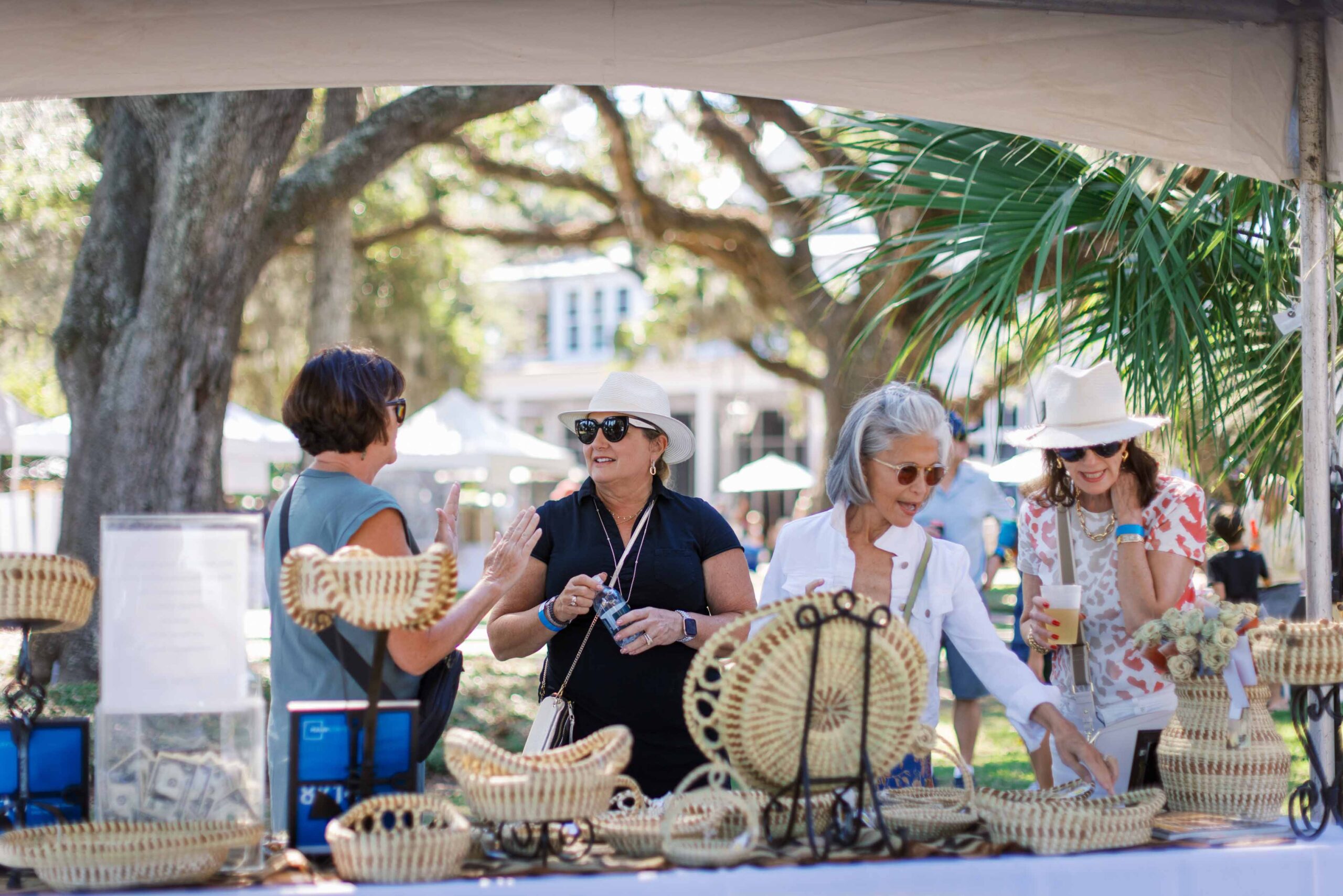
To sew baskets, they coil bundles of the fibrous sweetgrass, held in place by sewing through the grass with thin strands of saw palmetto frond.
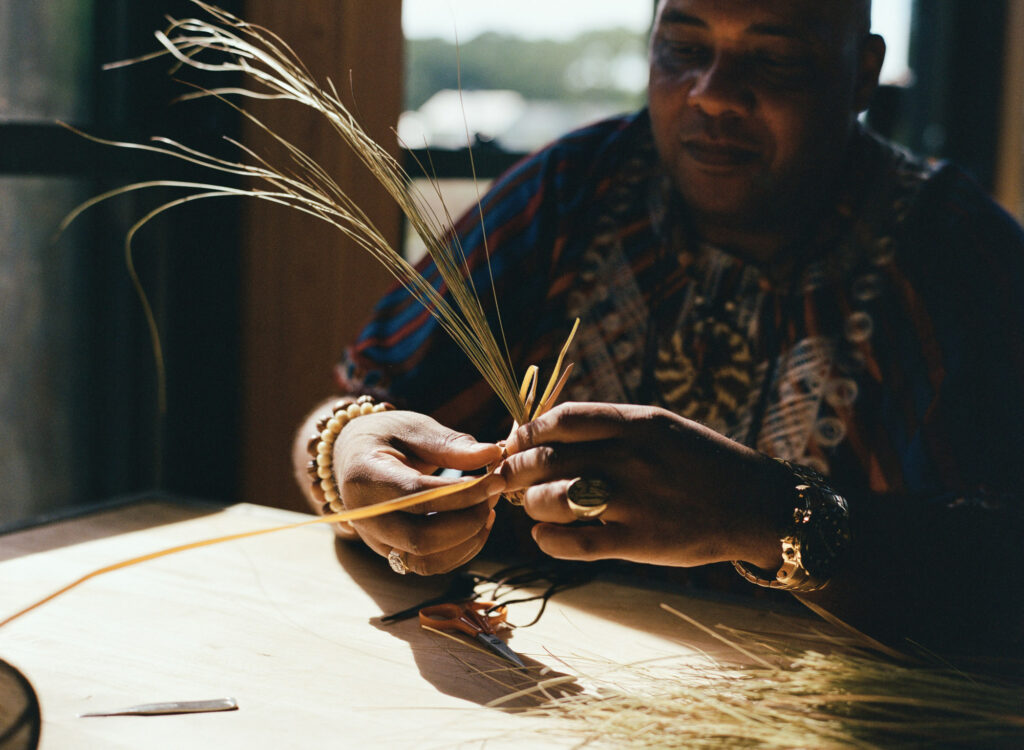
Smalls has focused on sewing baskets for the past couple of decades. He worked as a phlebotomist for the American Red Cross previously, but now he dedicates his time to instructing others about the process and significance of making sweetgrass baskets. Badger has a Brooklyn accent and both urban and Lowcountry credibility. Raised in New York by South Carolina-born parents, he grew up visiting extended family in Colleton County. Badger’s permanent move to the Lowcountry as an adult was a homecoming of sorts. He was eager to learn more about Gullah culture, and when he became intrigued with sweetgrass basket artistry, the left-handed Badger apprenticed with right-handed Smalls, who modified his instruction to be able to teach Badger. “Michael worked it out,” Badger says, “and that’s why he’s a master sewer.”
Smalls didn’t realize it then, but by learning to craft baskets, he would carry on Gullah traditions and skills traced back to western Africa. Young men originally made the larger baskets as a rite of passage, and other work baskets were made to hold vegetables, shellfish, and cotton.
For years now, the men have sewn baskets together. They have been recognized as Gullah elders, and their baskets are displayed in museums and sold in shops and galleries around the country. Smalls and Badger also teach children and adults throughout the Lowcountry, and they’ve traveled widely as educators, including a trip to Rwanda, Africa, to meet and exchange designs and techniques with basket sewers there. It was a deeply profound experience, Smalls says, as the region had suffered a genocide, and people were finding healing and an economic path forward through basketry. That experience strengthened the men’s mission. “We want to help educate and preserve this important art form,” Badger says. Bringing the rich history of Gullah culture to grade school classrooms is a vital part of their work. Teaching about baskets, he says, integrates lessons in language and history, economics, natural sciences, and even geometry. Smalls and Badger hope to encourage young people to continue the craft. “If we can get one or two students inspired,” Smalls says, “we’d know that we could pass on the torch.”