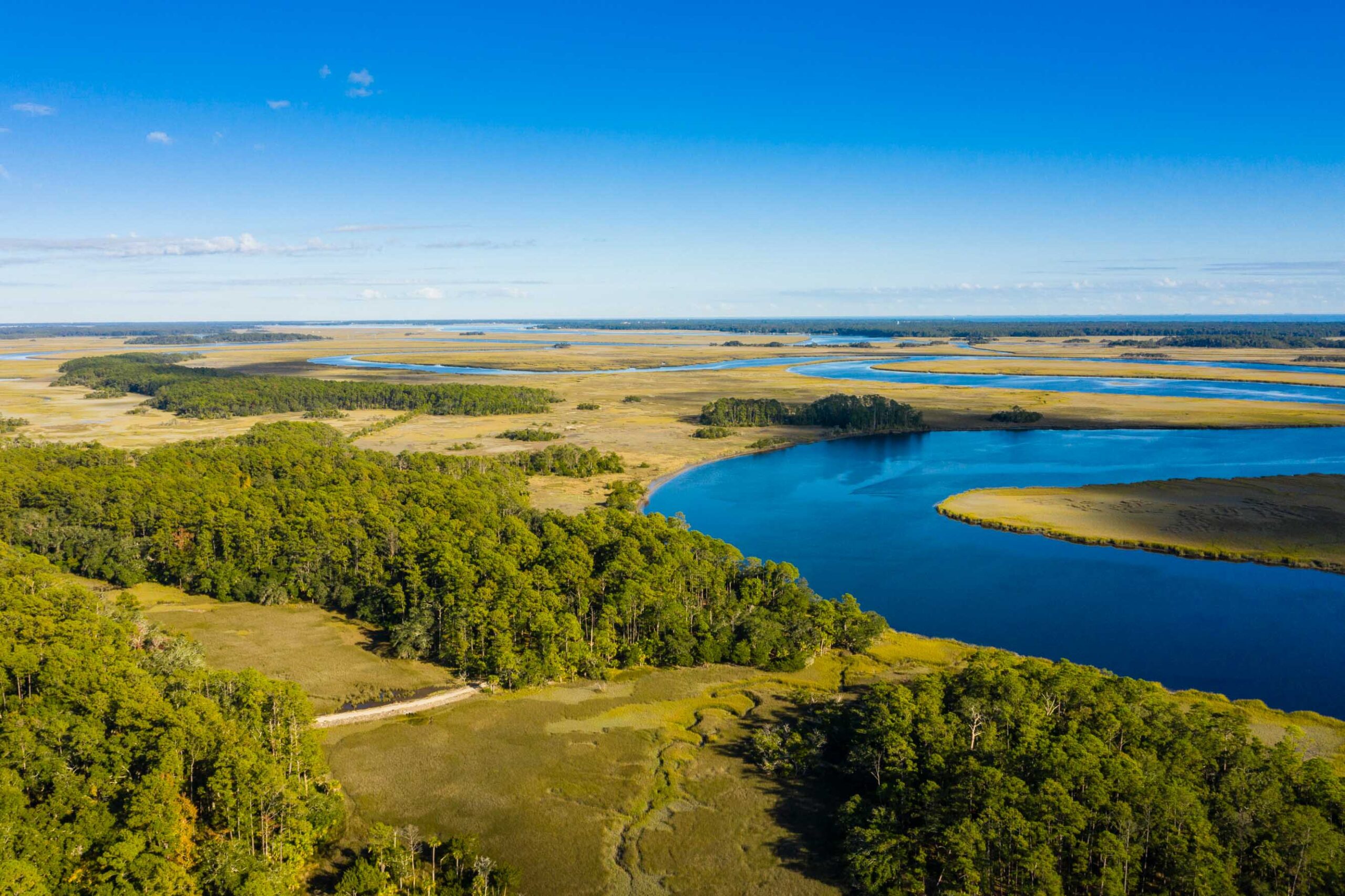
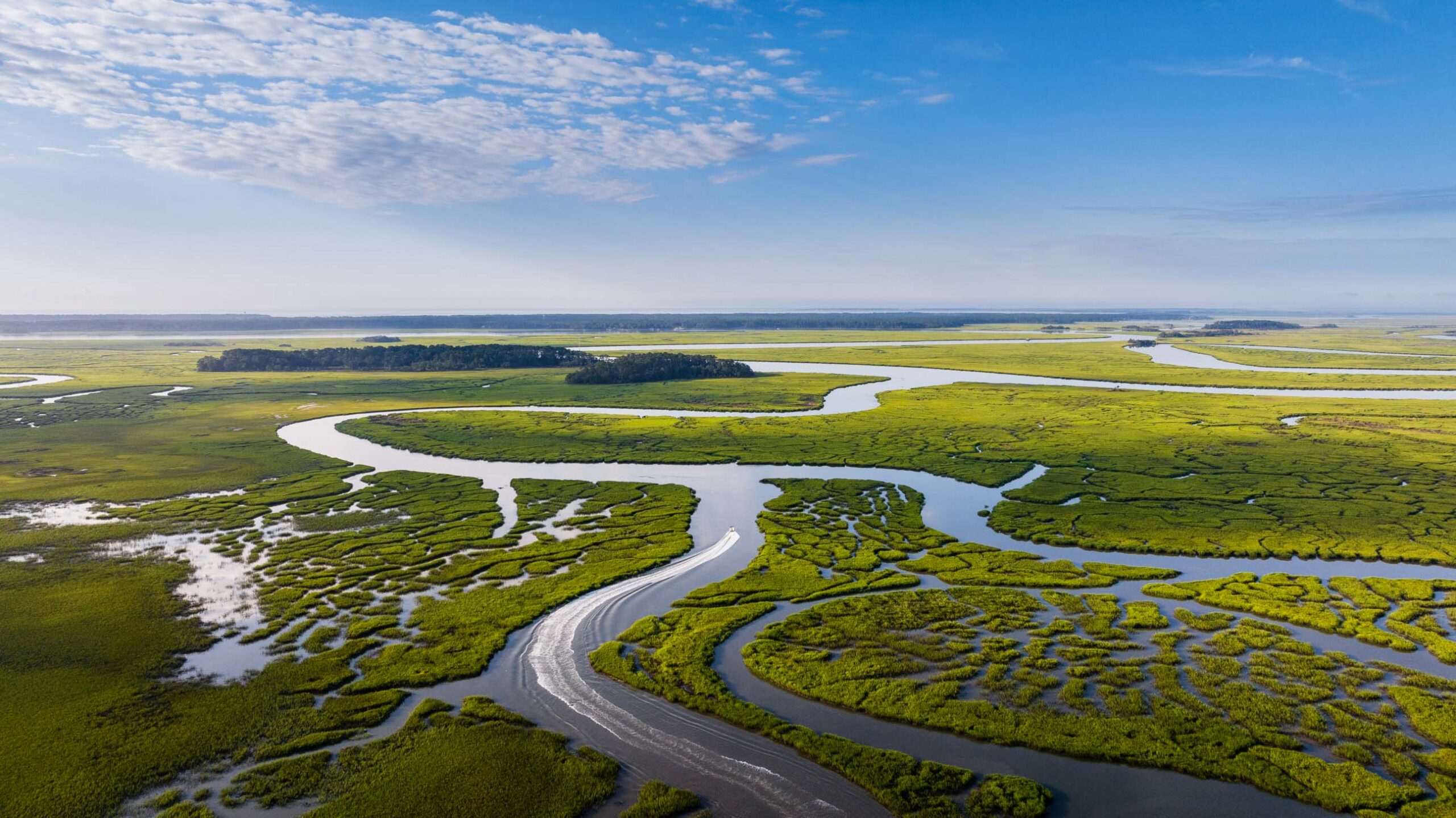
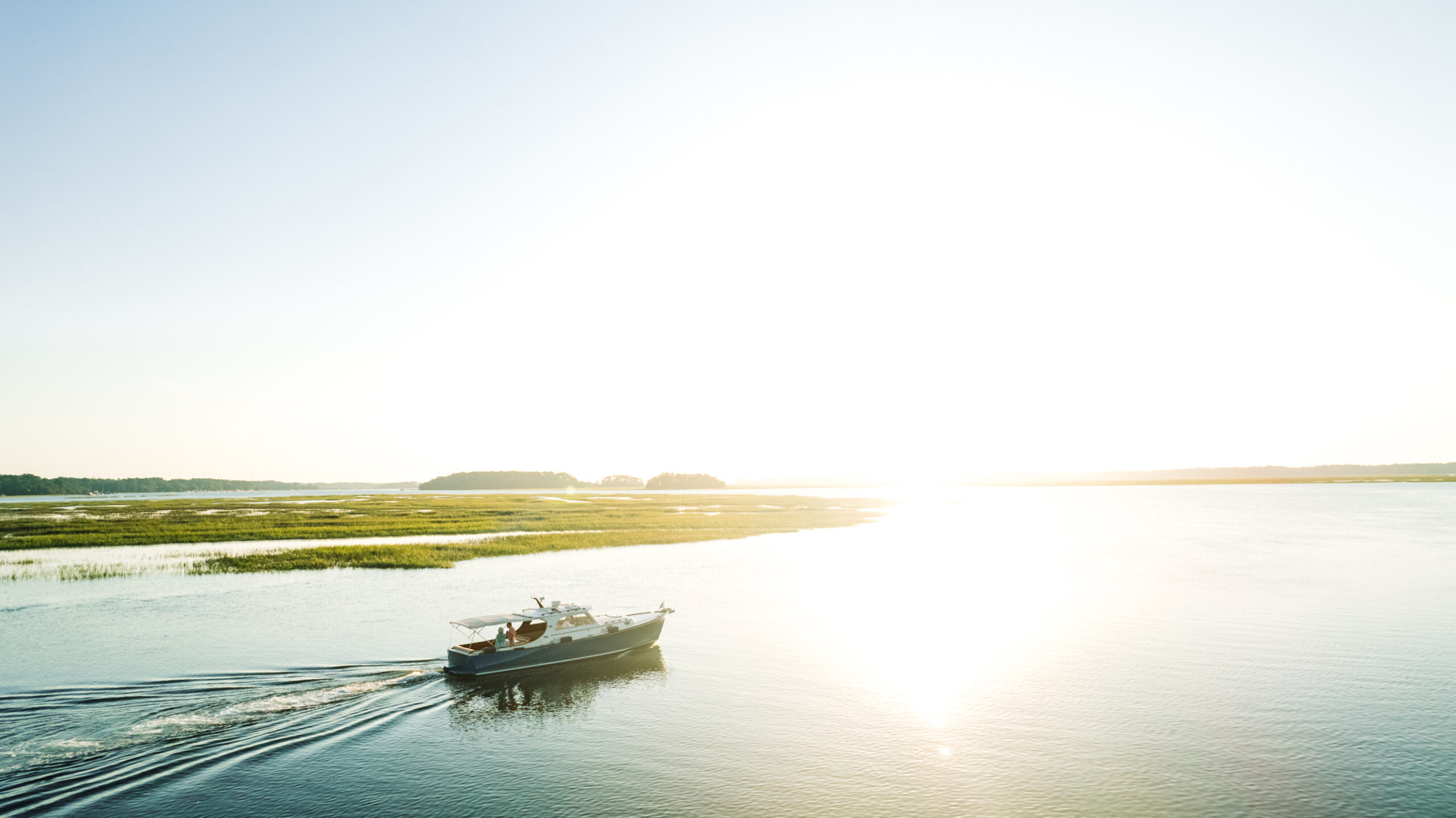
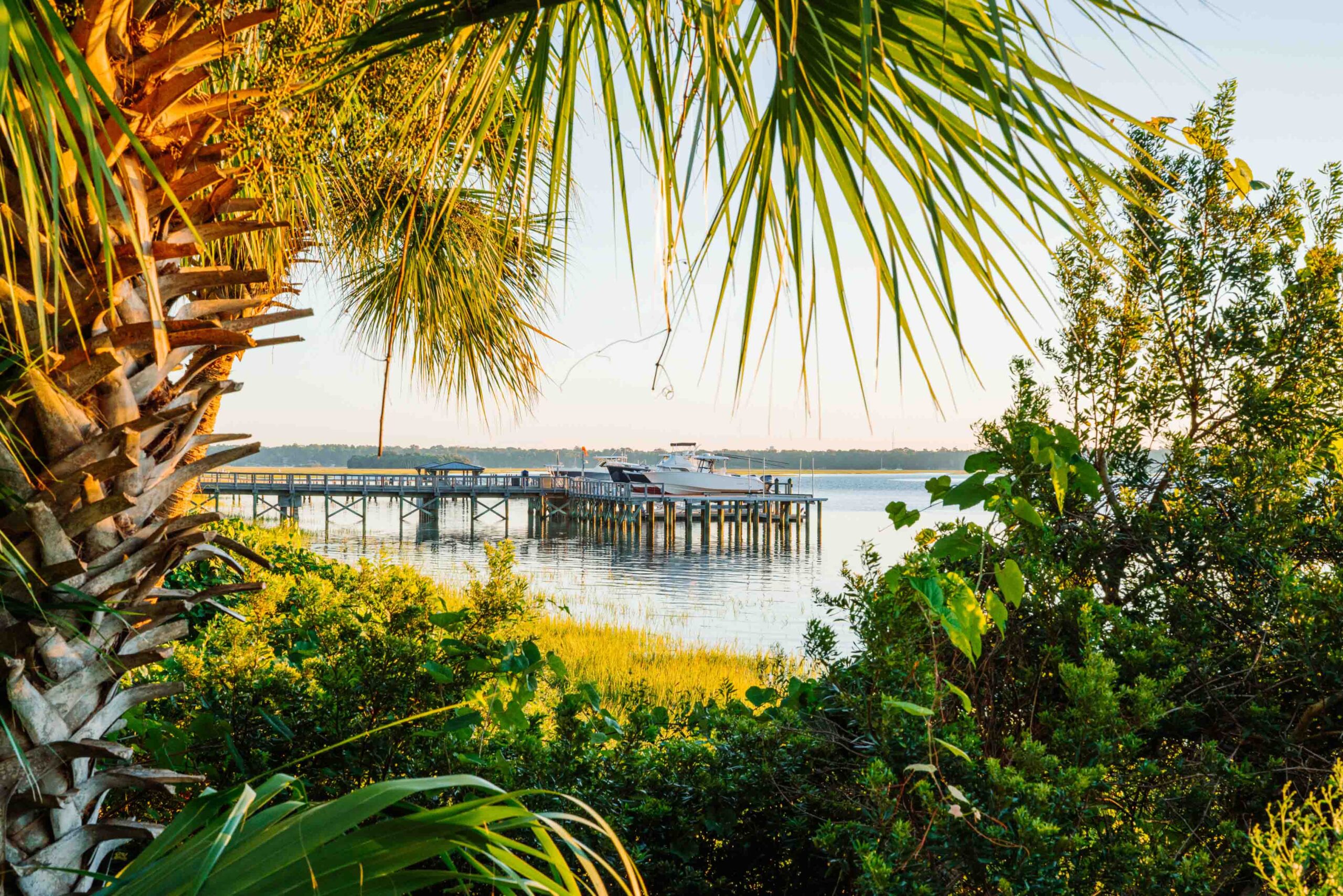
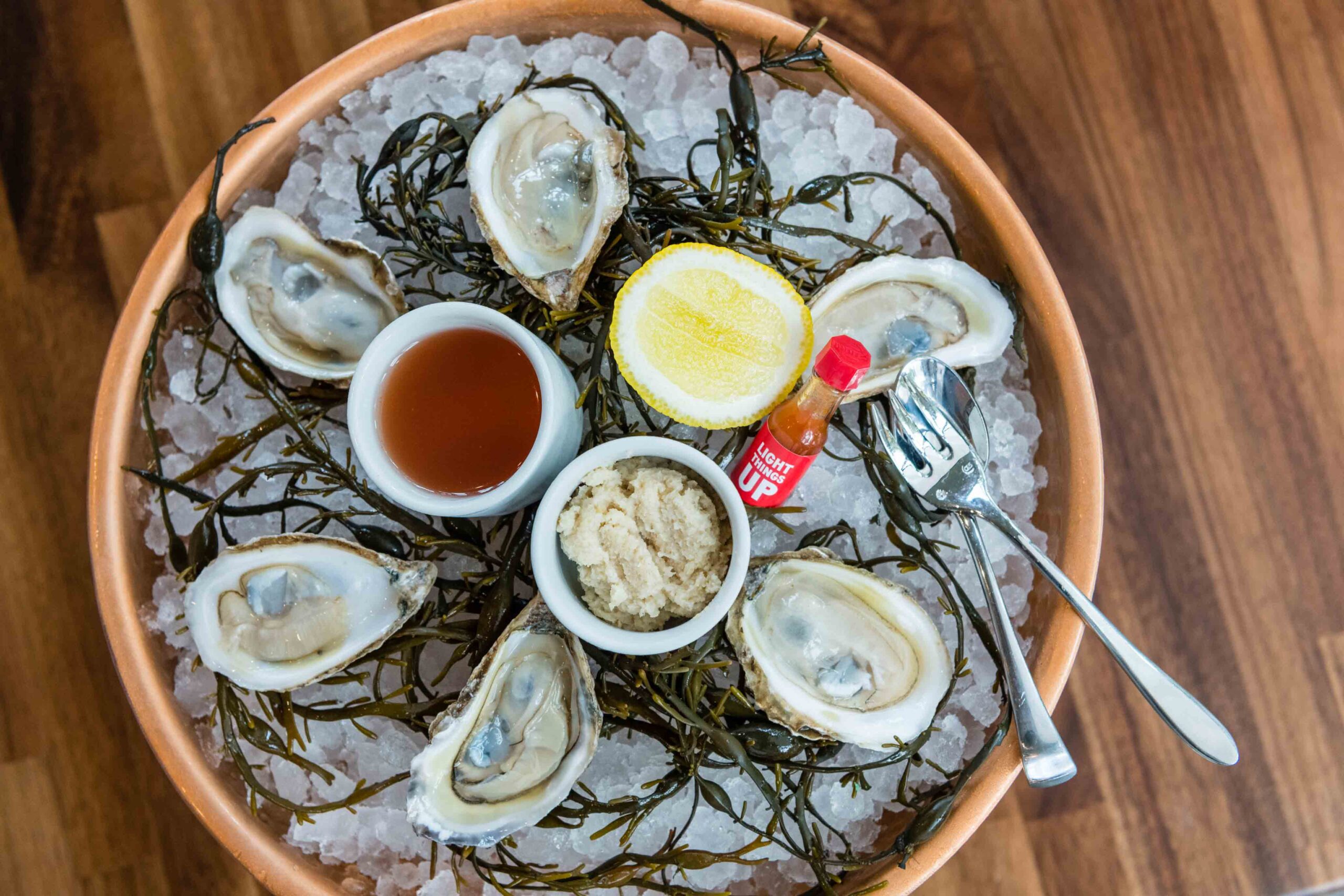
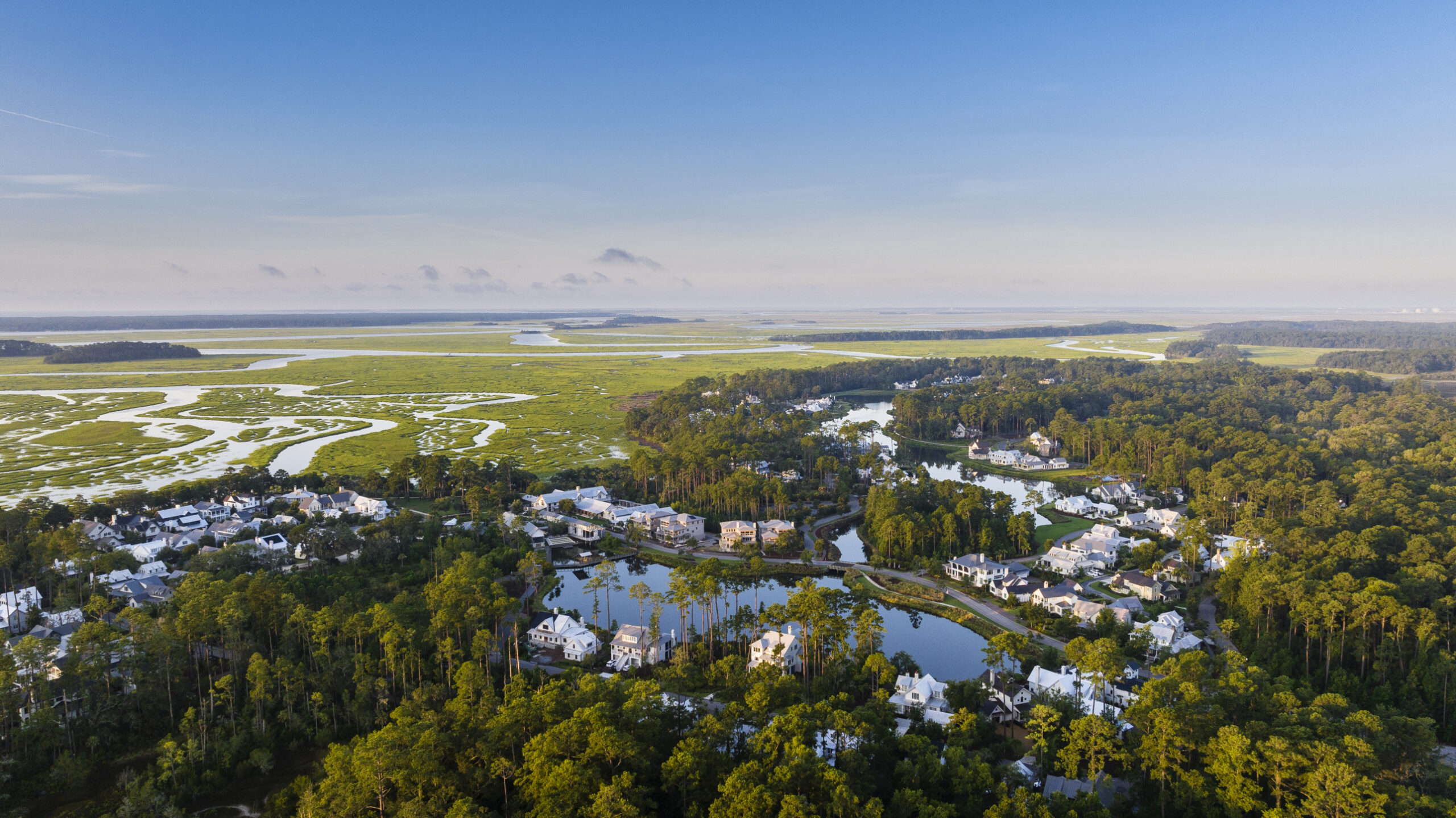
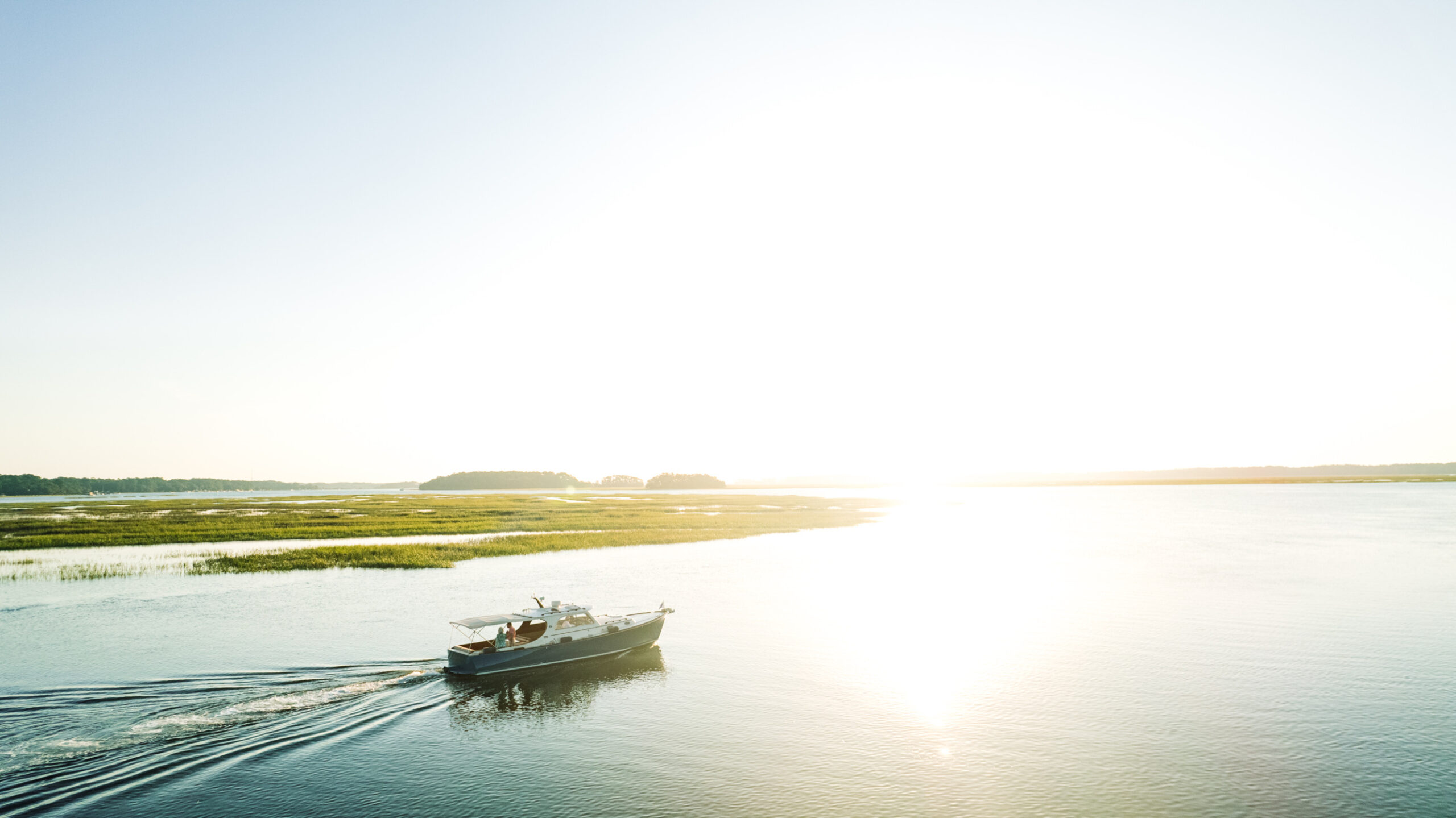
Pop! Click! Snap! A din rings across the marsh from oysters closing their shells, jets of water springing from sealing halves, as water recedes from the intertidal zone.
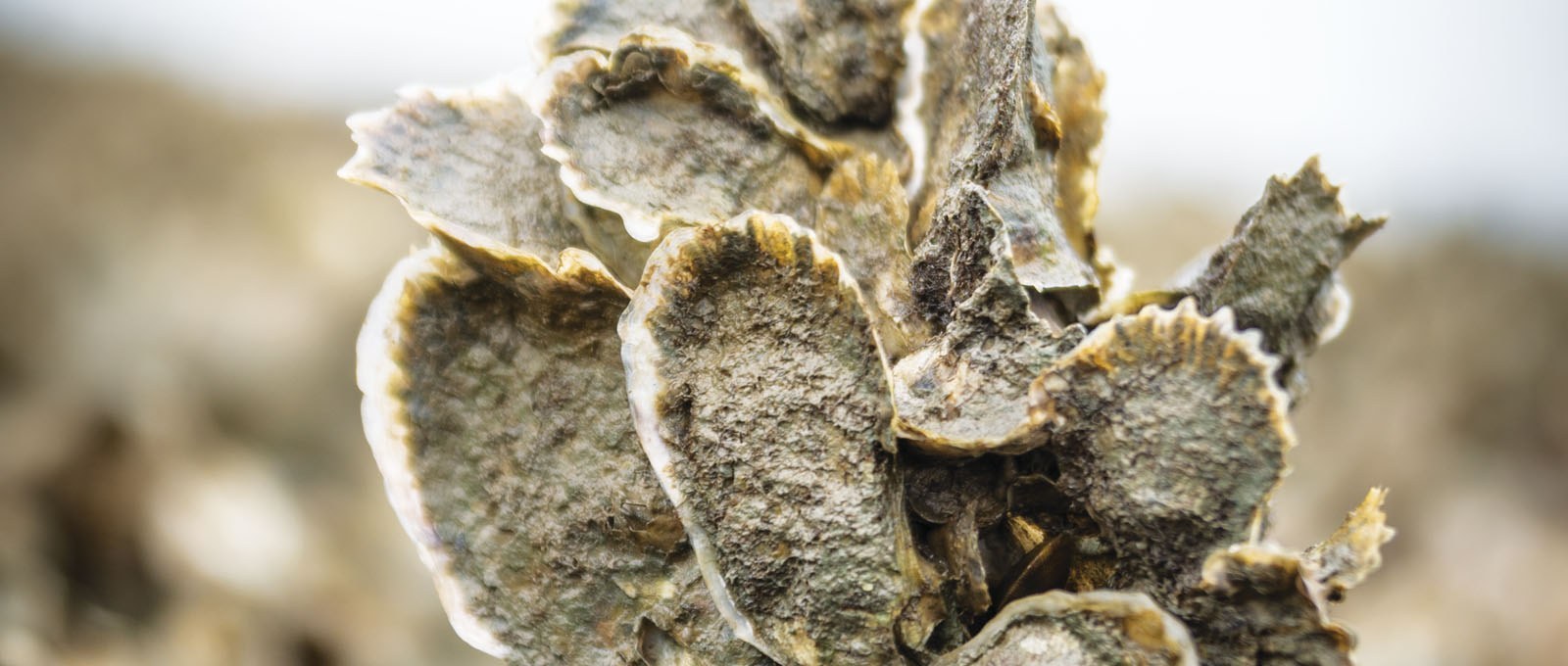
Eastern oysters (Crassostrea virginica), probably known best for their central role in autumnal oyster roasts, are a keystone species in our coastal marshes and provide essential ecosystem functions including erosion control, water filtration, and habitat creation.
Oyster reefs are barriers that break down waves from hurricanes before they hit the mainland, retaining the substrate of our shorelines. Foraging primarily on microscopic phytoplankton, oysters are filter feeders and can filter up to 4 gallons of water per hour. They can even remove pollutants, including heavy metals such as mercury, providing a cleaning service through their foraging activities.
Over 300 species of plants and animals rely on oysters for survival. Oyster reefs provide three-dimensional structures for fish, crabs, shrimp, and other invertebrates on the otherwise fl at bottom of creeks and estuaries. Declines in oyster populations create a trophic cascade of loss, depleting the abundance and diversity of species present throughout the food chain.
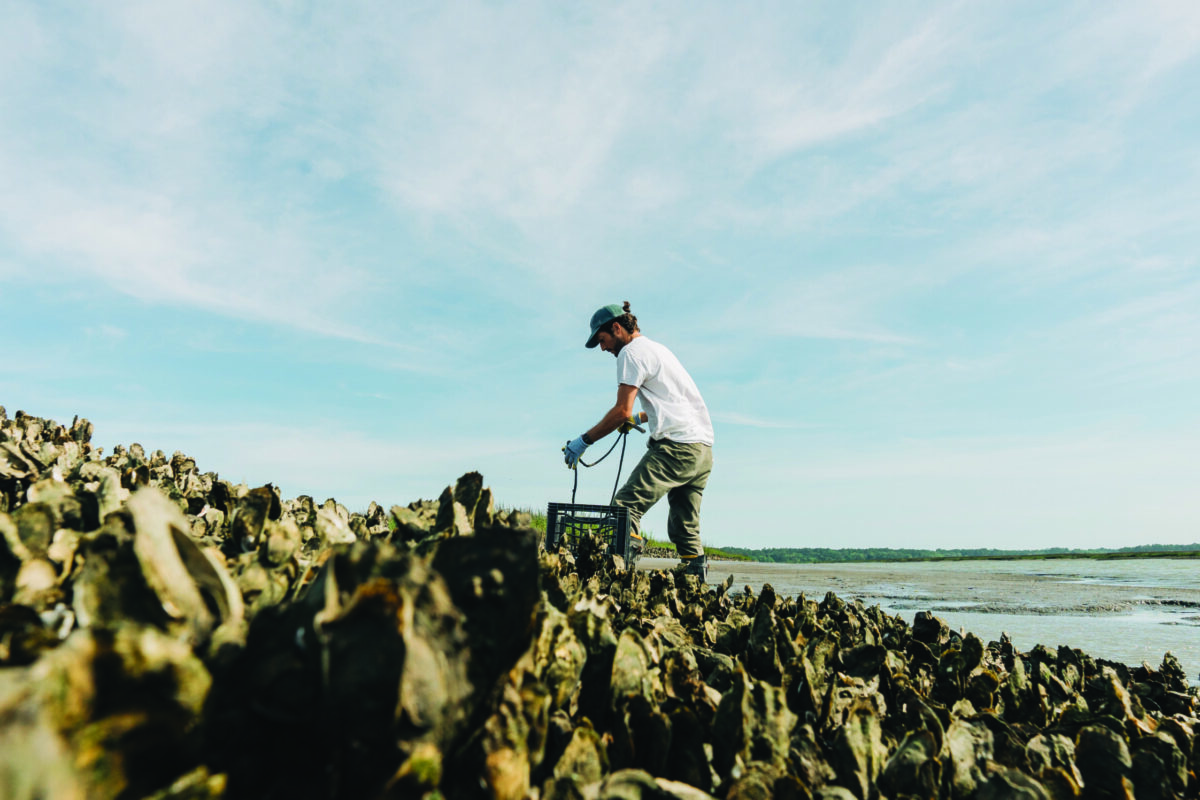
In addition to providing habitat, oysters themselves have specific habitat requirements. Ninety-five percent of eastern oysters live in the intertidal zone, the space within tidal creeks covered during high tide and exposed during low tide. If oysters are too deep, they are unable to compete with more benthic species such as boring sponges. If oysters are too shallow, they reduce the amount of time they can spend feeding. The intertidal zone provides important advantages for oysters, and the success of restored reefs depends on specific placement within this zone.
The oyster life cycle is surprisingly complex. Spawning begins in April when adults broadcast sperm and eggs into the water column, peaks during the summer, and continues into October. During this period, 50 percent of the tissue within the oysters is comprised of gonads—the organs that produce eggs and sperm. Resulting larvae have poor locomotory skills and rely on tides for transport, spending their first two weeks floating with currents while developing into more complex larval stages. Around two weeks old, they form their final larval stage and begin to sink to the creek bottom. This final stage is different from previous ones in that the larva has a “foot” that allows it to be somewhat mobile, crawling over the creek bottom in search of a sustainable place to permanently rest.
Oyster larvae need hard substrates to which they can attach, preferring the shells of other oysters—both alive and dead. Once the larva finds a substrate, it permanently cements itself to that location and metamorphizes into a small version of its adult form. It grows rapidly, becoming mature in two to three years. Eastern oysters are protandrous hermaphrodites, maturing first as males and transitioning to females when they are older and larger.
Females can produce more than 100 million eggs in a single year—with the waters along coastal South Carolina filled with oyster larvae during the summer months. Unfortunately, this same water lacks an abundance of substrate to which larvae can attach. Over-harvesting and habitat loss—including the depletion of oyster shell substrate—have contributed to significant declines in oyster populations. Less than 20 percent of historic oyster reefs currently exist along U.S. coastlines.
Fortunately, there is something we can all do to help. The South Carolina Department of Natural Resources oversees the South Carolina Oyster Restoration and Enhancement (SCORE) program, which obtains oyster shells from citizens through shell drop-off centers, then quarantines and recycles them through the creation of new reefs.
To learn more about SCORE, visit score.dnr.sc.gov.
%GALLERY%