










































Written by Palmetto Bluff
Jun 02, 2021

May’s bird watching excitement kicked off on May 8th with the annual World Migratory Bird Day, also known as the Global Big Day. This international citizen science effort involves people going out and bird watching throughout the day and submitting their sightings via eBird. I spent the Big Day seeking any birds I could find at Palmetto Bluff. I traveled to six locations on property either by myself or with residents. All of the trails we walked on Saturday were the same as the previous year. Walking the same trails helps create comparable information between the years. By the end of the day, we managed to document 57 species! This count is slightly lower than the 60 seen in 2020, but it was still a successful day.

We did not see as many migratory warblers on the Big Day compared to 2020, and one of the potential reasons could be attributed to a slow migration along the southeast coast the night before. How do we know it was a slow night? We checked the Birdcast. Birdcast is a collaborative effort between multiple universities that looks at temperature, wind, rain, and other factors connected to migration. This information is then used to create a 3-day ‘bird forecast.’ Along with the projected birdcast, they also archive the data from each night for people to look back on and see when and where birds were flying. While the migration was not in our favor for migratory warblers on the 2021 Big Day, we still managed to see some unique and fun sightings. Painted buntings moved among the brush in River Road Preserve, summer tanagers sang all throughout the Bluff, and a surprise ruby-throated hummingbird zipped around the Conservancy’s shop.
![Red-headed Woodpecker [Photo provided by Annie Kosk]](https://palmettobluff1.wpengine.com/wp-content/uploads/2023/02/Red-headed-Woodpecker-Annie-Kosh.jpg)
Birds that were seen in May, but not on the Big Day, include yellow-billed cuckoos, which could be heard all over the Bluff. Cuckoos are colloquially known as storm crows as their calls are thought to herald rain. May proved this to be an old wives’ tale as we had a fairly dry month. The blue grosbeaks were another common sighting as they continued to establish their territories for the breeding season. The star bird of the month was a magnolia warbler seen near the Conservancy classroom. Magnolia warblers are a migratory species mainly seen during the fall migration, which makes this spring sighting even more spectacular.

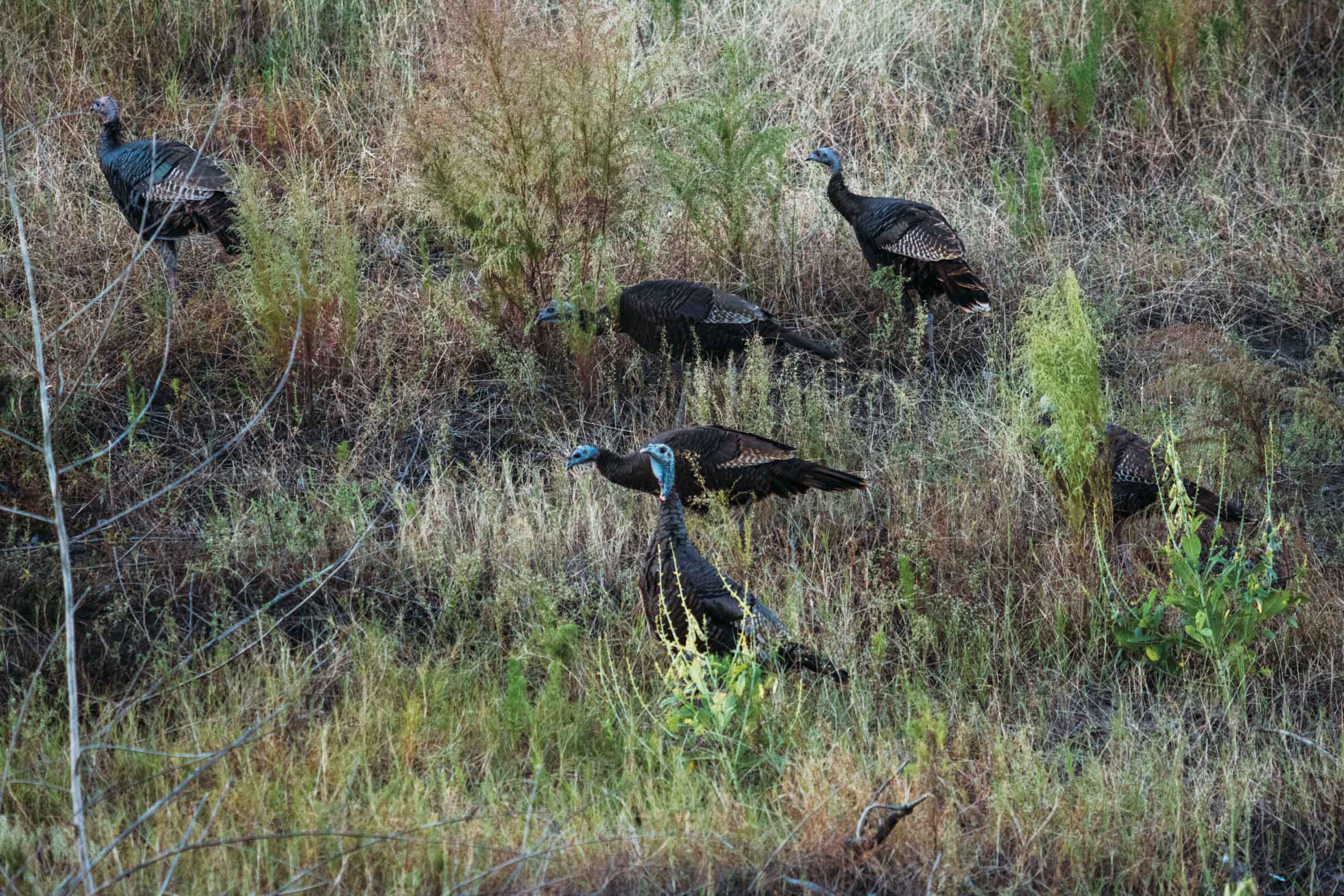
Breeding activity was consistent throughout May. At least three turkey hens with poults, or chicks, were seen moving around the Bluff, and each hen had 10-14 chicks. Roughly thirty new turkeys make it sound like we should be covered in them, right? Not quite. Producing a large number of young is a reproductive strategy to help offset predation. Lots of animals eat turkey eggs, chicks, and adults.

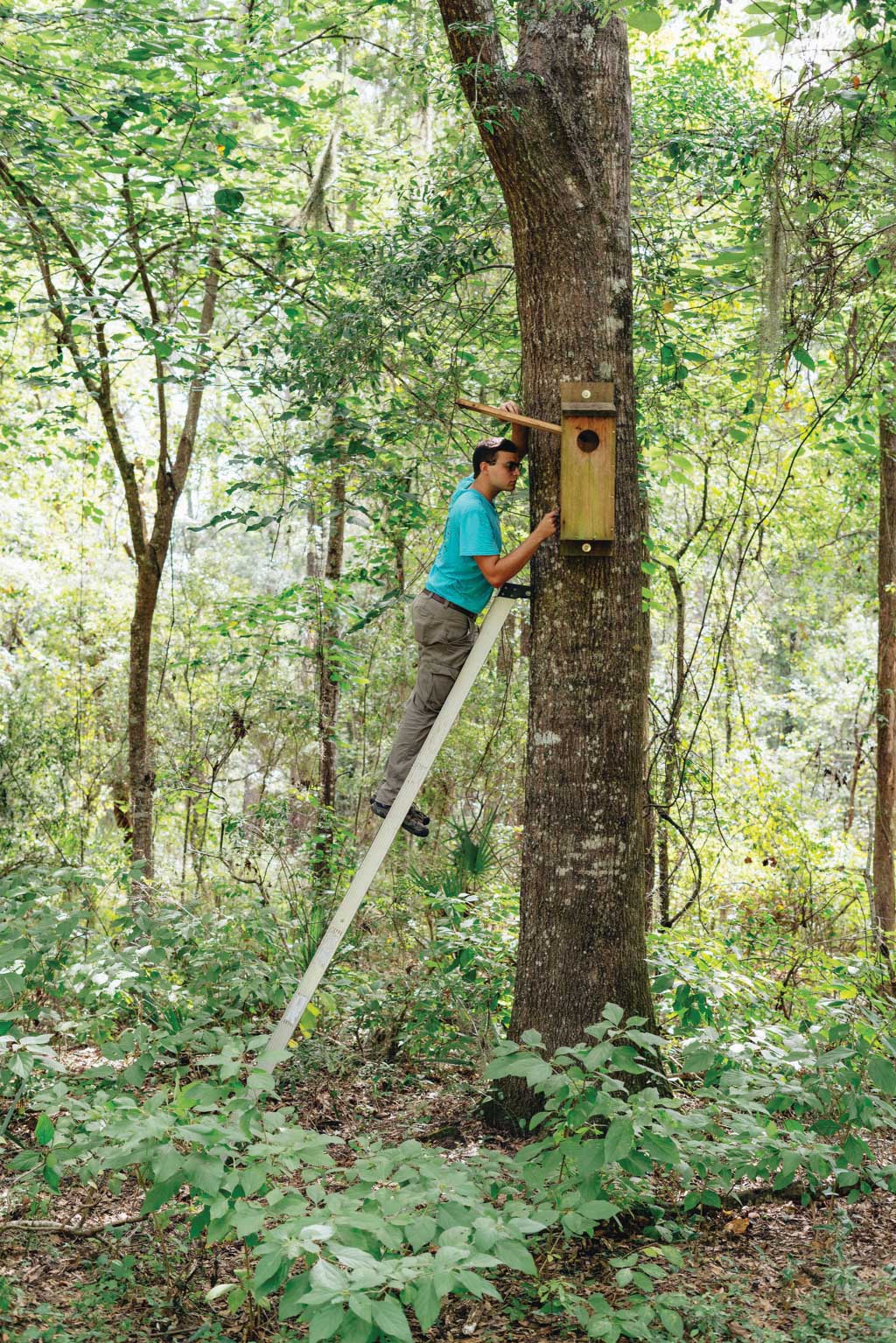
On the topic of predation, some of the Conservancy’s bluebird boxes were visited by snakes, raccoons, and flying squirrels.

While some nests did not make it, many of the bluebirds were successful and have already begun their second clutch of eggs.

Blanca, the leucistic bluebird, had an unsuccessful first nest. Her first eggs were potentially duds and were buried under new nest material. She then laid another clutch of eggs and is now the momma of two chicks.
![Leucistic bluebird [Photo provided by Lydia Moore]](https://palmettobluff1.wpengine.com/wp-content/uploads/2023/02/Leucistic-Bluebird-Lydia-Moore.jpg)
Bluebirds and turkeys were not the only young birds seen at Palmetto Bluff. Fledglings of Carolina chickadees, brown-headed nuthatches, brown thrashers, and northern cardinals were observed following their parents around and begging for food.

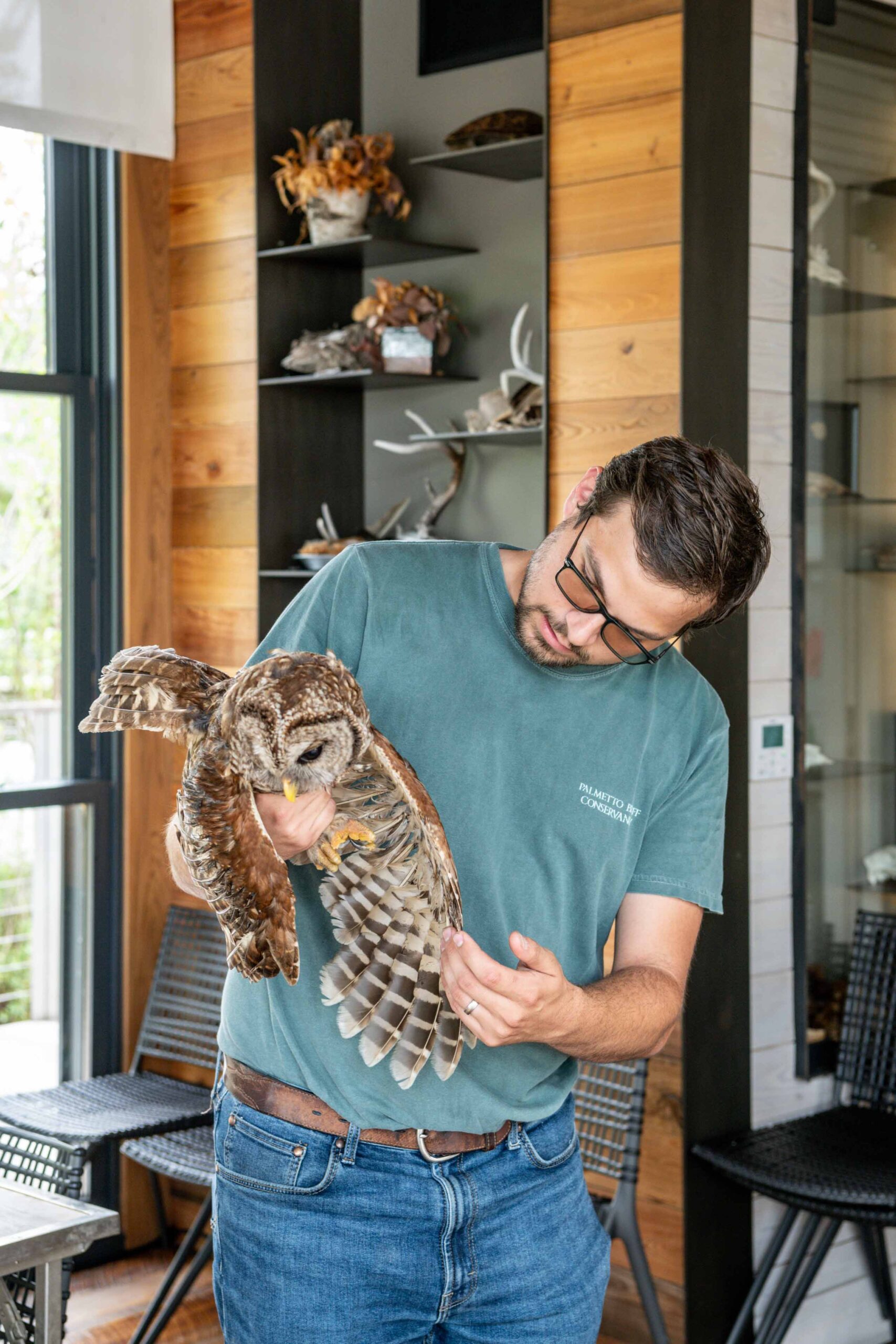
In our cavity nest boxes, the eastern screech-owl chicks had grown quickly throughout May and will likely be gone when the Conservancy checks them again in June.

Moving into the beginning of summer, activity will switch gears as the migration ends and the nesting season takes off.

I would like to take this time to talk about some of the different nesting behaviors for birds you can find at Palmetto Bluff in June. Carolina chickadees and brown-headed nuthatches are both cavity-nesting birds that will be finishing their nesting season by the beginning of the month. These are species that have a single brood in a year and will spend most of June teaching their offspring survival skills.
In contrast, Eastern bluebirds and Carolina wrens will be busy tending to their second, and potentially third, clutch of eggs. An interesting difference between these two multi-nesters is that bluebirds often use the same cavity, or birdhouse, for each brood, while Carolina wrens build entirely new nests for each clutch.

Northern cardinals, blue grosbeaks, and painted buntings all build cup-shaped nests and will be busy laying eggs in June. All three species choose dense shrubs for their nesting locations. Summer tanagers and eastern kingbirds also build cup-shaped nests, but they will be located along horizontal tree limbs. Kingbirds tend to select exposed sites, occasionally positioned over water. Meanwhile, summer tanagers choose branches hanging over the open ground that are still sheltered with a closed canopy. Chimney swifts are also technically cup nest builders – it is the location of their nests that make them unique! Before European colonization, they used tree hollows for their nesting sites. By the 1790s, their breeding activity was observed to be almost entirely in chimneys and other buildings. While they are occasionally documented using natural cavities, they have become dependent on manmade structures for nesting sites.
Shifting our focus to warblers, the pine and yellow-throated warblers are two year-round species that will hit the peak of their breeding season in June.

The ovenbird, a migratory warbler, will spend most of the month building their nests and laying eggs. Each of these warblers has a different nesting behavior and can be found in various areas of the Bluff. Pine warblers build nests within clusters of pine needles and will likely stay high up in the canopy. Yellow-throated warblers’ nests may be found in the crotches of tree limbs or be built within Spanish moss. Ovenbirds are the most unique out of the aforementioned warblers as they build a dome-shaped nest on the ground.

The last species we will mention that breeds in June is the elusive chuck-will’s-widow. Similar to the ovenbird, chuck-will’s are a ground-nesting species. Unlike an ovenbird’s domed nest, they form a shallow bowl in the ground for their eggs and rely on their cryptic coloration to blend in with leaf litter. They are such secretive animals that their population is difficult to estimate. Thankfully, the Center for Conservation Biology established the Nightjar Survey Network to help document these nocturnal birds. The network is a citizen science program aimed to monitor chuck-will’s-widows and other nightjar populations throughout North America. The Conservancy will be participating in June to add to this effort. If you live outside of Palmetto Bluff and want to get involved, check out the Nightjar Survey Network website to learn how to conduct your own survey.
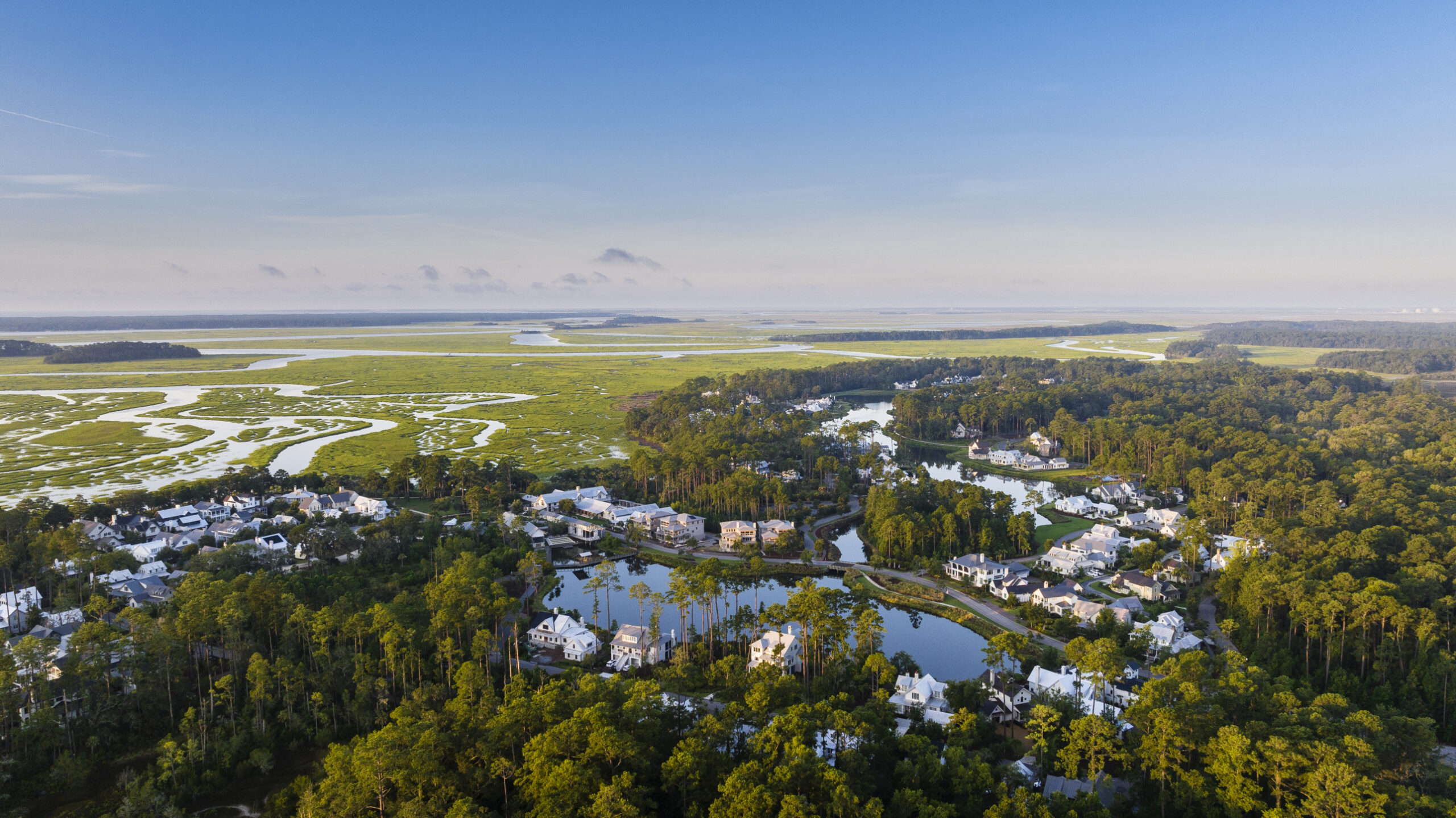
The migration may be over until the fall, but the bird diversity at Palmetto Bluff is still phenomenal during the summer months. If you see or photograph something you wish to share, you can submit your sightings to Aaron Palmieri at apalmieri@pbconservancy.org and they may appear in next month’s update!
![Cooper's Hawk [Photo provided by Ken Peters]](https://palmettobluff1.wpengine.com/wp-content/uploads/2023/02/Coopers-Hawk-Ken-Peters-1.jpg)
May’s Unique Sightings:
May Contributors:
Jay Walea, Justin Hardy, Lydia Moore, Paul & Jeanne Yhouse, Bob & Terri Dalton, Carol Hevey, Ken Peters, Annie Kosh, John Capps, Jean Andersen
