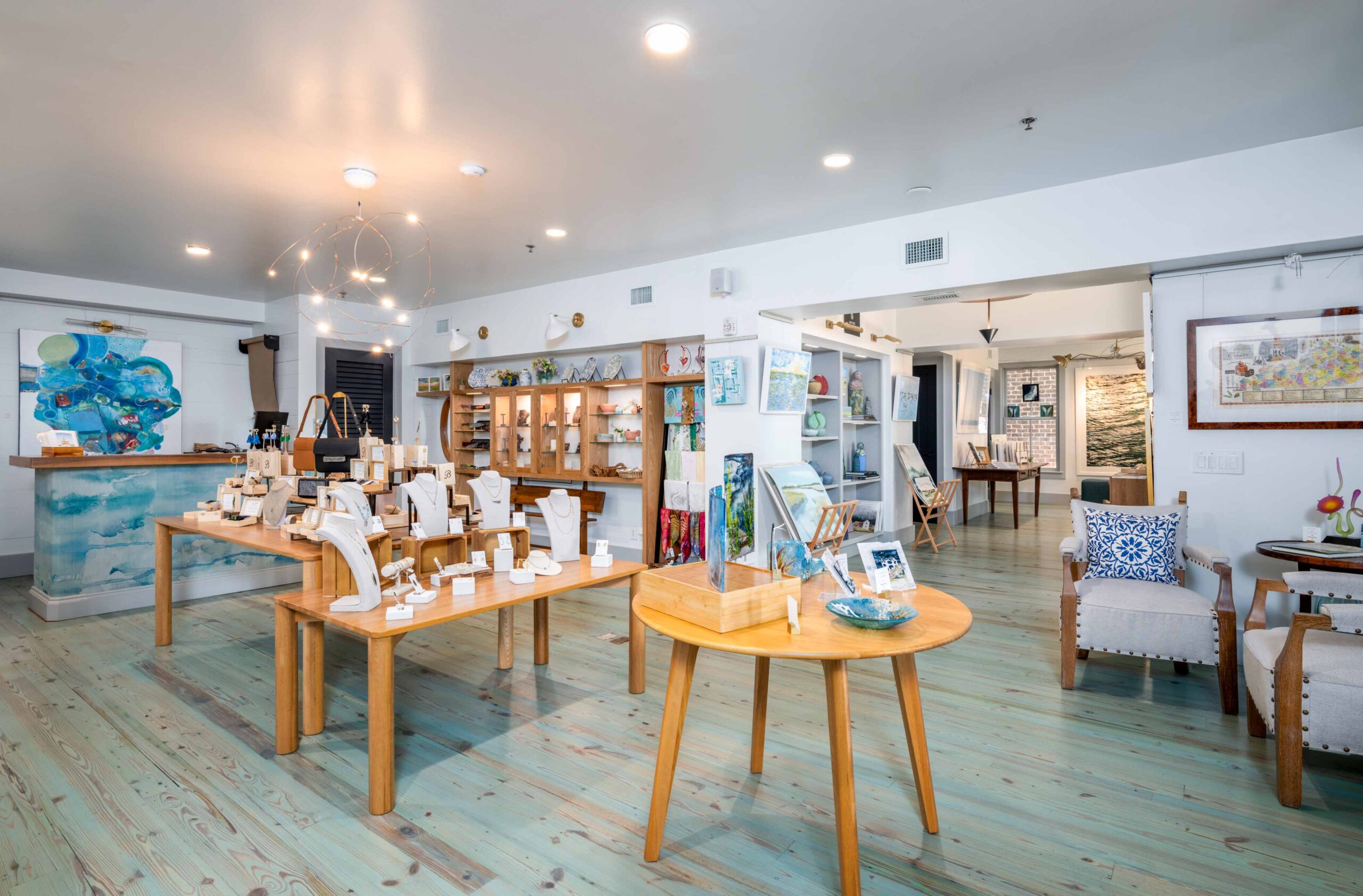
Palmetto Bluff Real Estate Company Sales Office
Office Hours
Monday-Friday 9am - 5pm
Saturday 9am - 4pm
Sunday 12 - 4pm
Saturday 9am - 4pm
Sunday 12 - 4pm
How did you first get involved with Palmetto Bluff?
I believe it was the fall of 2000. Crescent Resources purchased the holdings from Union Camp and my wife Diana was involved in that transition. At the time, the Crescent team was led by Jim Mozley. He conducted a tour of Lowcountry communities and when he came to Kiawah, we gave him the grand tour. After that visit, Jim reached out to me and asked if I would like to be part of the team that was evolving a new concept for Palmetto Bluff. And, of course, I said yes.
Tell me about your first visit.
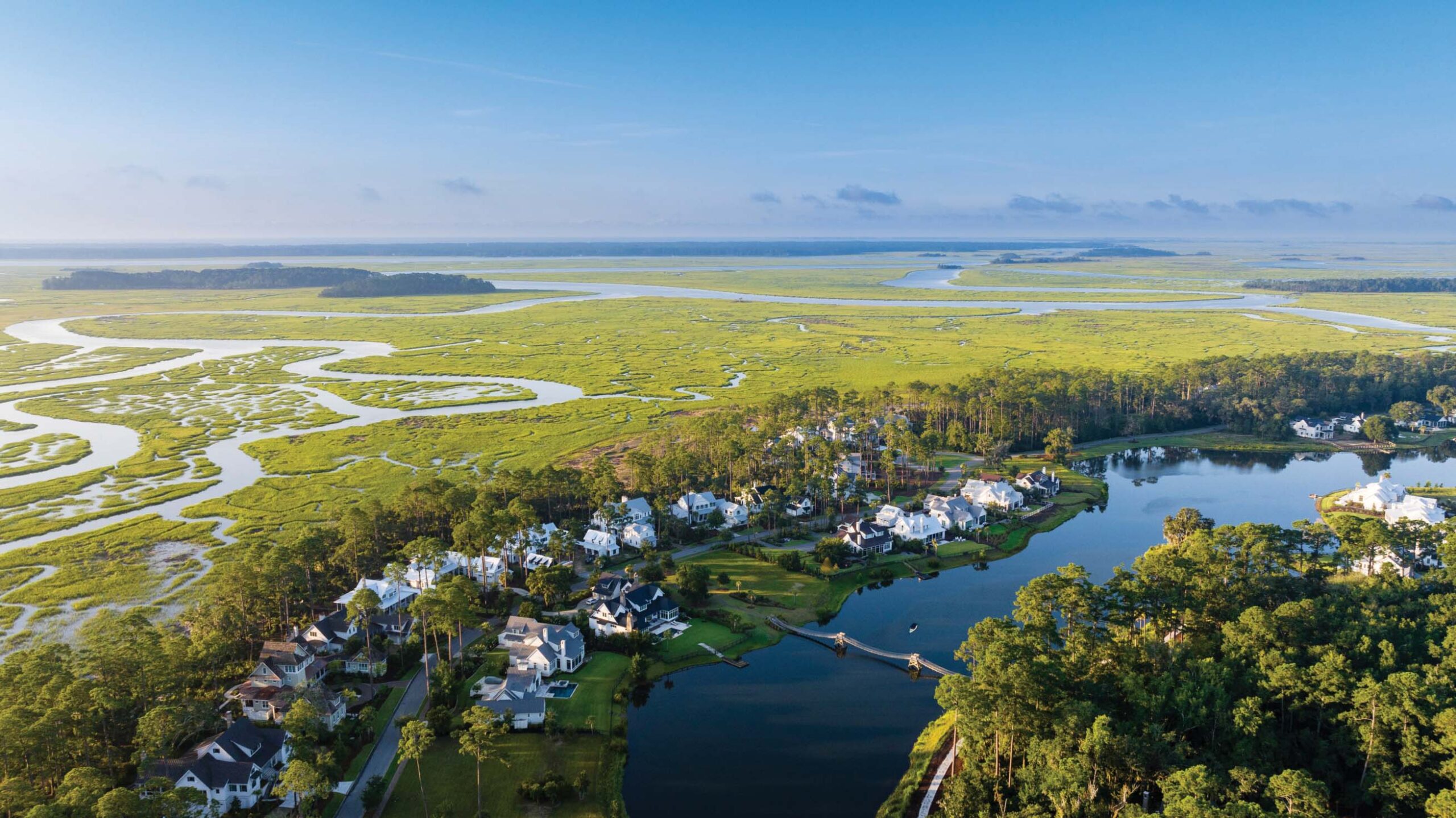
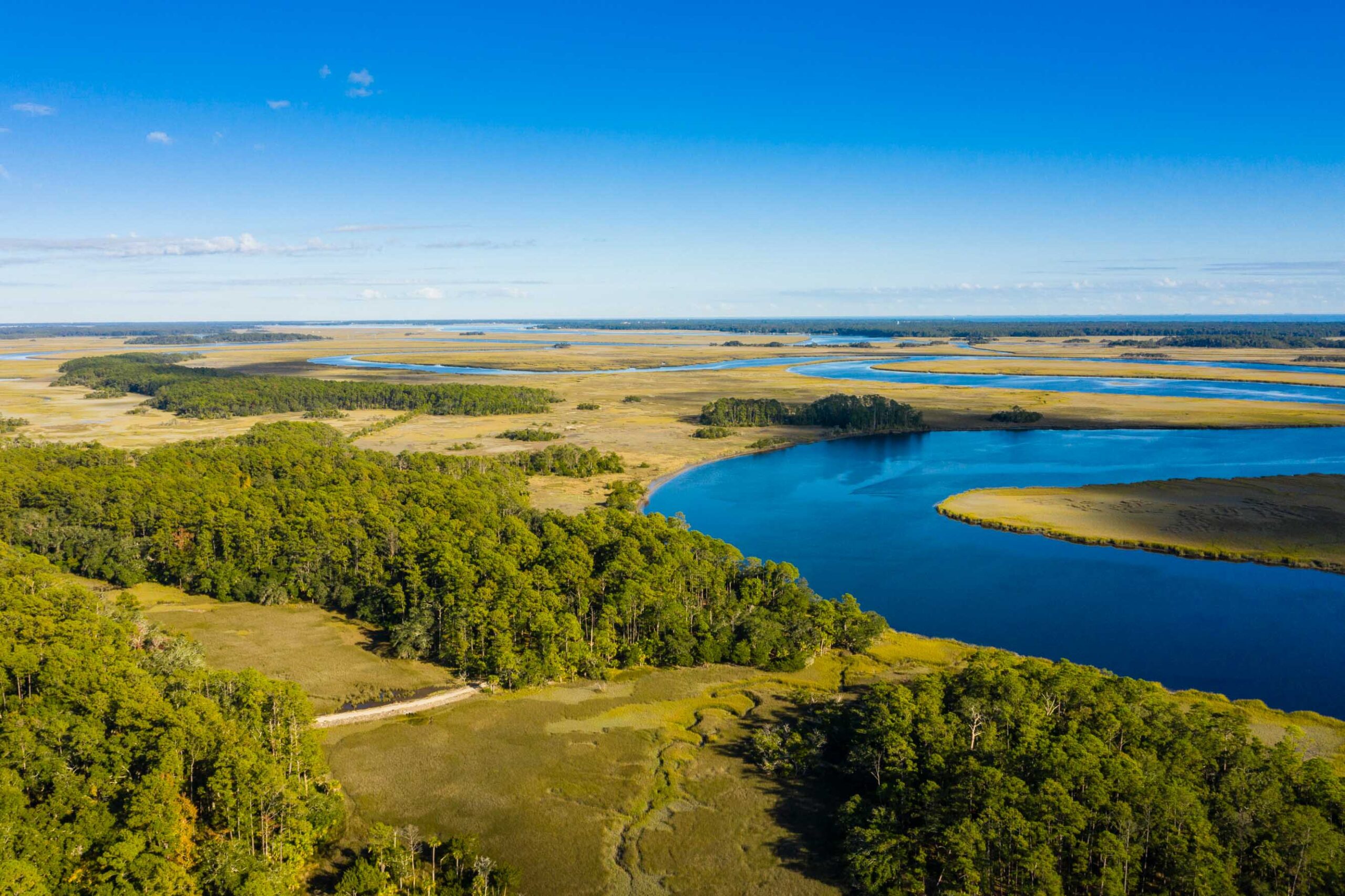
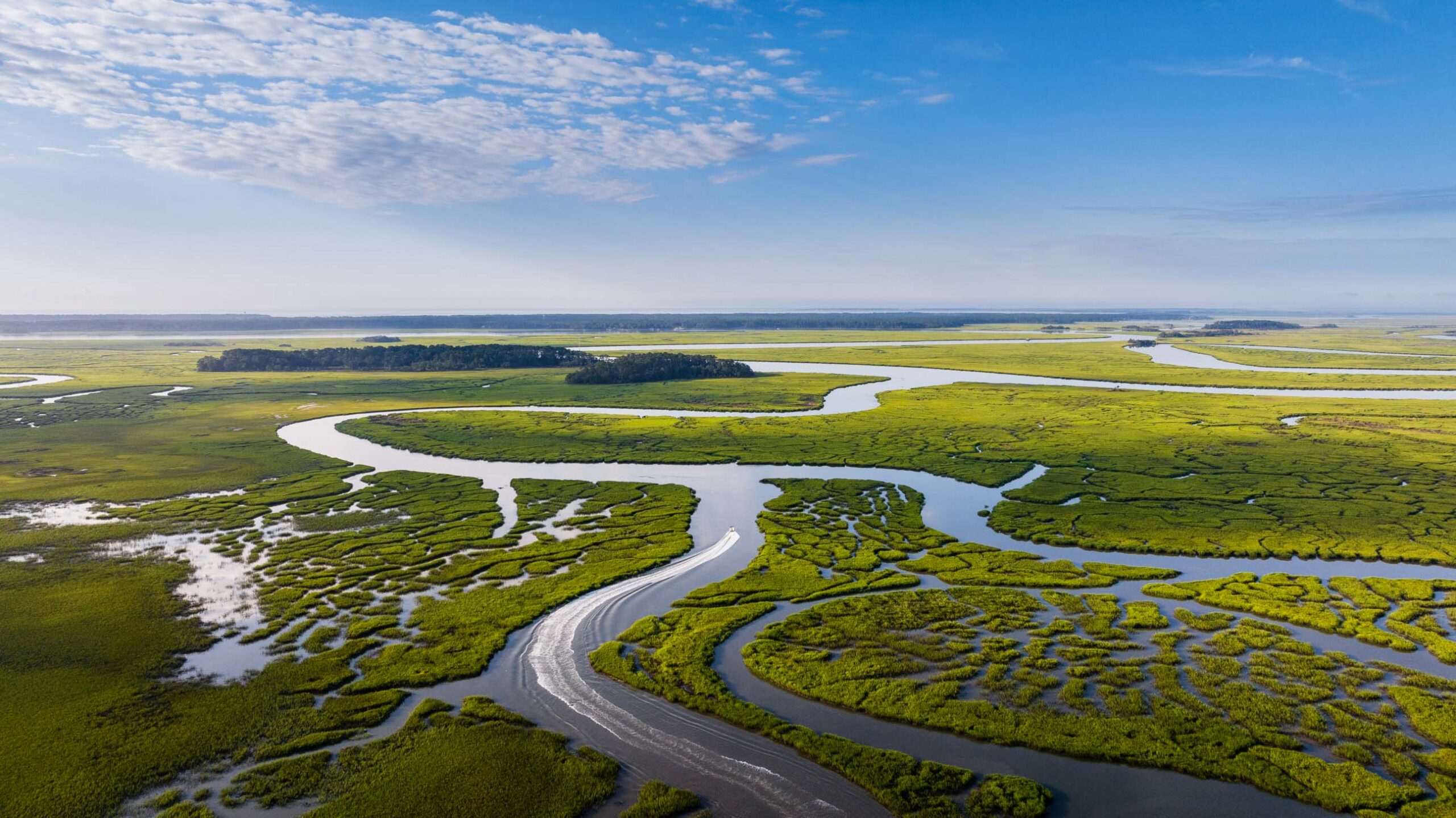
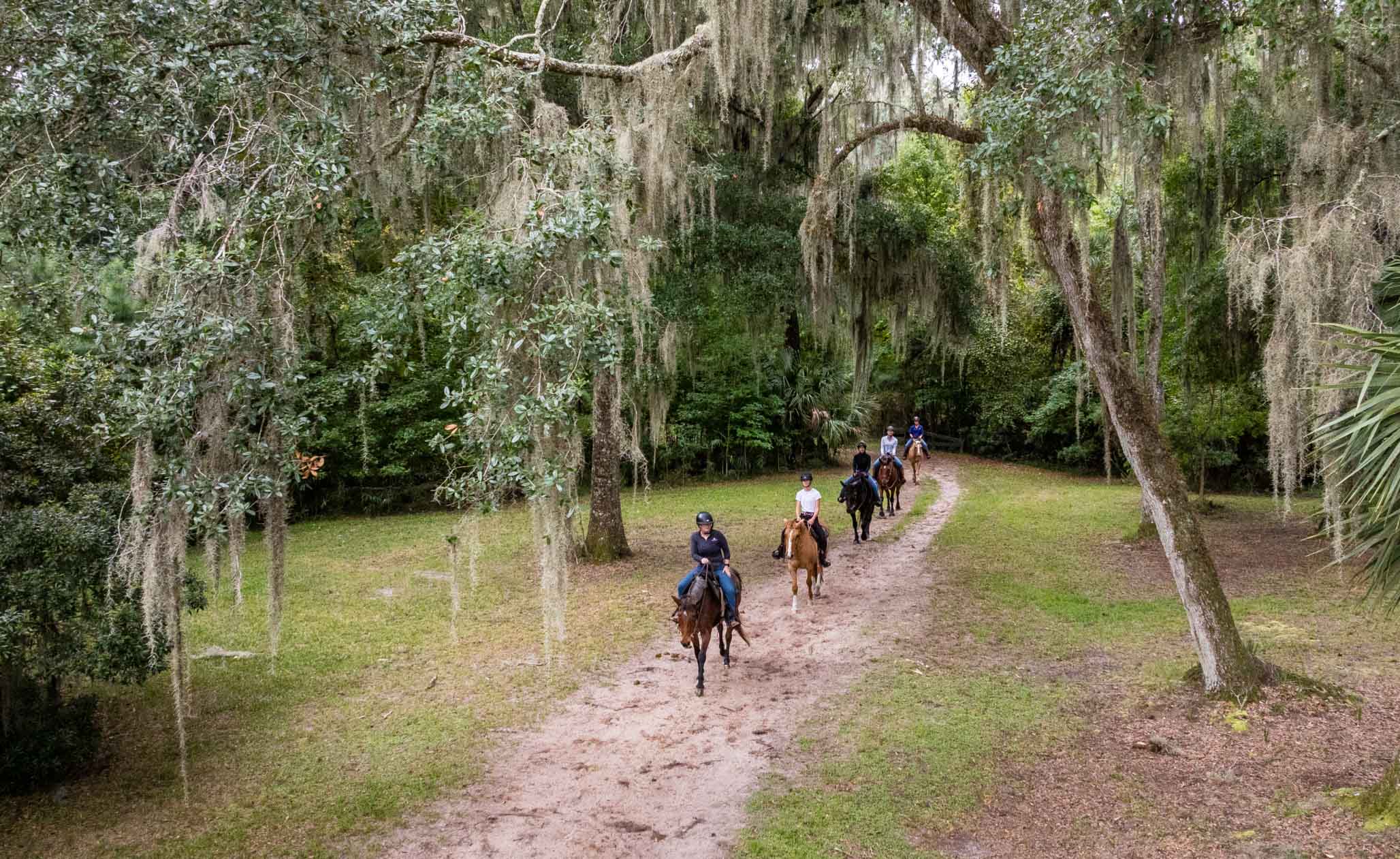
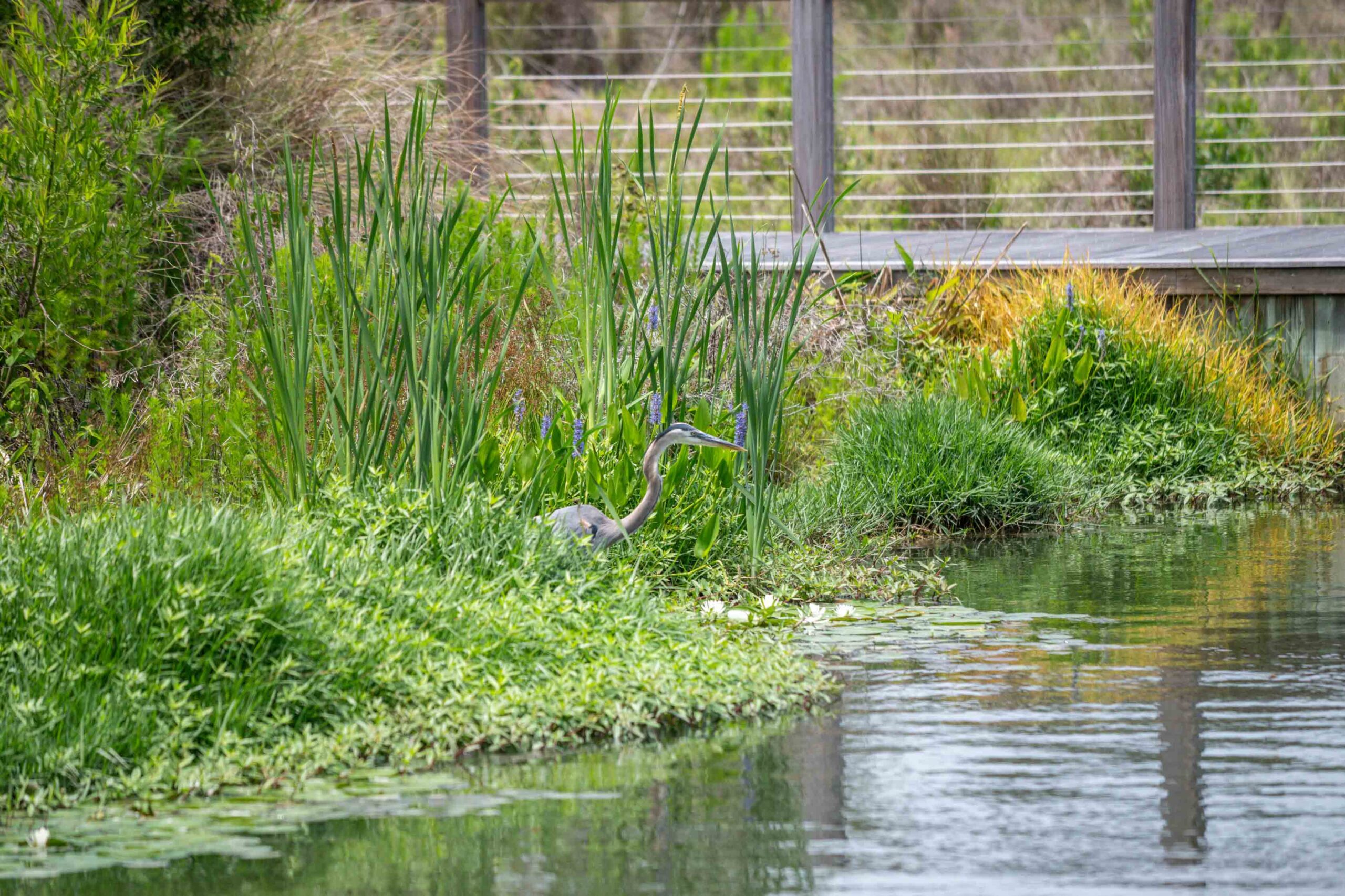
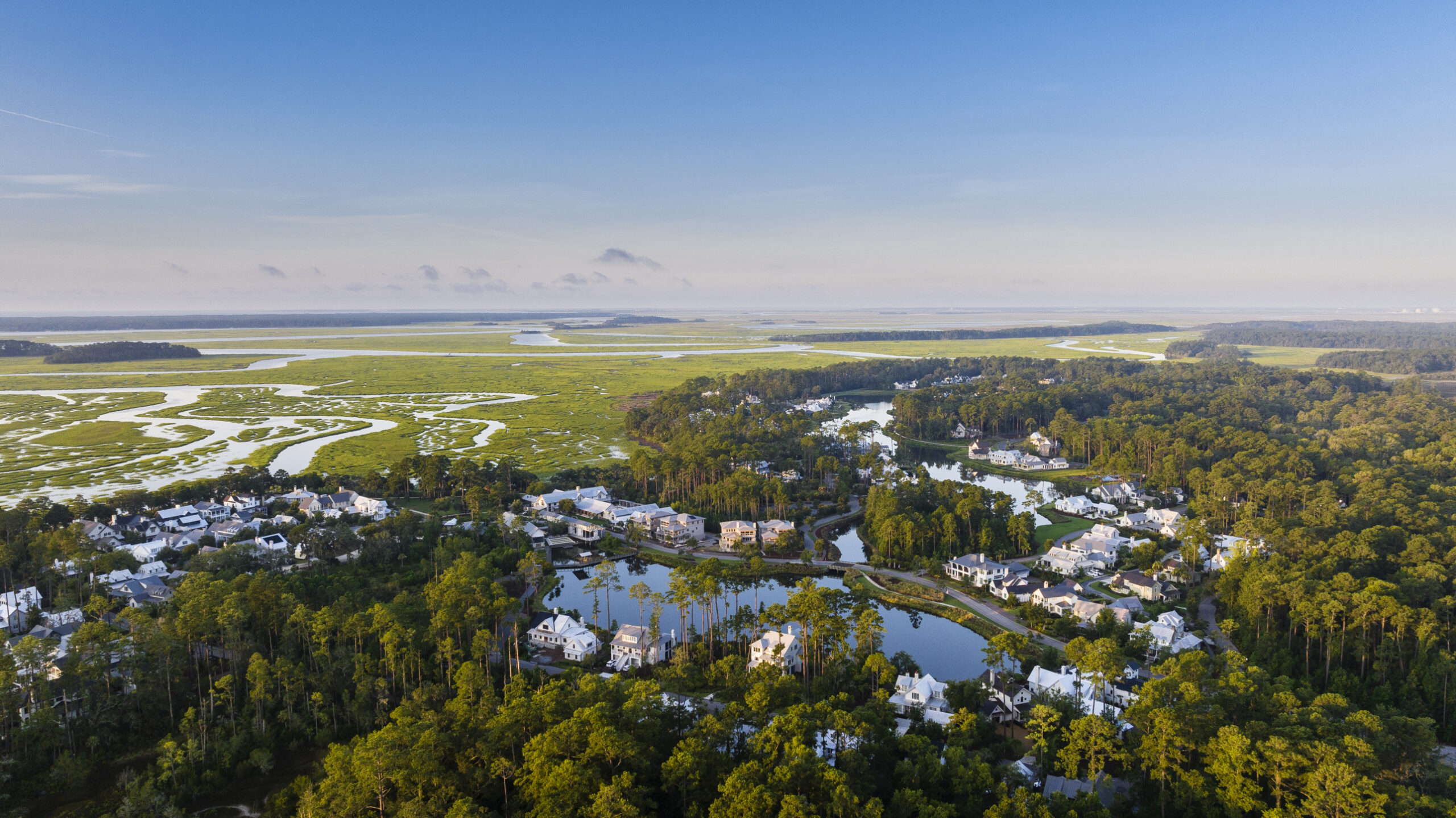
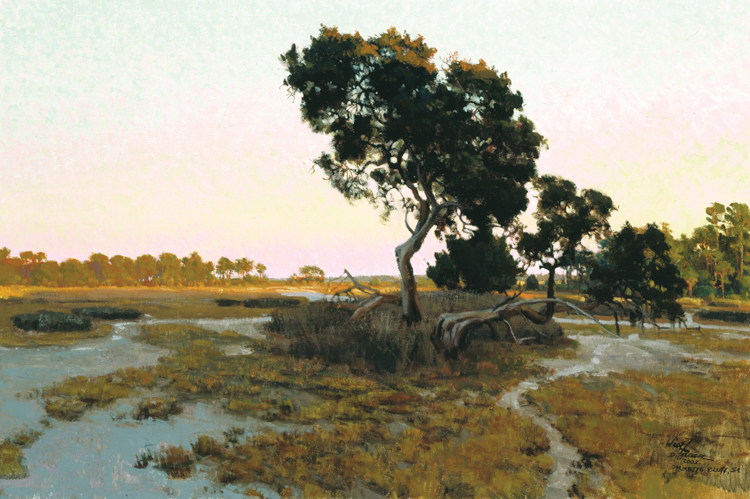
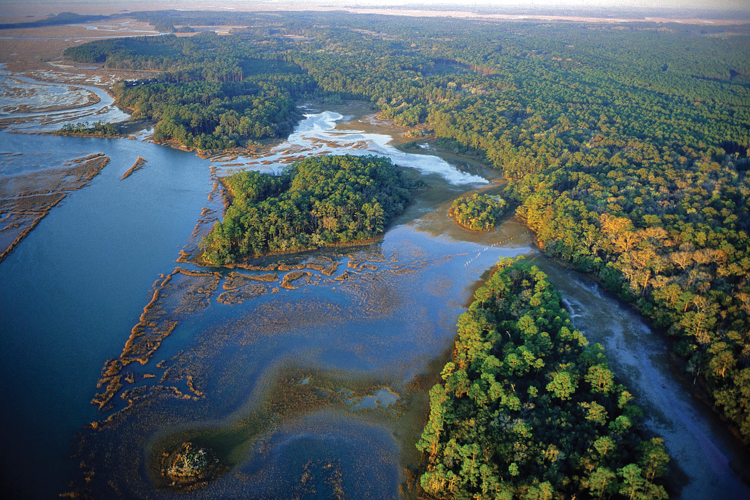
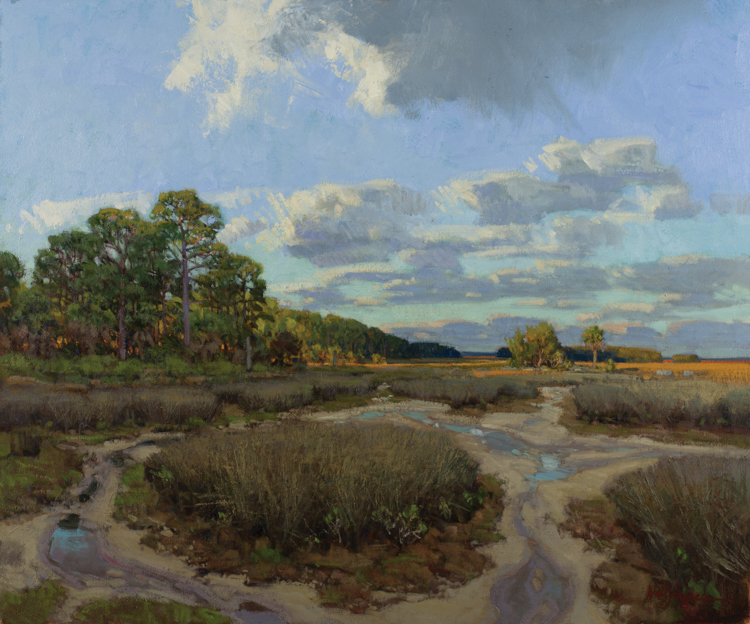
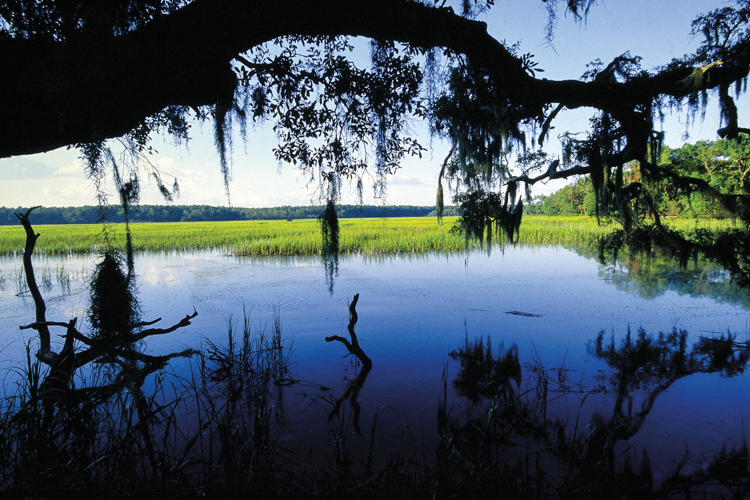
I had heard a lot about the property, mostly from Diana, but seeing it with my own eyes—it took your breath away. It was quintessential Lowcountry land—the vastness of it and its relationship to the surrounding riverine and marshland. It was Fall and the Lowcountry is very unusual during the transition of the marsh grasses, from rich green to golden, almost like wheat. And so it was a powerfully visual day. The sun was right, the breeze was right, the temperature, the humidity. You’re first in a dense maritime forest laden with oaks and pines and magnolias with occasional open savannas, then you bump out to the marsh edge and look over the May River. The contrast in micro environments was compelling, but also the seamlessness of the natural environment—it was very stirring.
What was the vision for Palmetto Bluff?
Mozley assembled an internal team of experienced professionals and brought in Dave Howerton [of Hart Howerton]. We were charged with developing a comprehensive plan. From the beginning the mantra was that this is a place not a project. Jim consistently reminded us that it all begins with the land. At the outset, the highest priority was to assess the natural features of the land through a lot of intense analysis. Through that analysis the team identified the best areas for “settlements”. Wilson Village was the first, Moreland Village was second. And Anson was to be the potential third. The choice to start with Wilson Village was logical because there was already evidence of settlement there—the ruins of the Wilson mansion.
What set the comprehensive plan apart during that era of development?
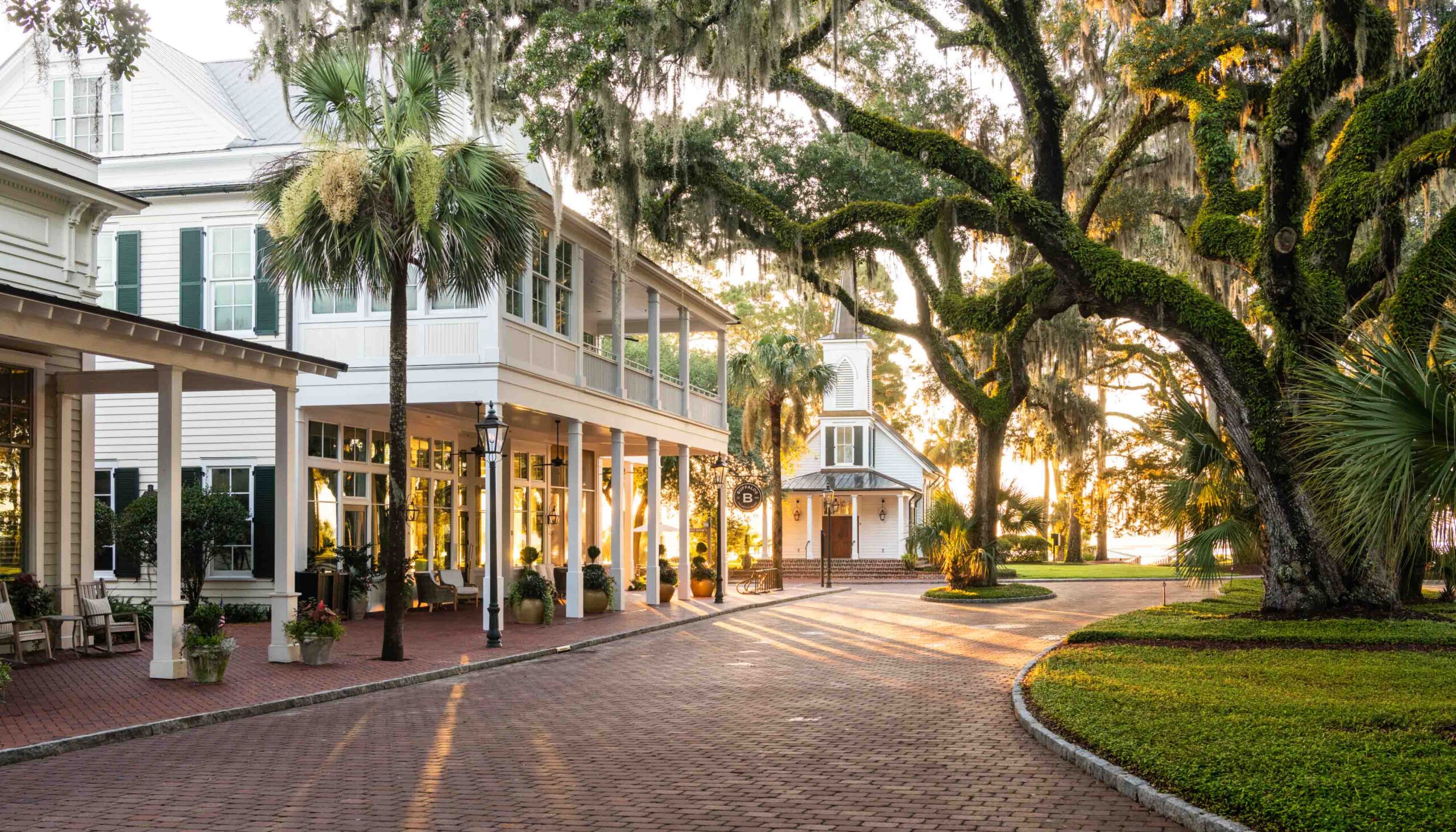
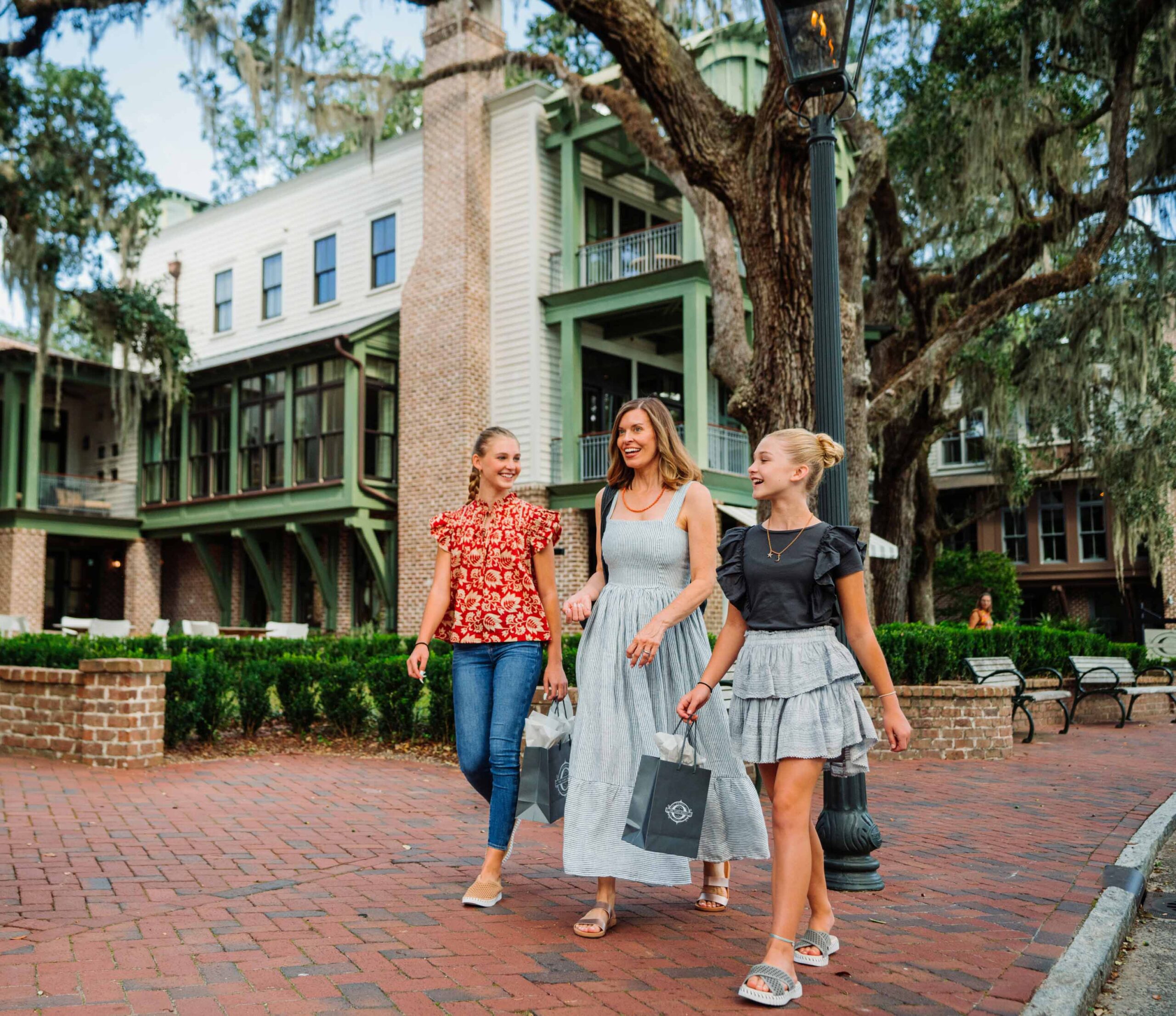
From the beginning, it was really important that future settlements within Palmetto Bluff be modest in scale and woven with the natural environment. The team conducted a lot of studies of coastal communities such as Beaufort, Bluffton, Rockville and the old village of Mt. Pleasant, as well as the northeast. We wanted to look at how these settlements evolved over time. The scale, buildings, and roadway system of Wilson Village borrows from this history. And that was really different from what other developments were focused on in the eighties and nineties. At that time, there was a lot more intense development, more commercial and resort activity, and more density. But that wasn’t the kind of buyer Palmetto Bluff wanted to appeal to.
How did the look and feel of Wilson Village evolve?
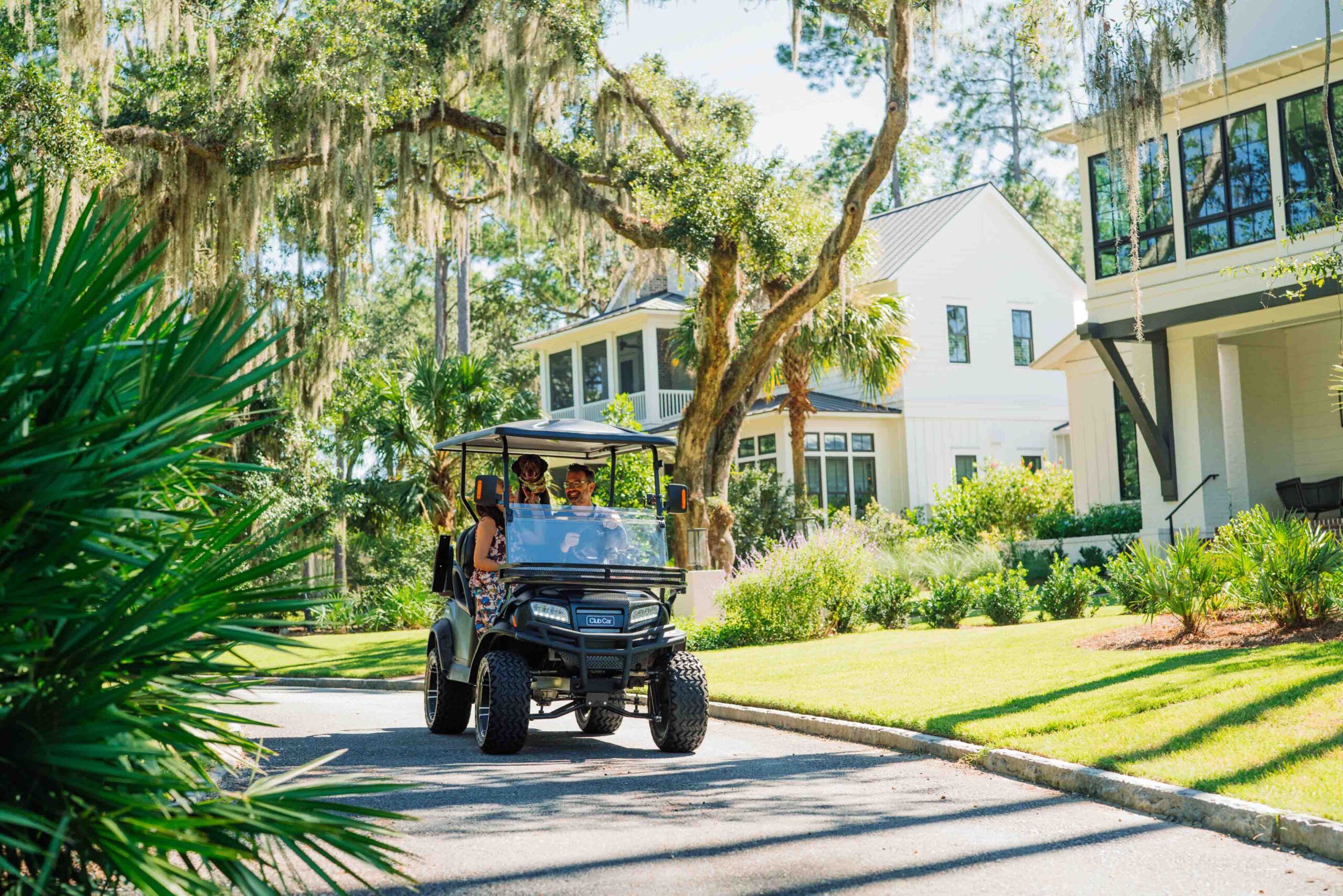
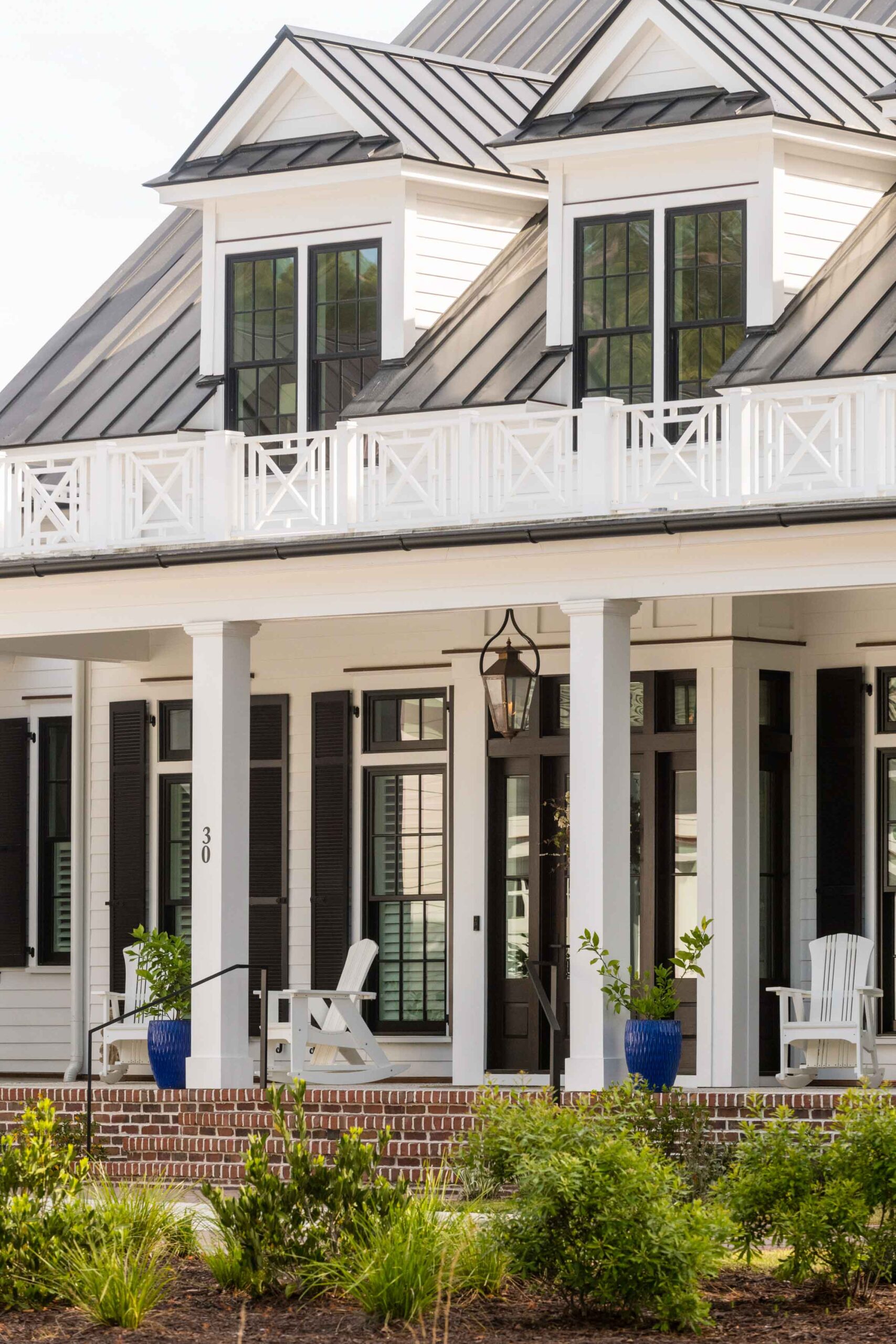
The idea was to develop settlement areas that were appropriately scaled for the natural features, that retain as much of the natural setting as possible. We wanted the siting of homes to be such that it looked like they had been there for a lot longer than they had, woven into the tree canopy. We did three dimensional surveys—with topography and tree forms—and those were used as the basis for how to shape a house to a site. The team was fortunate to work with skilled and experienced architects who found ways to snuggle the homes within the natural setting. It was challenging and fun at the same time. So now Wilson Village looks like it’s been there a lot longer than it has. It appears that it has grown up with the trees. Then it became more intuitive. The team didn’t over-analyze it, we just tipped toward a subtle and elegant scale.
What is it like to be working on this project again after so many years?
I have had the luxury of being involved in community development projects continuously, like I am at Kiawah Island. But it’s been really interesting to reconnect to Palmetto Bluff and look at it with fresh eyes. I can see how each setting has matured and what lessons we can learn from their evolution. I feel very fortunate to reconnect with the Hart Howerton team and continue the community development work with South Street Partners. I can’t think of a better team to carry the vision forward.
How does that inform the development of Anson?
Now we are thinking about how to transfer the original philosophy to Anson—recognizing that the natural conditions are subtly different. It’s not on a bluff, it’s closer to the natural elevations of the marshlands. So we’re looking at the prior studies of Anson from the early 2000s with the Hart Howerton team and making adjustments and refinements based upon experience. Site analysis and assessment is a continuous responsibility.
Tell me about the vision for Anson?
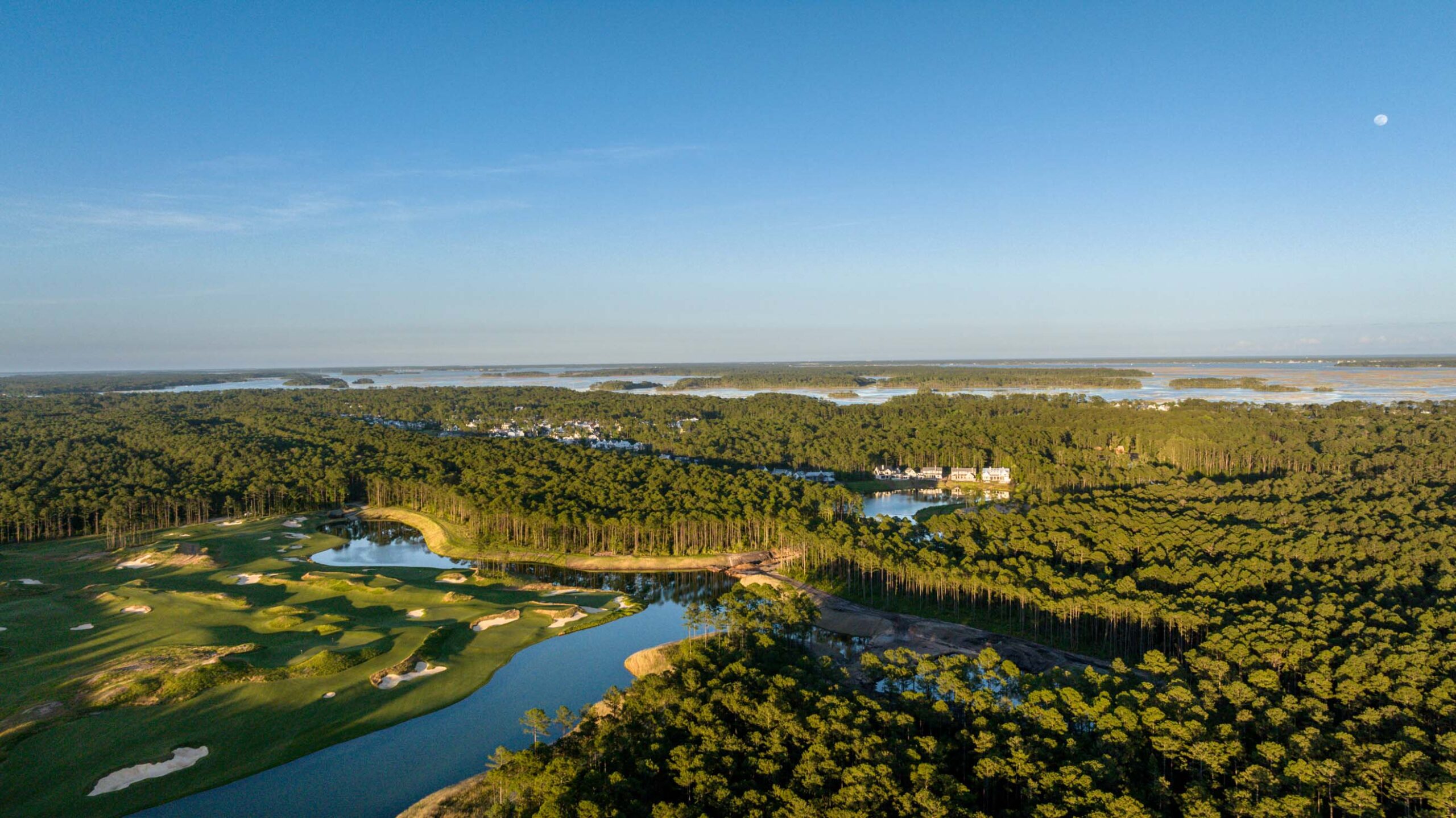
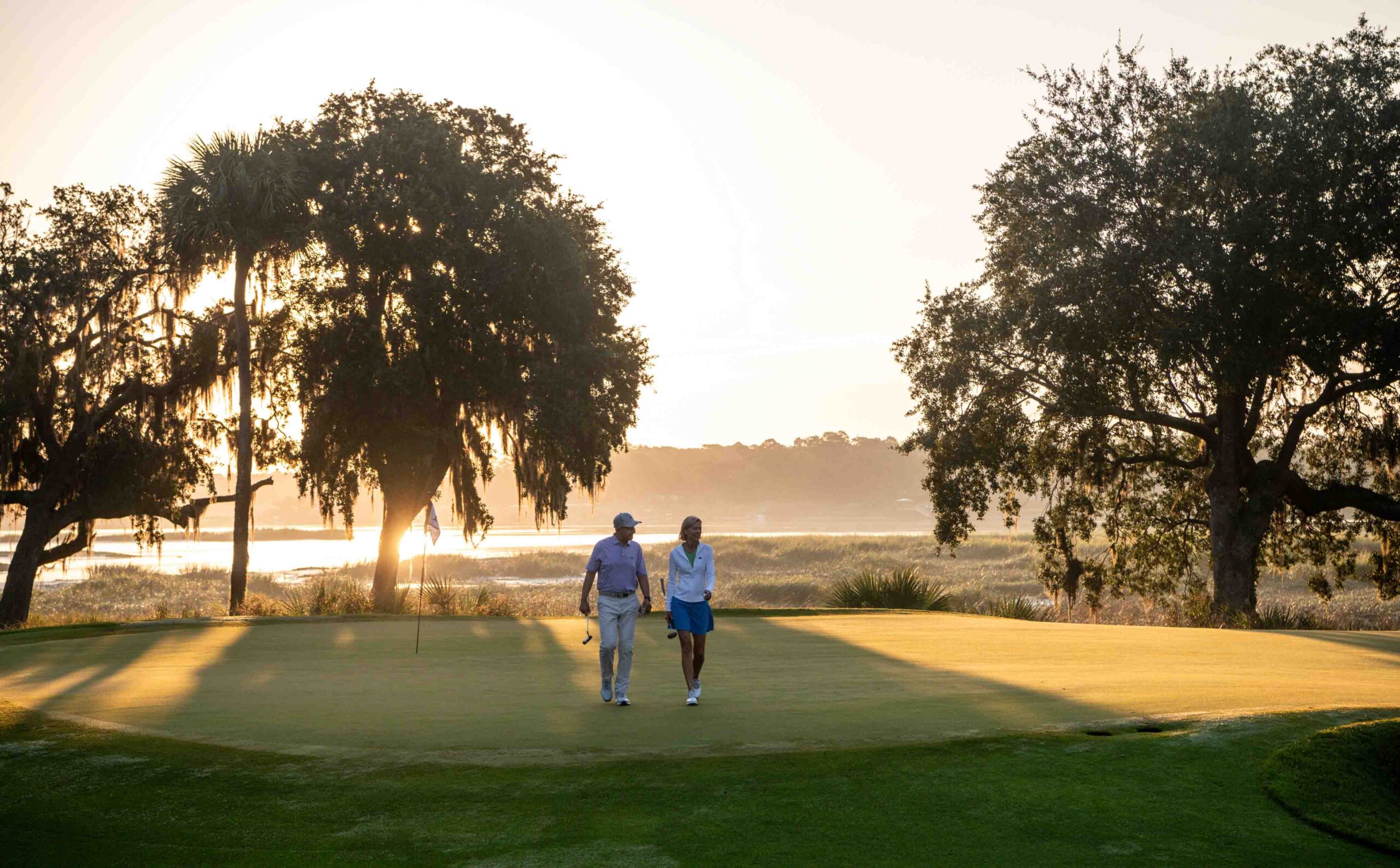
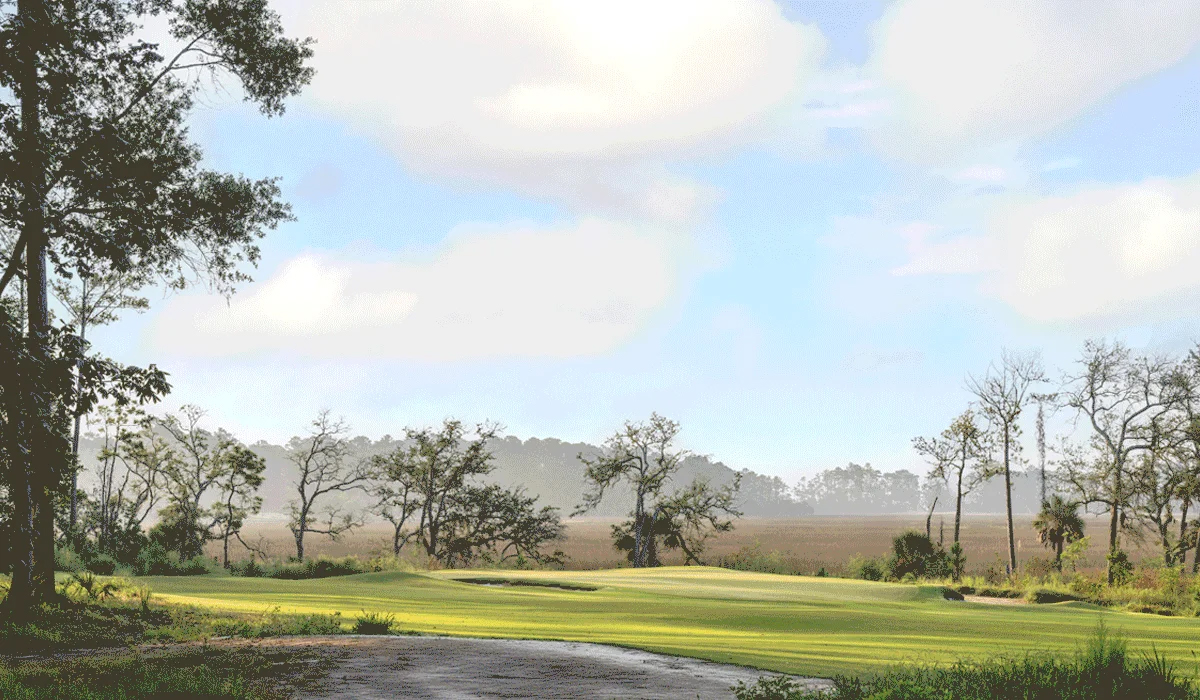
Anson will be scaled appropriately for its setting and will continue the concept of Designing With Nature. Right now, the focus is how best to integrate the planned wet and dry marina operation on the New River and construction of the golf course. Walking the golf course site now, you can begin to clearly visualize the rhythm of play and how the course will connect to the natural framework. Coore and Crenshaw have such a respect and soft touch to the existing conditions. They don’t excessively alter the topography, they work with existing natural features. In a certain way they do not create the place, they reveal the place that exists. Within a short time the course will feel like it has been there much longer than its true age. It will be a beautiful compliment to the May River and Crossroads courses and will provide members diversity in play.
How does Anson feel different from Wilson or Moreland?
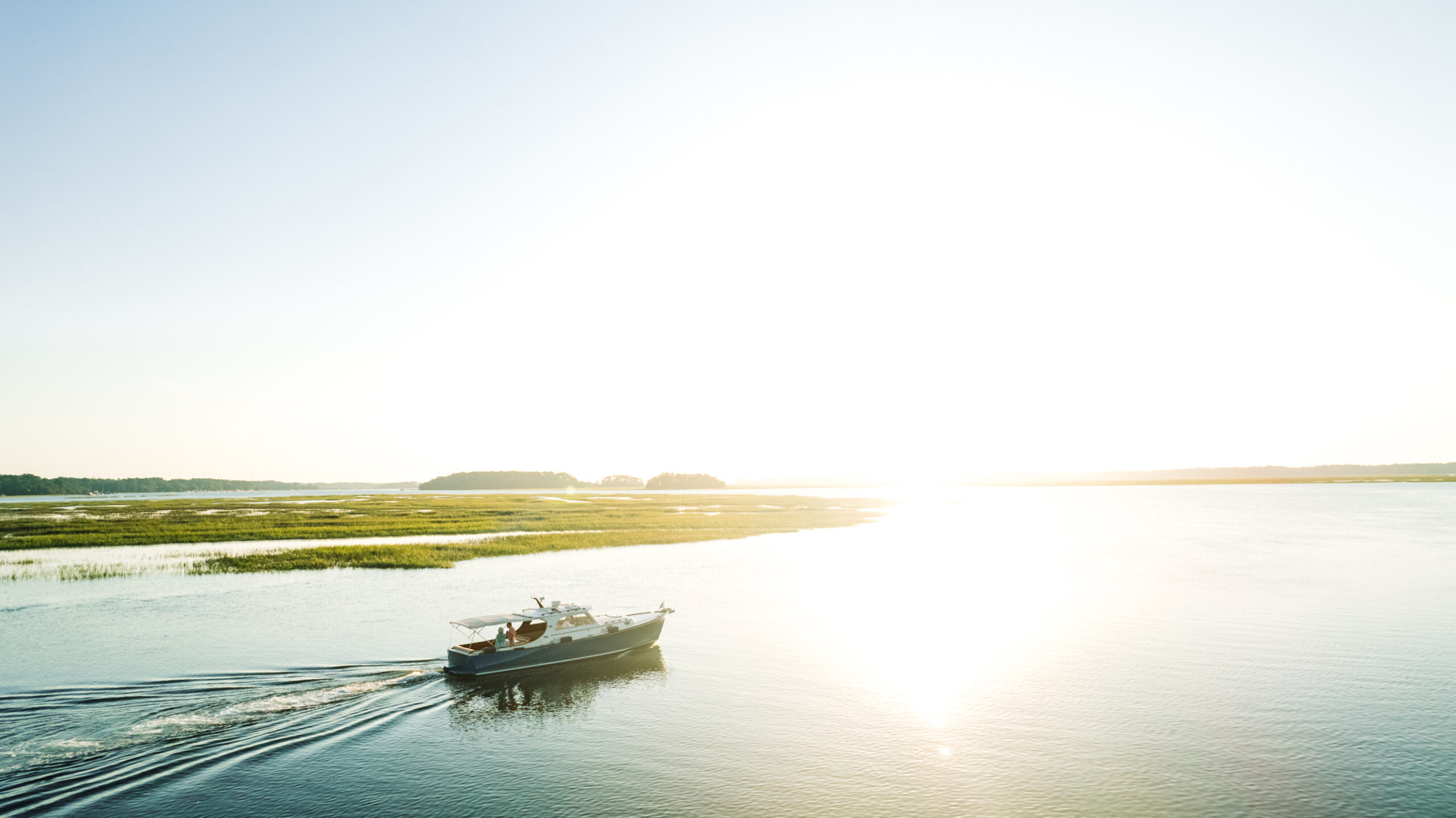
There are more opportunities to connect to the vast Savannahs and marshlands that surround that part of Palmetto Bluff. The vistas are greater—it’s a bigger American landscape, if that makes sense. And so the scale and magnitude of the open vistas, either from the golf course or certainly from the marina location, are going to be much broader. And it’s closer to the open coastline. It’s kind of intangible, but when you’re driving toward the coast, you start to feel the atmosphere change, the humidity creeps up a little higher, you smell the salt air, the breezes have more energy.
What about the built environment?
It is definitely a work in progress. The partners and team are currently assessing the aesthetic expression. But the scale and massing will be consistent with Wilson and Moreland Villages. The architects will continue to use the same tools to articulate form. And the natural framework—the topography, tree canopies, and wind patterns—will continue to lead.
Lastly, what is your favorite place at Palmetto Bluff?
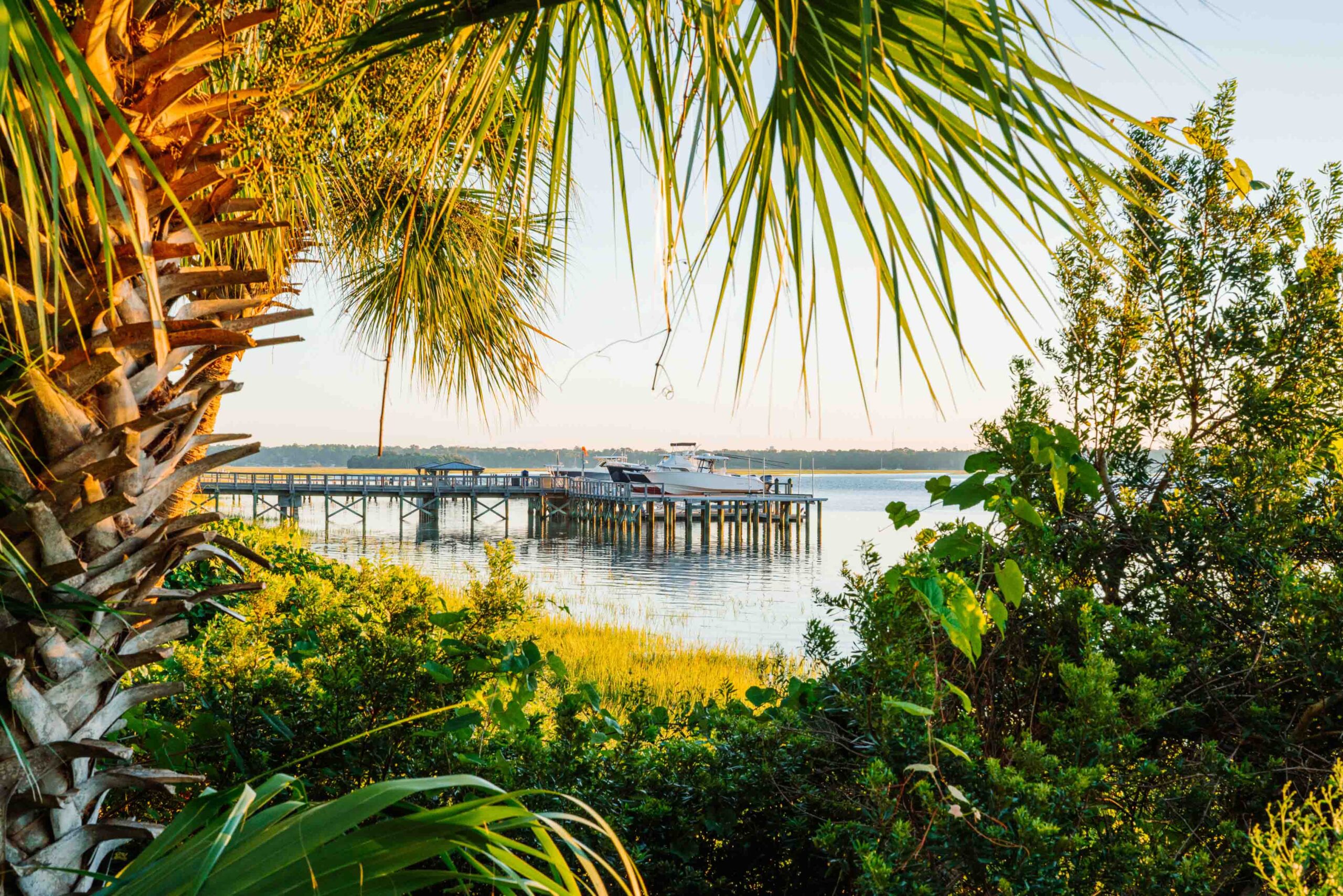
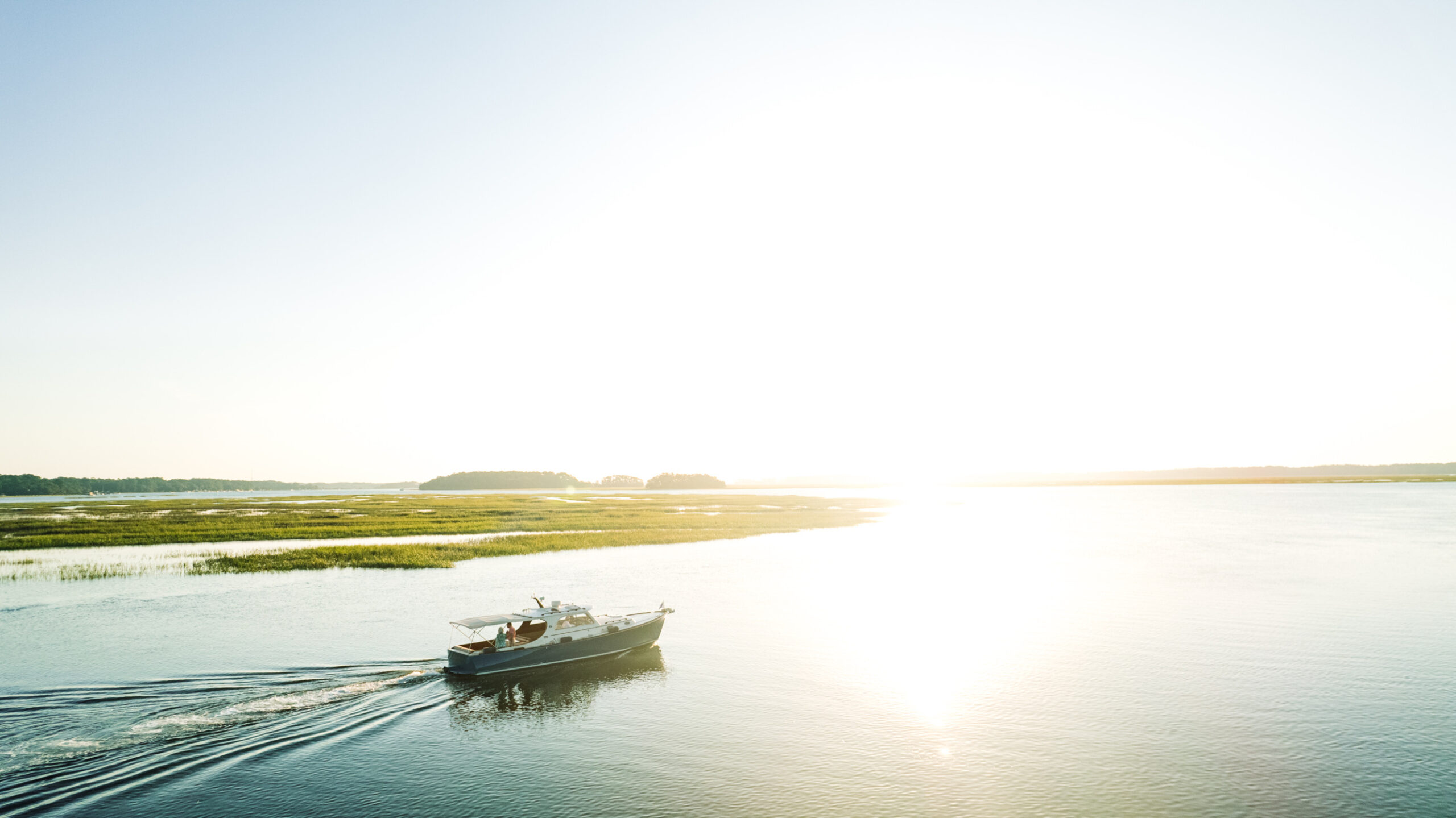
It’s different places during different times of the year and different times of day, if that makes sense. I have a strong affinity for marshland areas. The site of the new Anson Clubhouse has beautiful southern exposure with long distance views. The other place that I find interesting is the collision of the high ground, marsh, and river where the marina is. I’m not a boater, but the idea of being pulled to the shoreline in this active riverine system—it’s cool. And there are a collection of island hummocks down there—they all feel like members of a family. They’re all unique. And maybe that’s the best way for me to describe what Anson will become. Another member of the family.
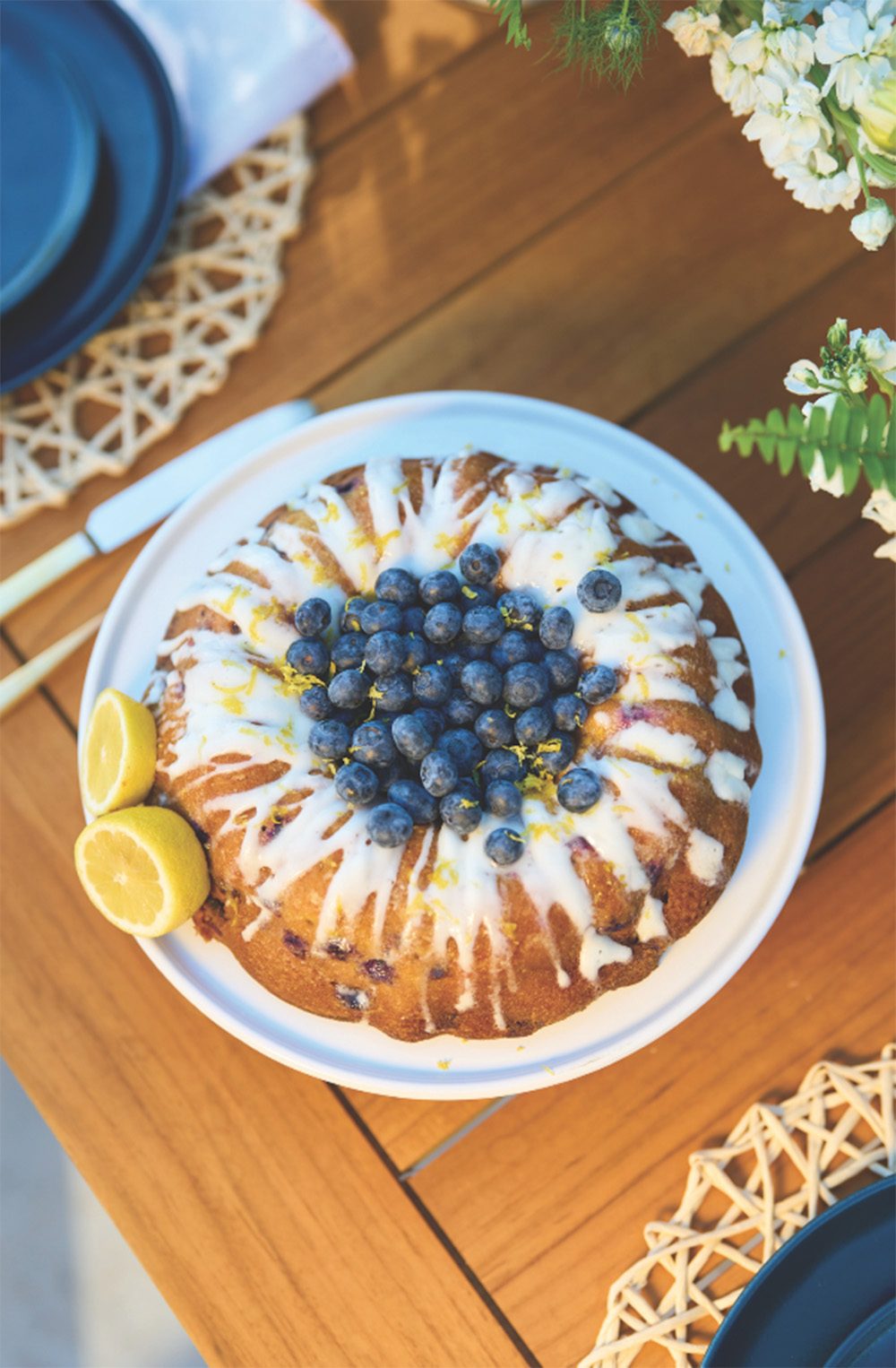
Warm, fragrant, and deeply comforting, Chef Beth’s Southern Sausage & Sage Stuffing is a holiday classic that brings together rich pork sausage, fresh herbs, and toasted bread for the ultimate savory side dish. Studded with green apples and aromatic vegeta...
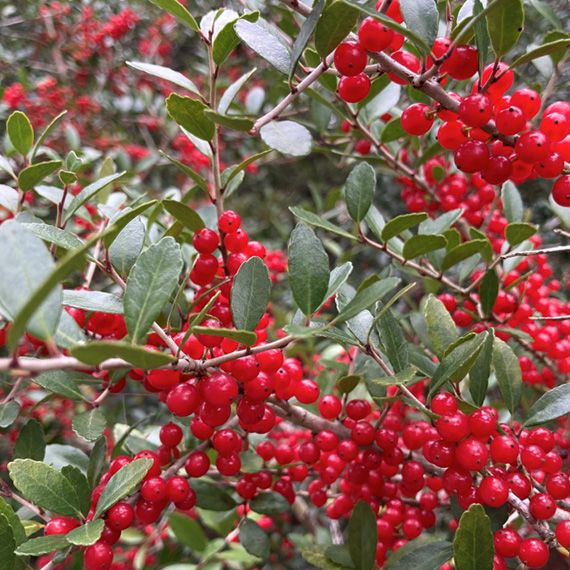
As December settles over Palmetto Bluff, it brings softer light, cooler mornings, and the natural beauty of native evergreens and winter berries that define the Lowcountry landscape. Palmetto Bluff Conservancy’s Education and Outreach Manager, Aaron Palmieri, ...
In 2025, Palmetto Bluff welcomed new neighbors and old friends, groundbreakings, and long-awaited openings. From inspired Club gatherings and elevated programming to the creation of our latest golf course, the year was defined by connection and excitement for ...
There is something serene about waking up to shimmering water, the stillness of the woods, or the sweep of marsh and sky right outside your window. Even without stepping outside, science shows that simply seeing nature from home can meaningfully improve mental...
The Ultimate Choice: Building vs Buying a Home in Palmetto Bluff For those searching for Palmetto Bluff homes for sale, this common question often arises: Should you choose an existing residence, or embrace the opportunity to build your own? While a complet...
A Complete Guide to South Carolina Winter at Palmetto Bluff South Carolina's winter is unlike any other on the East Coast. While many travelers search for “South Carolina winter” expecting cooler temperatures and limited outdoor options, the Lowcountry revea...
River Road: Where Lowcountry Beauty Meets Elevated Everyday Living Tucked gracefully between Wilson Village and Moreland Village, River Road is one of Palmetto Bluff’s most immersive communities. It's where the pace of life seems to soften, classic Southern ...

Sunday, December 14 | 9am to 1pmVillage GreenThe season’s most festive farmers market, the Holiday Farmers Market, comes to Wilson Village on Sunday, December 14, from 9am to 1pm. All are welcome to visit and experience the magic of holidays at the Bluff. The ...
Tucked amid whispering pines and overlooking a tranquil water trail, 11 Lyonia Street is where Lowcountry charm meets modern artistry. The newly built residence redefines Southern living with a balance of craftsmanship and calm. This is a home that feels both ...
The holiday season in the Lowcountry brings crisp air, oaks draped in twinkling lights, and laughter drifting from homes where families and friends gather once again. At Palmetto Bluff, the holidays are more than just a season; they’re a feeling of togethernes...
We do not attempt to independently verify the currency, completeness, accuracy or authenticity of the data contained herein. All area measurements and calculations are approximate and should be independently verified. Data may be subject to transcription and transmission errors. Accordingly, the data is provided on an “as is” “as available” basis only and may not reflect all real estate activity in the market”. © [2023] REsides, Inc. All rights reserved. Certain information contained herein is derived from information, which is the licensed property of, and copyrighted by, REsides, Inc.