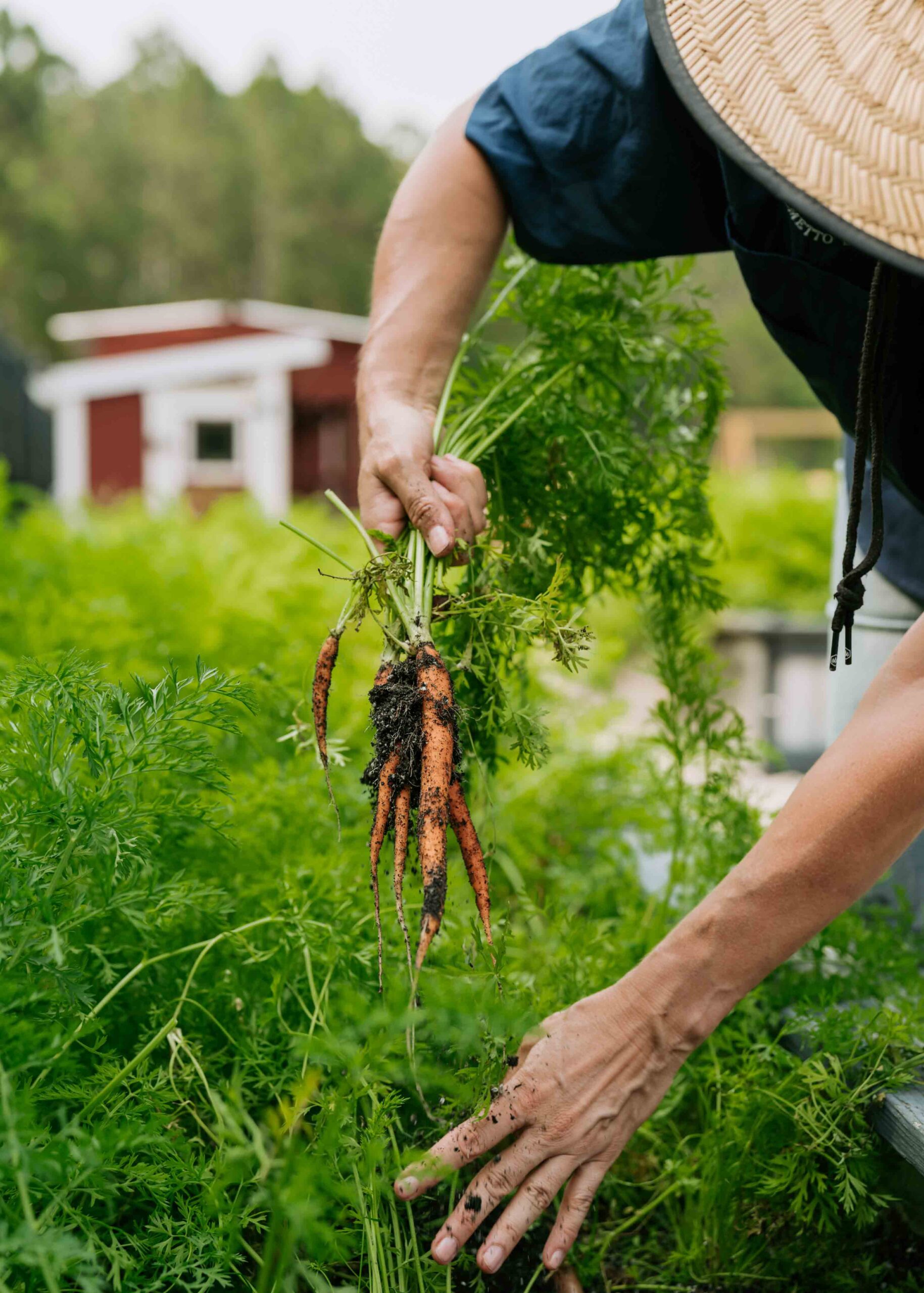
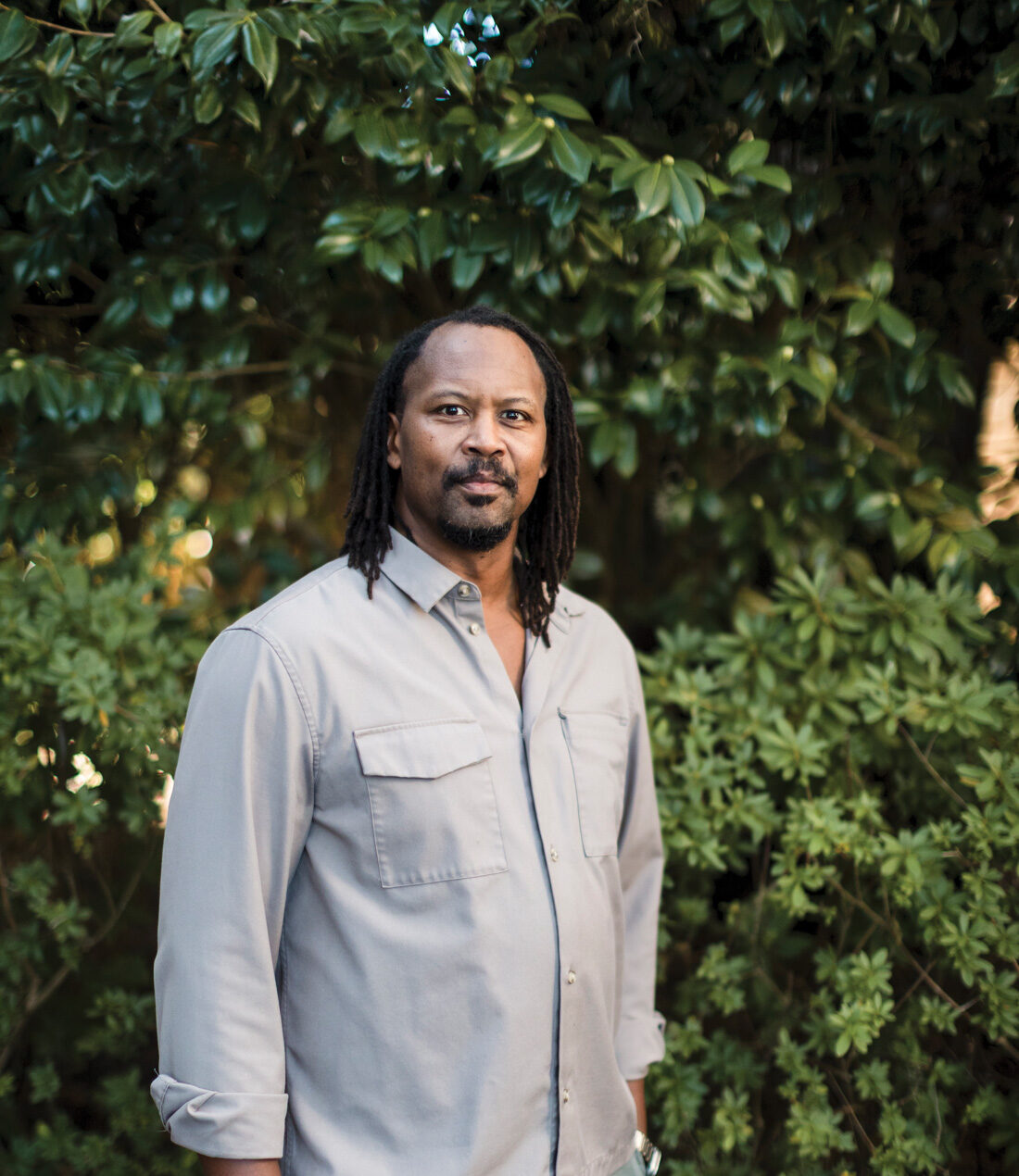
Jay Walea is known for bringing his truck to a screeching halt while showing new people around the Bluff and jumping out to rip plants from the ground for people to taste. One of his favorites to point out is sweetleaf, which has a sour, green apple flavor. He always makes the point that animals love to eat it. They have taste buds just like we do, and they love tasty, easy-to-find treats. At the Bluff, we plan whole buffets for our animal residents. They’re called food plots, also known as supplemental food programs.
Supplemental food programs provide livestock and other animals with a nutrient value that they may not be able to find on their own. Can you think of your last healthy meal? A square meal is a thing of beauty. It fills your belly and gives you energy. For our forest critters, day-to-day tribulations make square meals hard to come by. Lush, healthy, accessible food can be scarce in a natural environment. The Palmetto Bluff Conservancy regularly maintains food plots scattered throughout the Bluff’s wild spaces. Square food plots with nutritious offerings give our forest creatures a square meal.
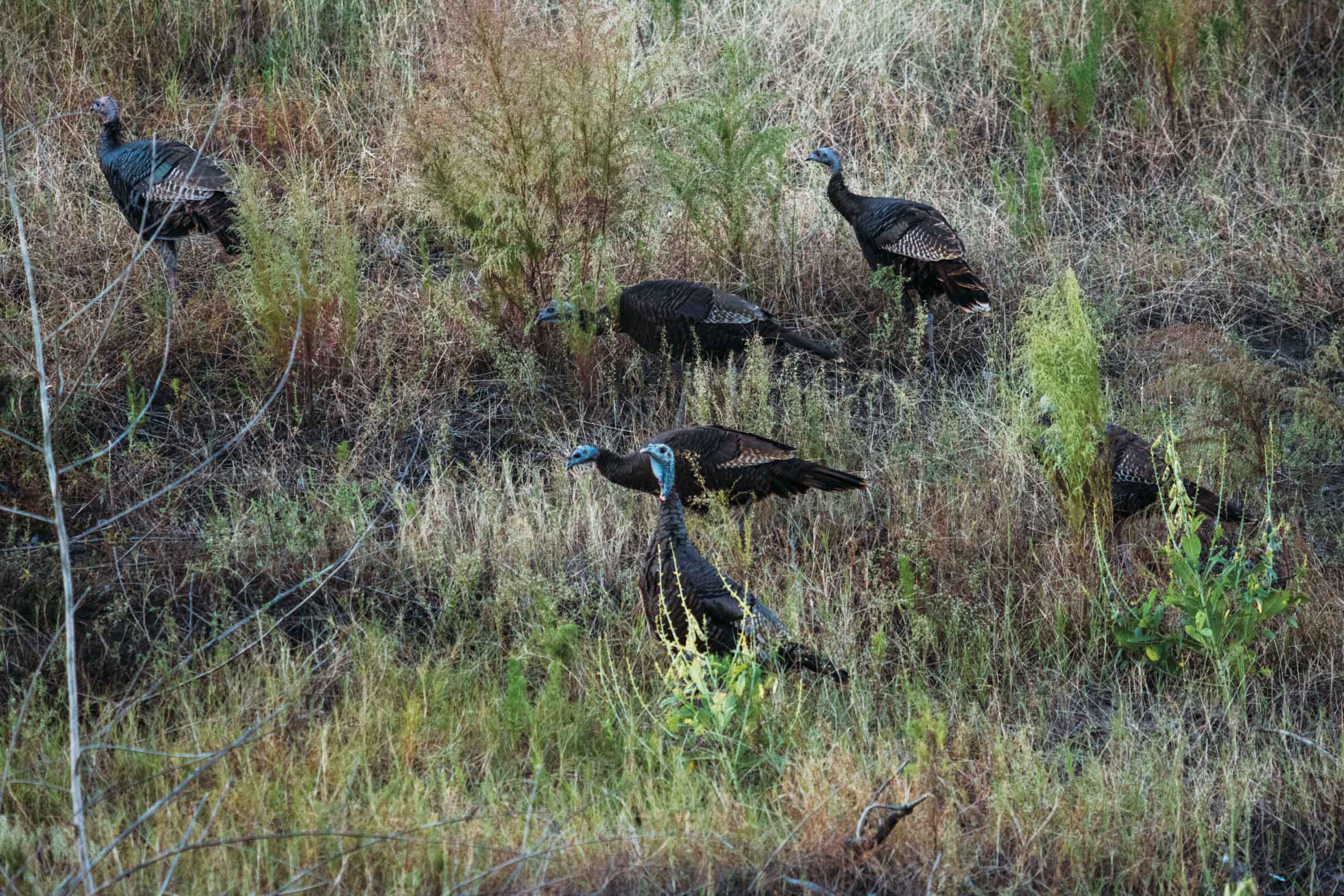
Providing a wide variety of nutrients throughout the year helps our deer herd grow to its fullest potential. Just like humans, deer need a well-rounded diet. During different seasons, the nutritional requirements of bucks, does, and fawns will vary slightly, but all three need water, protein, and energy (fats and carbohydrates). Providing the right nutrients in the right season is the key to success. Our summer crop is full of protein, while our winter crop contains more carbs and less protein. The summer crop includes chufa, Aeschynomene (vetch), Alyce clover, and buckwheat. The winter crop contains rye, wheat, oats, peas, rape, and purple-top turnips. Every animal on the property can benefit from our food plots. Rabbits, birds, deer, and turkeys all thrive on our food plots year-round. The chufa planted in the summer crop produces nuts in the soil that turkeys chew on for months. The seed heads produced from our winter crop provide turkeys and birds with seeds and grains to snack on. Rabbits munch on any greens, particularly the turnips in our winter crop.
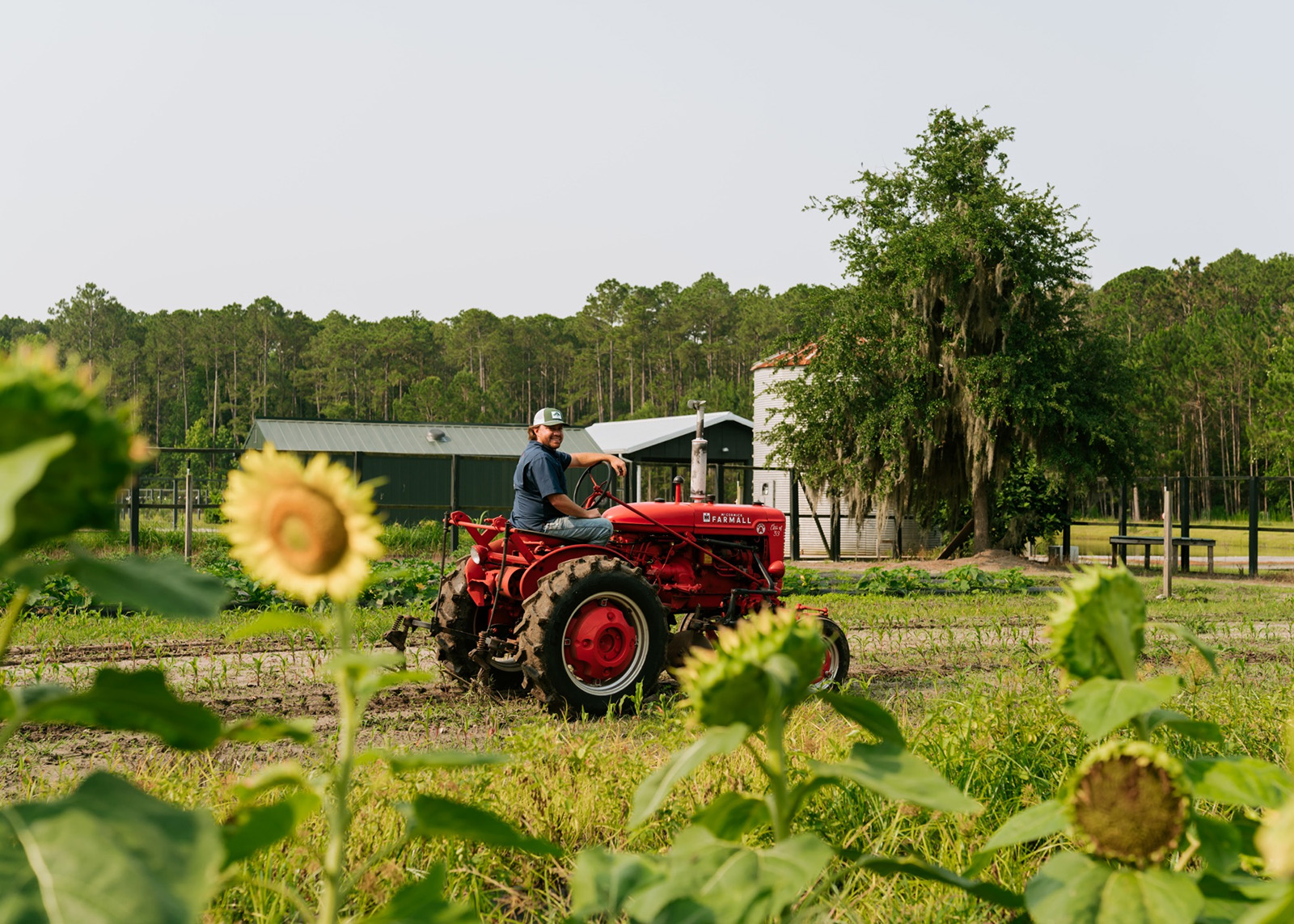
Once the temperatures start to elevate, our winter crops slowly begin to fade out and weeds start to take over the food plots. By mid-spring, preparation for the summer planting is underway. To plant the summer crops, we hook up a leveling harrow behind our tractor, which will be used to till the soil to expose fresh soil and do away with pesky weeds. We do not use herbicides to kill the weeds. The harrow also levels the soil, so the food plots are smooth. After all the food plots are harrowed, we test the soil. Soil samples are sent off to an extension office through Clemson University. This gives us a rough idea of the type of fertilizer we need to spread across our food plots. The fertilizer will help the soil reach its maximum potential.
Once our order of summer food mix and fertilizer comes in, we start planting. Our summer mix is broadcast over our freshly harrowed fields with an electric seed spreader that we attach to the rear of our ATV. The summer mix comes prepared in separate bags for each food plot, so the measurements are precise. After all the mix is spread, we follow up with the tractor broadcasting the fertilizer on top. We normally wait to broadcast the fertilizer just a day or two ahead of a good rain shower. That way, the fertilizer can break down and filter through the soil faster. Leaving fertilizer on top of the soil for a long period of time may cause the fertilizer to harden or simply go bad. After the seed and fertilizer are spread, the summer planting is complete.
Our summer mix stays in the food plots until mid-September when it is time to plant again. We go back to each food plot and harrow the fields once more with the leveling harrow to get rid of any pesky weeds that came back. Then, we do another round of soil samples. Most of the time, we get similar results. The winter crop we use must be planted using a grain drill, which is pulled behind a tractor. Seeds travel down chutes and into the soil. The grain drill we use has 12 chutes spaced 8 inches apart. This would be known as a 12-row planter to most farmers. By using this grain drill, the seed is planted evenly across the field in the freshly harrowed soil. After the planting is done, the fertilizer is broadcast over the field just before a good rain shower. Winter planting is complete.
The food plots grow tasty crops animals can consume easily. These plots become a common area in the forest for deer and wildlife to gather. They can chew on plants that are more palatable than a tough-to-digest tree leaf or a woody stem. The ease of the food plots is what the animals are after. They have to put less work into finding something to eat. The forest provides the animals of Palmetto Bluff with nutrients, but a deer could scrounge around for hours looking for food to fill its belly in a natural forest. Creating a food plot makes it easier for deer to fill their bellies in less time. This makes for a healthy herd and a healthy forest. And it doesn’t hurt that they make great spots for deer stands come hunting season.
%GALLERY%
Photography by Tyler Dewland