Caroline Harper already had a feeling 2020 was going to be a great year, and then she saw Pantone’s Color of the Year—Classic Blue, a hue reminiscent of the sky at dusk.
But Caroline sees indigo.
To be fair, she sees indigo everywhere now. A native of France, Caroline (pronounced “care-oh-lean”) came to the Palmetto State for college and never left, but she was a South Carolina resident for more than two decades before indigo made it onto her radar—and she was on the other side of the globe when it finally happened.
A little over six years ago, she took a trip to Japan and spent 10 days on a silk and indigo farm outside Tokyo. She learned about the plant and the dye, as well as the ancient Japanese art of shibori, which involves tying, knotting, and clamping fabric to produce different dye patterns.
Caroline had dabbled with different fabrics and chemical dyes as a hobby while working as a graphic designer, but nothing ever captivated her quite like indigo. Little did she know that the plant that had captured her attention on the other side of the globe had such deep roots back home.
Fast-forward six years, and Caroline and her husband, David, are at the forefront of reviving South Carolina’s long-lost cash crop—or at least they hope so. Their company, CHI design indigo, is equal parts high fashion and historic preservation, aiming both to produce farm-to-fabric creations and educate people at home and afar about the plant’s connections to the Palmetto State’s past.
“It’s interesting to think about,” David Harper says, “but it’s actually like a 230-year gap of production if you really look at it. There really wasn’t a dyeing tradition or a dye-making tradition in South Carolina that lasted much after the Revolutionary War.”
Indeed, indigo production was nonexistent in South Carolina for more than two centuries, although it was the state’s number two export, behind rice, from 1747 until the 1790s. The crop was grown on land not suited for rice, and the fields were tended by enslaved people who were also responsible for harvesting the plants and manufacturing the dye. British subsidies made indigo production lucrative, at least until the Revolutionary War disrupted production and England turned to India for its indigo. Exports from South Carolina dropped off precipitously, and plantation owners turned their attention to growing cotton.
The Harpers became as interested in the plant’s history—its quick rise and fall—as they were enamored with the stunning blue dye it produces.
That history, like much of US history, is complicated. Indigo production in South Carolina was dependent on a system of brutal oppression—the enslavement of people of color.
The Harpers are cognizant of indigo’s cruel past but see an opportunity to bring awareness and understanding of indigo’s history and give the Palmetto State a chance to revive the industry in a manner that is beneficial to all. “There’s some real opportunity for healing with indigo in the Lowcountry in ways that could open up new opportunities,” David says.
Growing indigo is easy enough. Processing it is another story.
Extracting the coveted, deep blue dye is an arduous task that is both time- and labor-intensive, hence the industry’s success in the colonial South’s oppressive economic system. But Caroline was compelled to use the magical blue dye to transform textiles into works of art, so David had to learn how to produce it. The multistep process involves soaking and fermenting the leaves in tanks to produce a blueish water, which is mixed with lime and oxidized until it turns a deep navy blue.
The paste that settles to the bottom of the tank is dried and eventually ground into indigo dye powder.
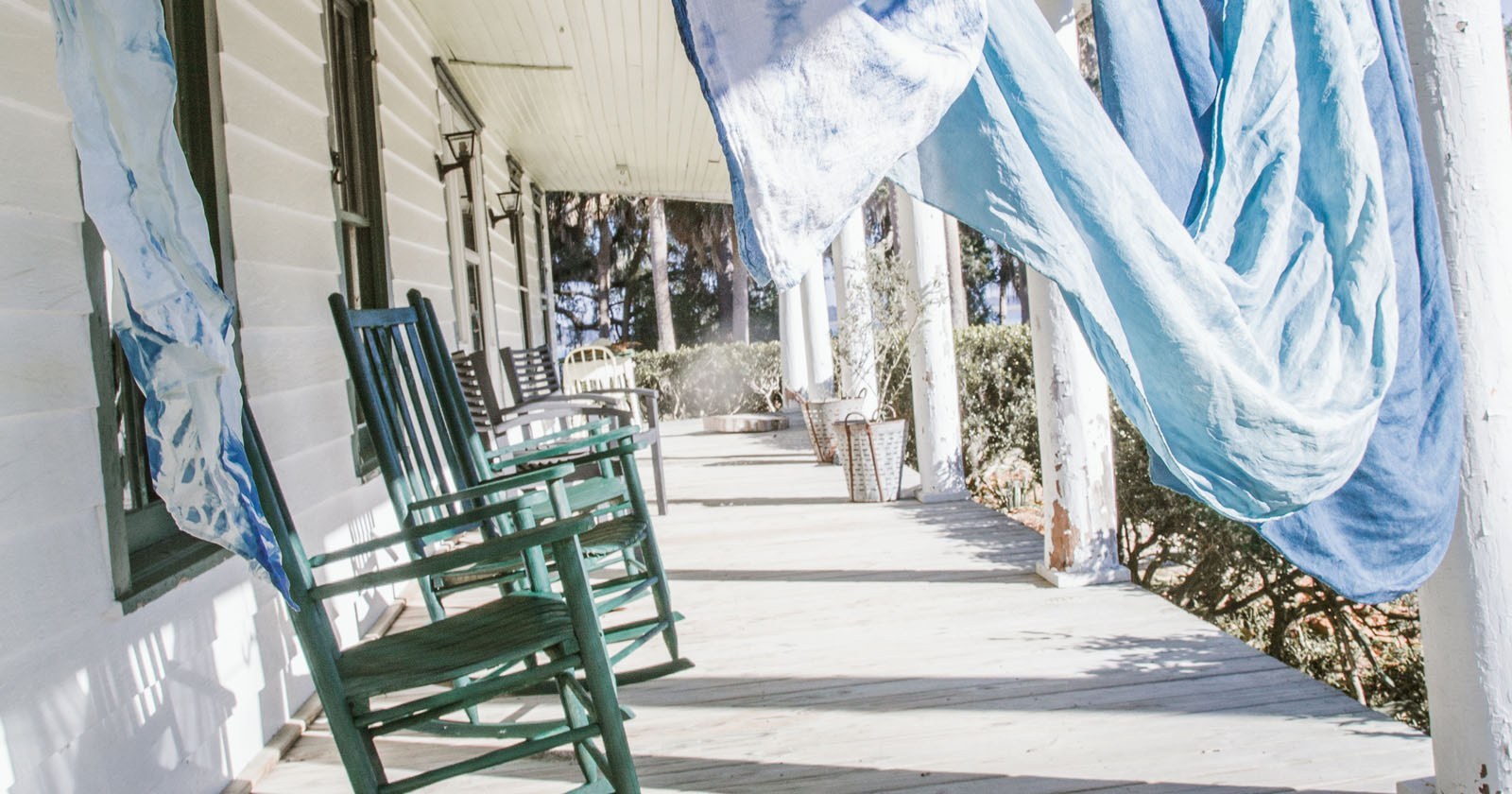
That’s when Caroline makes her magic happen, using the natural, organic “Blue Gold Indigo” to produce a wide array of products ranging from clothing and jewelry to bow ties and napkins.
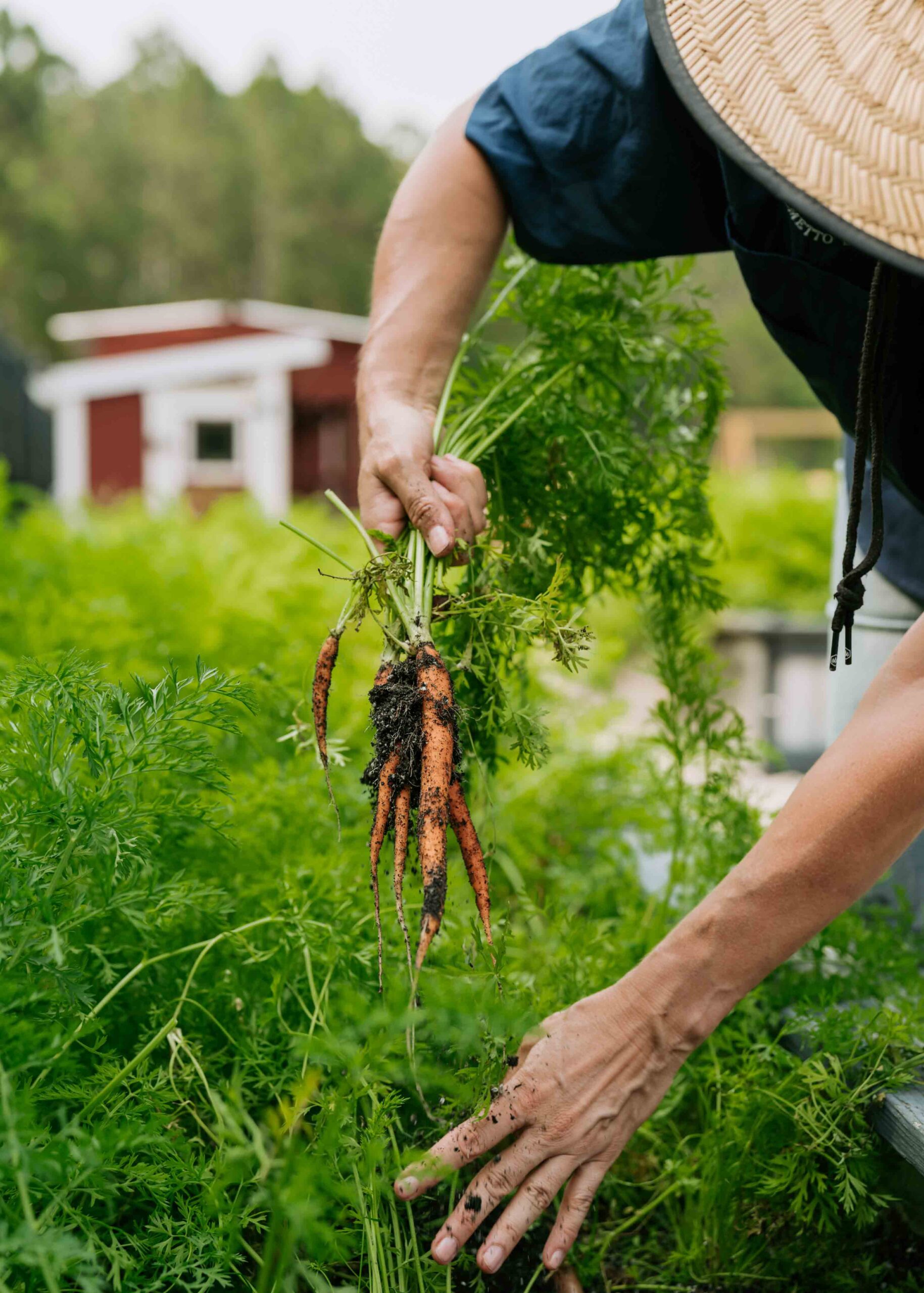
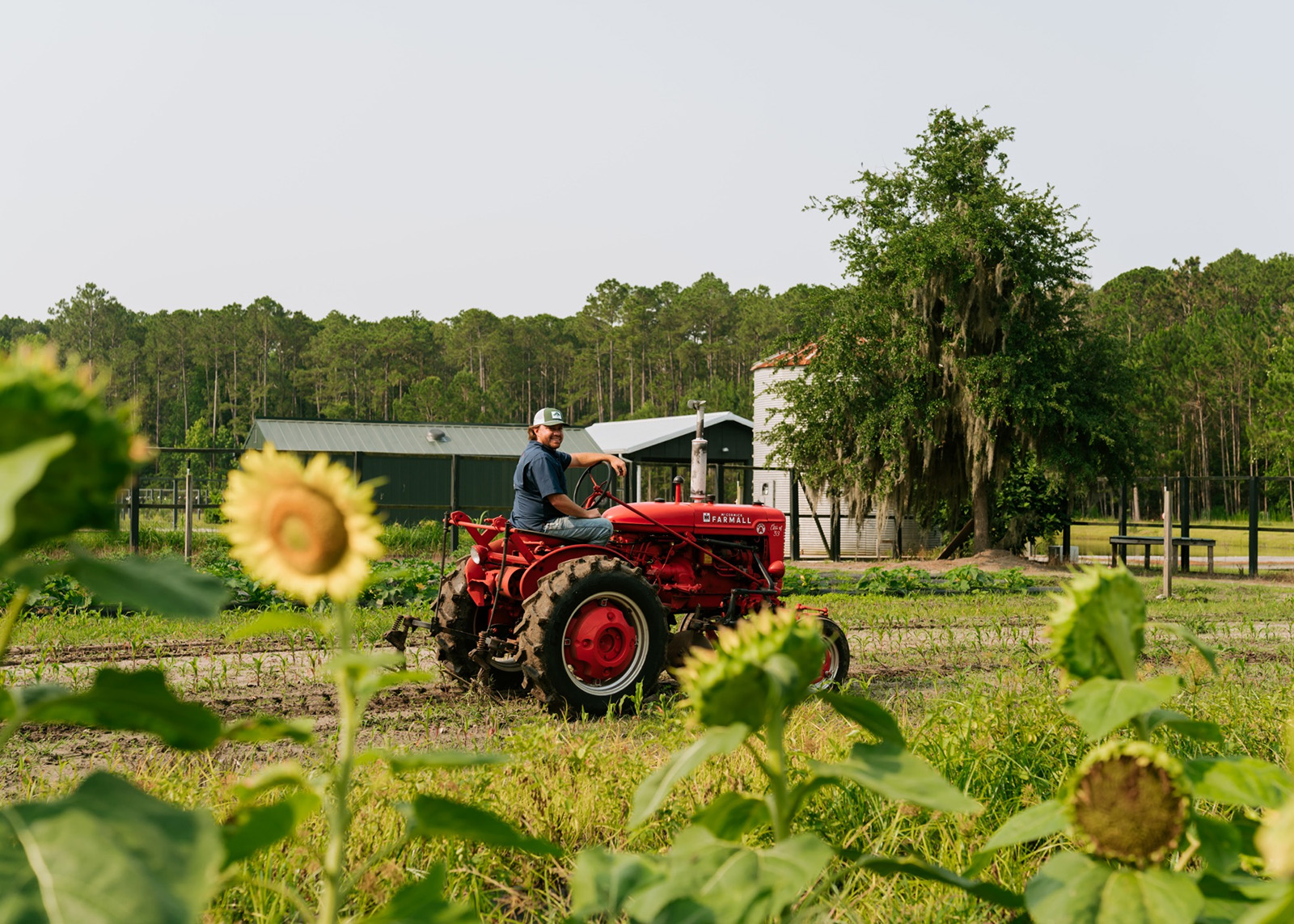
But getting to that point is no easy task. It begins with the Harpers germinating seeds indoors as soon as the soil begins to warm up in March. When the seedlings reach about two inches tall and are strong enough, usually in early to mid-April, they’re ready to go in the ground.
By July, the plants are knee-high, and in August, they hit full bloom and are ready to harvest, beginning the long process of once again turning green into vibrant blue.
The Harpers are not alone in their quest to revive indigo’s importance in the Palmetto State.
A small, but passionate and growing, group continues to increase production and spread awareness each year.
David sits on the board of the Charleston-based International Center for Indigo Culture, a non-profit organization with a mission to “inspire and create a new ‘farm-to-fabric’ economy and culture based around the indigo plant and the dye it produces.”
In other words, the Harpers don’t see others working with indigo as competitors so much as collaborators.
“There’s this sense of all boats rising together at this point, because indigo is such an important revival and education is so fundamental,” David says. “When we hear about other natural dyers and other people doing the work, it really is not so much a sense of competing as it is a question of how can we all make this work for everybody?”
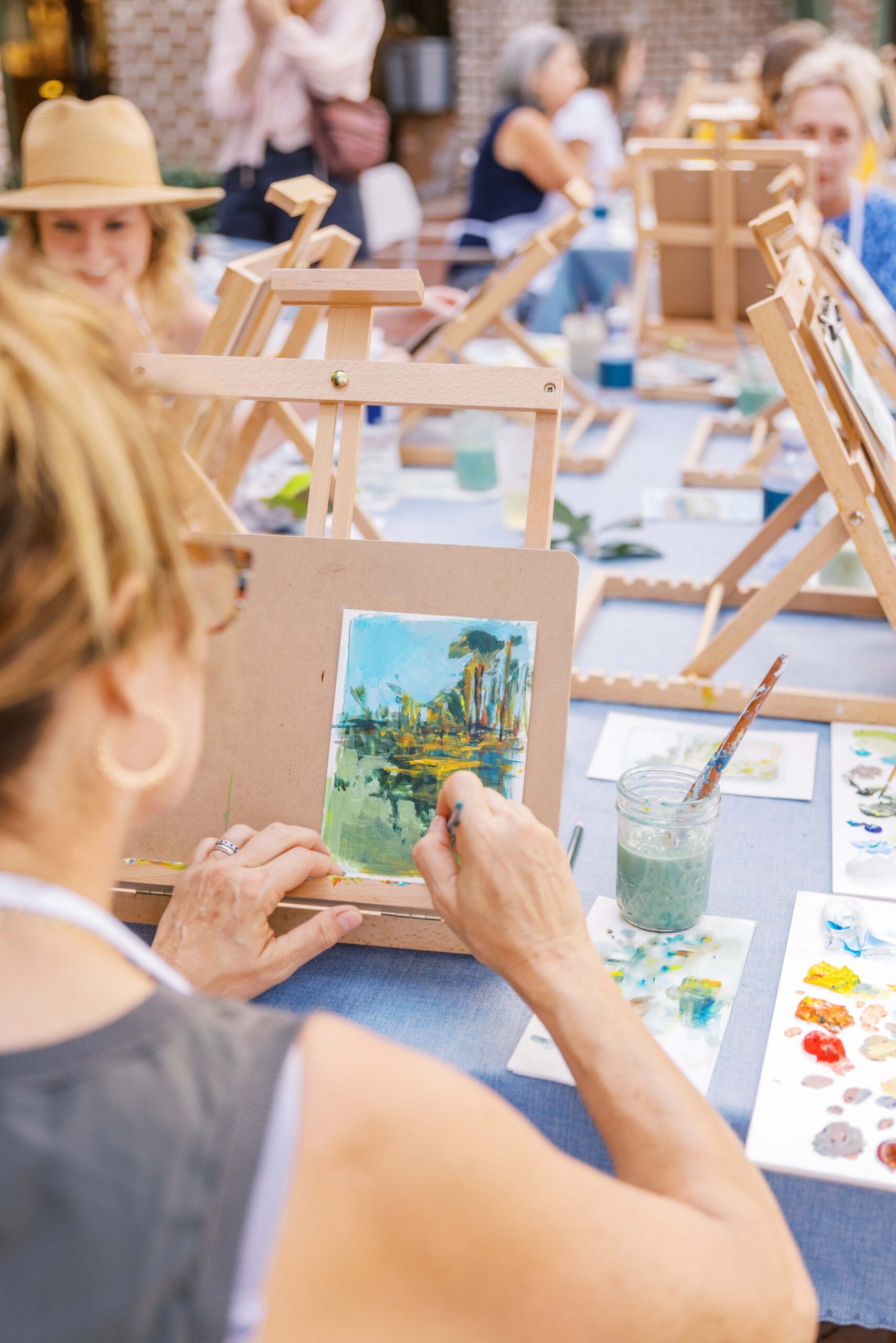
The Harpers have made education a cornerstone of their business, hosting workshops and other events aimed at educating people about the history of indigo, as well as best practices not only for growing and processing it, but also for dyeing with it. They’re also working on plans for a kit designed for art teachers to use in the classroom to introduce students to the history and utility of indigo.“
Our goal truly is educating people, especially in the Lowcountry, about not only this as a history lesson, but something that can be part of economic development in the future,” David says. “It’s about the Lowcountry experience of being able to do these hands-on workshops, get some hand-dyed products, and even if you’re flying back to Germany, you can be like, ‘Wow, I really just went to the heart of the Lowcountry through this experience.’”
The indigo revival in South Carolina got jump-started with the 2017 release of Natasha Boyd’s novel The Indigo Girl.
The Indigo Girl tells the story of Eliza Lucas Pinckney, who as a teenager in the 1730s was responsible for developing indigo as a major cash crop in South Carolina. It was perfect timing for Caroline, who was already three years into her quest to revive indigo production in the Palmetto State.
“I kind of picked it up at the right time,” Caroline says.
Well, as right as the timing could be to take on a trade from a bygone era.
Indigo was once ubiquitous along the Lowcountry coast, grown from Georgetown down to Savannah, with what is now Beaufort County producing quite a bounty. After centuries of dormancy, indigo is again sprouting from the fertile Lowcountry soil. The Harpers have crops in Kingstree, John’s Island, Edisto Island, and Green Pond, and they process plants from other cultivators around the region, including Three Sisters Farm in Bluffton.
The timing makes perfect sense to Caroline.
“I think I was meant to do this kind of work,” she says.
The Harpers hope the timing is right for another big move on the horizon. They plan to move to the Charleston area and add a brick-and-mortar store to complement the online storefront and the busy roster of shows, festivals, and markets where Caroline sells her indigo-dyed creations.
After all, 2020 is the year for Classic blue, and in South Carolina, it doesn’t get much more classic and bluer than homegrown indigo.
Photography by Krisztian Lonyai and courtesy of Caroline Harper.
%GALLERY%